Python Metaprogramming
Learning Path ⋅ Skills: Python, Descriptors, Metaclasses, Abstract Base Classes, Protocols, Duck Typing, Introspection, Dynamic Code Execution, exec(), eval()

In this learning path, you’ll explore Python’s metaprogramming tools, the features that let your code inspect and change how other code behaves. You’ll start with descriptors and metaclasses, which hook into attribute access and class creation, then use those hooks to work through duck typing, abstract base classes, and protocols.
You’ll finish with introspection and with running code your program generates itself using eval() and exec(). Quizzes along the way let you check your understanding.
Python Metaprogramming
Learning Path ⋅ 8 Resources
Is this path right for you? Mentor AI knows what’s in it and can help you decide where to begin.
Ask Mentor AI

Descriptors and Metaclasses
Descriptors control what happens when you get or set an attribute, and metaclasses hook into the moment Python creates a class. Both let you move behavior into the class itself instead of repeating it in every method. You’ll start with descriptors because they build directly on the attribute lookup you already know.

Course
Python Descriptors
Learn what Python descriptors are, how the descriptor protocol works, and when descriptors are useful—with practical, hands-on examples.
Interactive Quiz
Python Descriptors: An Introduction
Course
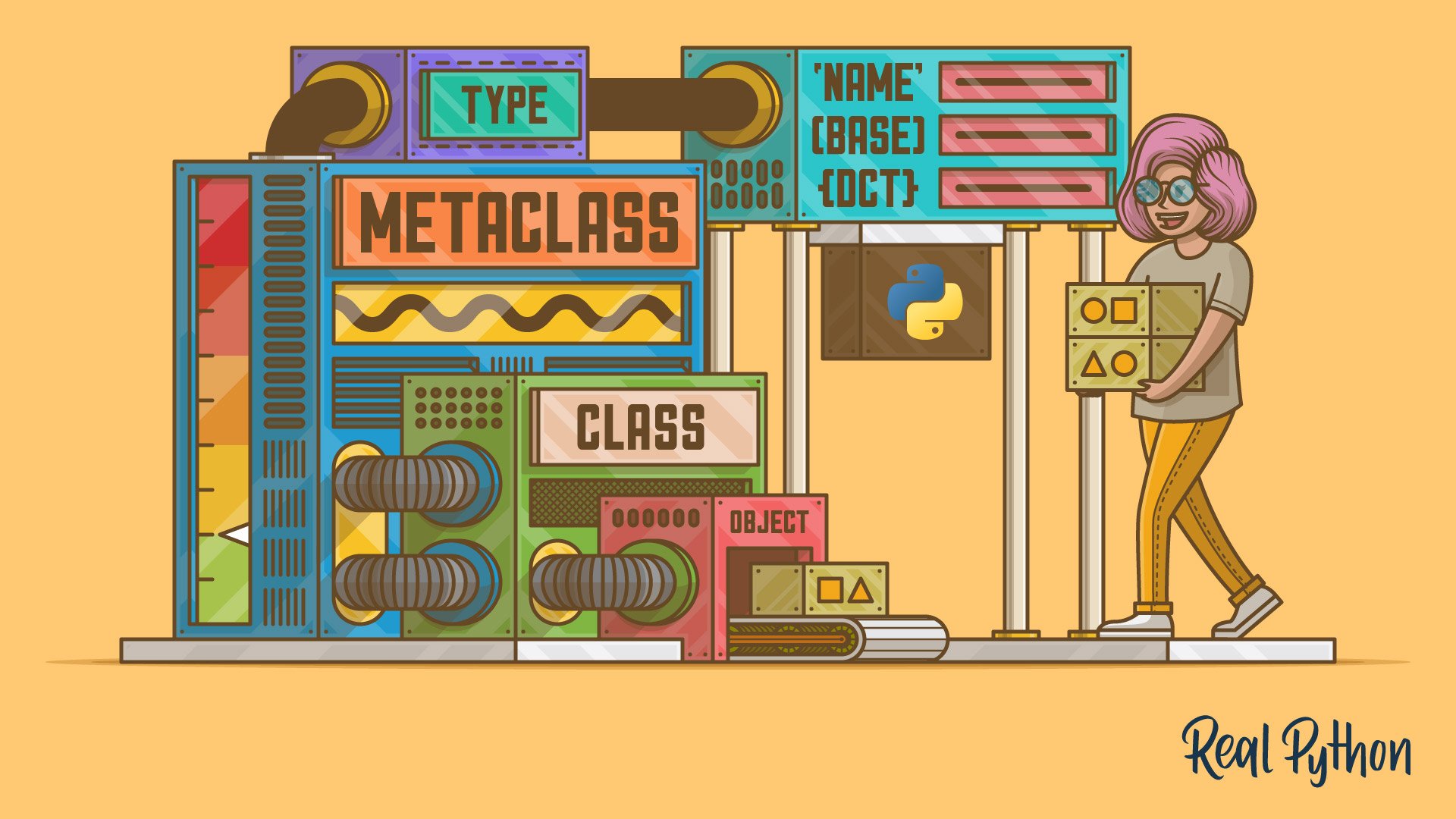
Metaclasses in Python
Metaclasses are an important but mysterious behind-the-scenes mechanism for instantiating classes in Python. In this video course, you'll learn how Python's metaclasses work in object-oriented programming.
Interactive Quiz
Python Metaclasses
Interfaces, Protocols, and Duck Typing
You’ve seen how descriptors and metaclasses hook into attribute access and class creation. Abstract base classes are the most common thing people actually build with a metaclass, since ABCMeta is one. You’ll move from informal duck typing to explicit ABCs and then to static protocols, each a stricter answer to the question of what counts as the right type.

Course
Getting to Know Duck Typing in Python
Learn about duck typing in Python---a type system based on an object's behavior rather than inheritance. By taking advantage of duck typing, you can create flexible and decoupled sets of Python classes that work together or independently.
Interactive Quiz
Duck Typing in Python: Writing Flexible and Decoupled Code

Course
Python Interfaces: Object-Oriented Design Principles
In this video course, you'll explore how to use a Python interface. You'll come to understand why interfaces are so useful and learn how to implement formal and informal interfaces in Python. You'll also examine the differences between Python interfaces and those in other programming languages.
Interactive Quiz
Implementing Interfaces in Python: ABCs and Protocols

Course
Exploring Protocols in Python
Learn how Python's protocols improve your use of type hints and static type checkers in this practical video course.
Interactive Quiz
Python Protocols: Leveraging Structural Subtyping
Inspecting and Generating Code at Runtime
Duck typing, ABCs, and protocols all reason about objects from the outside. Now you’ll look inward, using .__dict__ to see what an object actually holds, then generate and run code that doesn’t exist until your program is already running. You’ll also see why turning strings into live code is risky.
Course
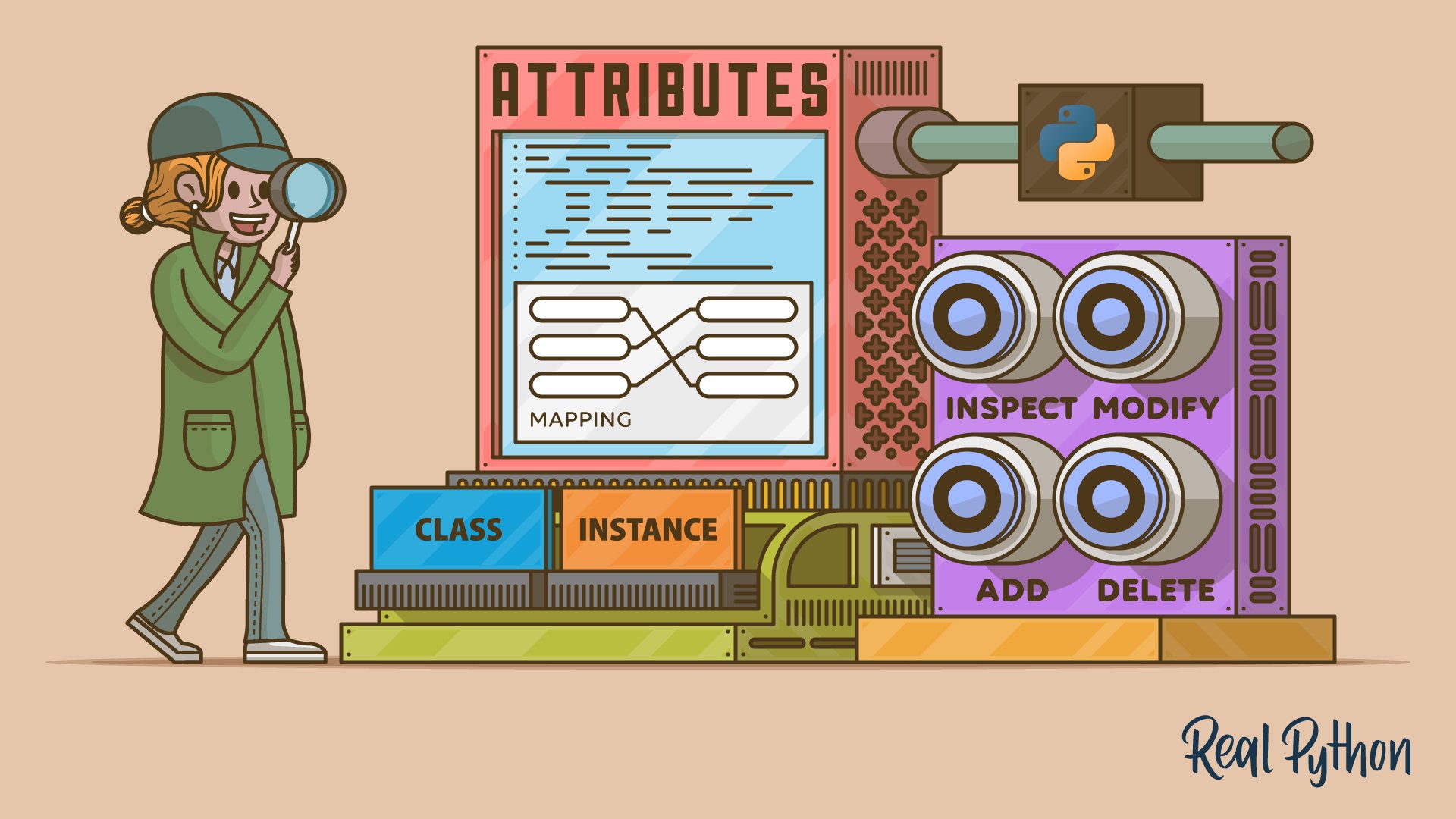
Working With Python's .__dict__ Attribute
Explore Python's .__dict__ attribute to manage class and instance attributes directly for more flexible, low-level control of your objects.
Interactive Quiz
Using Python's .__dict__ to Work With Attributes
Course
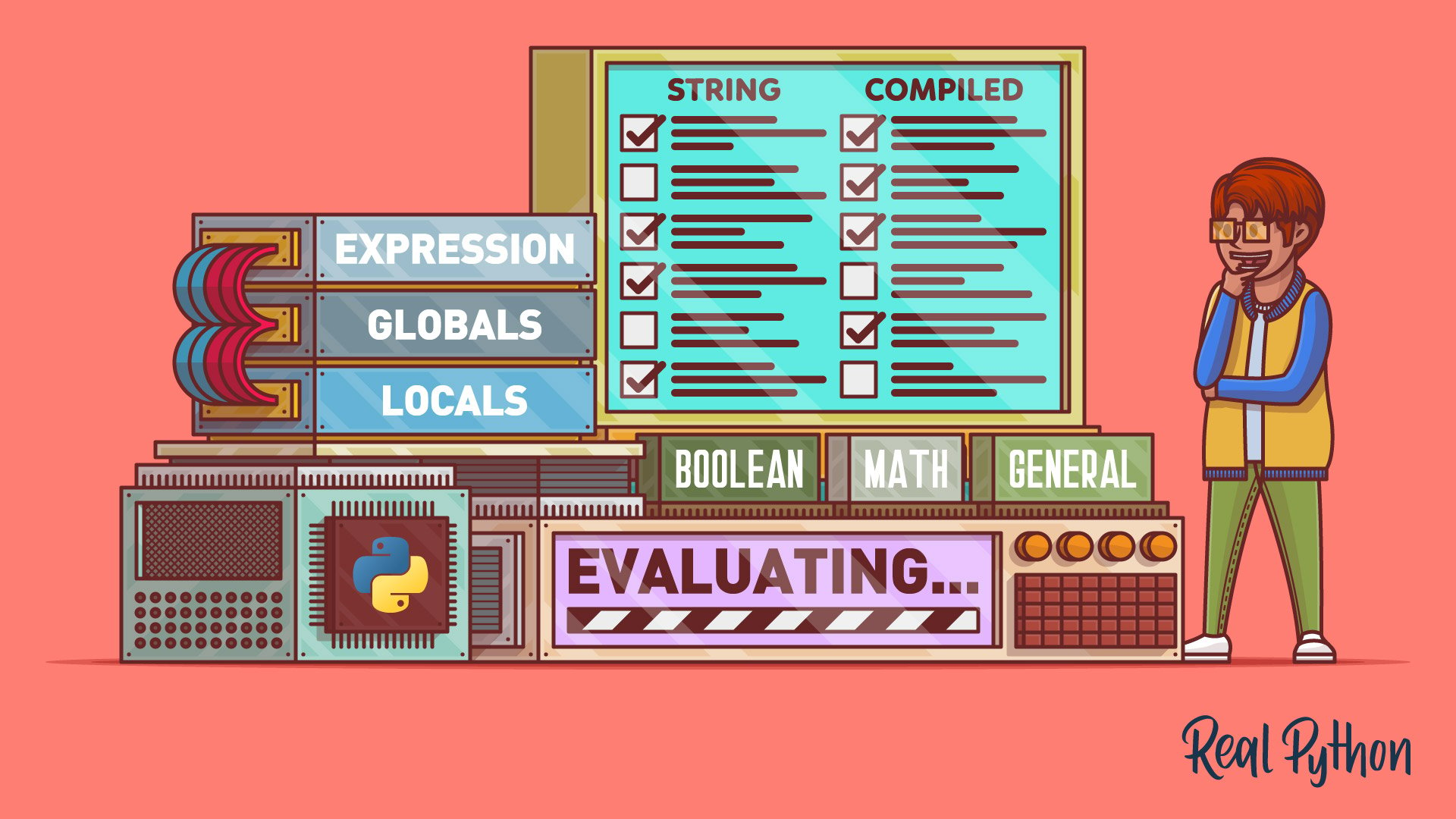
Evaluate Expressions Dynamically With Python eval()
Learn how Python's eval() works and how to use it effectively in your programs. Additionally, you'll learn how to minimize the security risks associated to the use of eval().
Tutorial
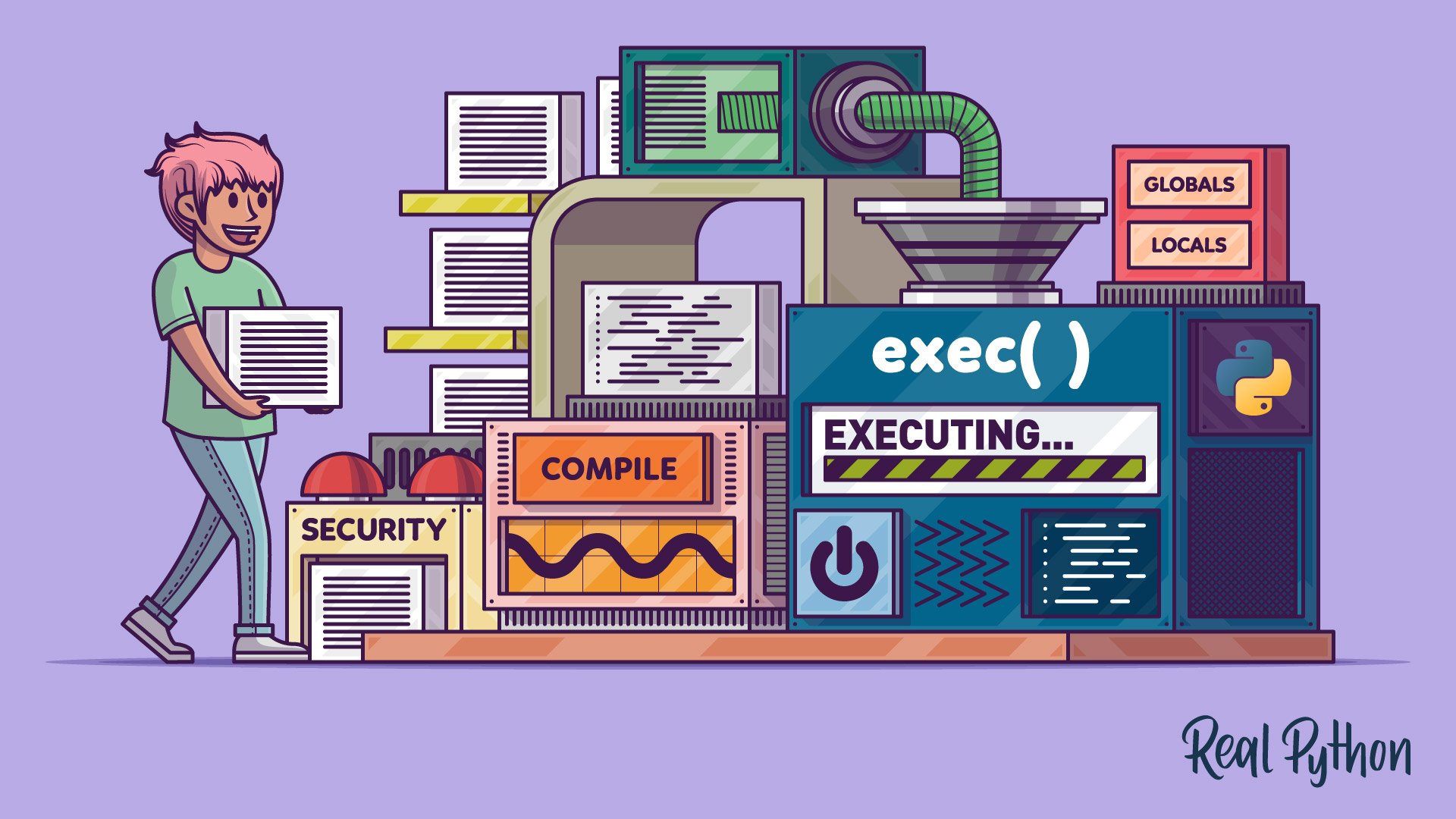
Python's exec(): Execute Dynamically Generated Code
Learn how to use Python's built-in exec() function to execute code that comes as either a string or a compiled code object.
Congratulations on completing this learning path! You’ve explored Python’s metaprogramming tools, from descriptors and metaclasses to interfaces and protocols, and on to runtime introspection and dynamic code execution.
Continue your advanced Python journey with the next learning path:

Learning Path
Network Programming and Security
5 Resources ⋅ Skills: CRUD Operations, REST APIs, HTTPS, Socket Programming, Cryptography, Network Security, Web Services
You might also be interested in these related learning paths:
Got feedback on this learning path?
Looking for real-time conversation? Visit the Real Python Community Chat or join the next “Office Hours” Live Q&A Session. Happy Pythoning!
