

Locked learning resources

Join us and get access to thousands of tutorials and a community of expert Pythonistas.

Unlock This Lesson

Locked learning resources

This lesson is for members only. Join us and get access to thousands of tutorials and a community of expert Pythonistas.

Unlock This Lesson

Downloading Files From URLs With Python (Summary)

You can use Python to automate your file downloads or to have better control and flexibility over this process. Python offers several options for downloading files from URLs that cater to different scenarios, such as downloading large files, multiple files, or files behind gated web pages that require authentication.

In this video course, you’ve learned the steps to download files in Python, including how to:

  • Download files from the internet using both built-in and external libraries in Python
  • Perform data streaming and download large files in smaller, more manageable chunks
  • Use a pool of threads to fetch multiple files concurrently
  • Download multiple files asynchronously when performing bulk downloads

In addition, you’ve seen how to use the requests library for its streaming and parallel downloading capabilities. You’ve also seen examples using the aiohttp and asyncio libraries for concurrent requests and asynchronous downloads to improve download speeds for multiple files.

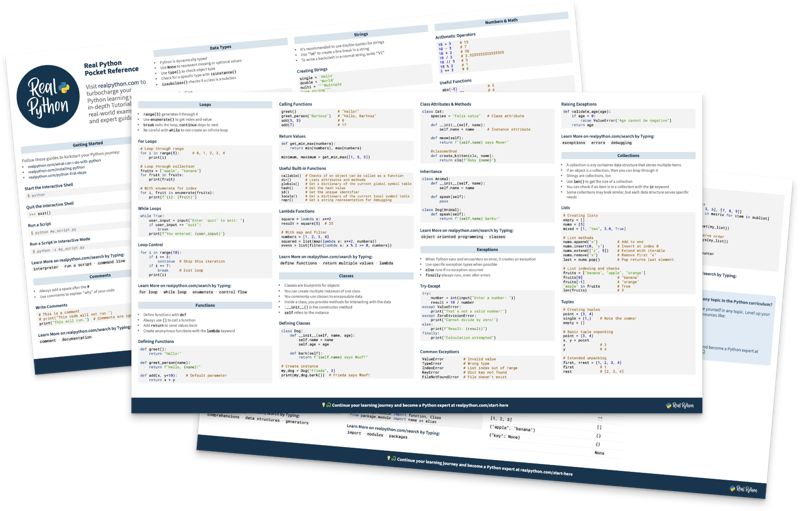
Resources mentioned in this lesson:
Locked learning resources

Join us and get access to thousands of tutorials and a community of expert Pythonistas.

Unlock This Lesson

Already a member? Sign-In

Locked learning resources

The full lesson is for members only. Join us and get access to thousands of tutorials and a community of expert Pythonistas.

Unlock This Lesson

Already a member? Sign-In

00:00 You now have a solid grasp of two different ways to download files.

00:04 You learned how to use the built-in urllib for zero-dependency tasks and the requests library for a more powerful, developer-friendly experience.

00:13 You also understand the mechanics of streaming, which is how you handle downloading large files efficiently. Most importantly, you now have the criteria to choose the right tool for the job.

00:24 Let’s look at some practical scenarios where these skills are essential in the real world. Downloading files is rarely a standalone task. It’s usually a part of a larger system.

00:35 You might have to write a script to automate data collection, essentially creating a bot that archives daily reports or backs up the server logs every night.

00:44 Downloading files is also an important part of building web scrapers. If you’re scraping an e-commerce site, you need to download the product images and save them locally.

00:54 For data analysis, you often need to fetch large CSVs or datasets programmatically from a repository before you can start working with pandas.

01:04 Finally, if you’re integrating with REST APIs, you’ll often encounter endpoints that generate exports like PDF or Excel sheets that you need to download and manage.

01:15 If you want to go beyond what you’ve learned in this course, I’ve curated a few topics that I think are the logical next steps for your learning journey. You can do an in-depth dive into the requests library or learn more about the urllib standard library.

01:30 And finally, you should look into Python’s pathlib module, which is the modern, object-oriented way to handle file paths and directories, making your file management code much cleaner and less error-prone.

01:43 Thank you for watching this course on Downloading Files From URLs With Python. I hope you now feel confident in your ability to download data from the web, whether it’s a tiny text or a big binary dataset. Good luck with your projects, and happy coding.

Become a Member to join the conversation.