
Loading video player…

Start Building With FastAPI (Overview)

FastAPI is a web framework for building APIs with Python. It leverages standard Python type hints to provide automatic validation, serialization, and interactive documentation. When you’re deciding between Python web frameworks, FastAPI stands out for its speed, developer experience, and built-in features that reduce boilerplate code for API development:

Use Case Pick FastAPI Pick Flask or Django
You want to build an API-driven web app
You need a full-stack web framework
You value automatic API documentation

Whether you’re building a minimal REST API or a complex backend service, understanding core features of FastAPI will help you make an informed decision about adopting it for your projects. To get the most from this video course, you’ll benefit from having basic knowledge of Python functions, HTTP concepts, and JSON handling.
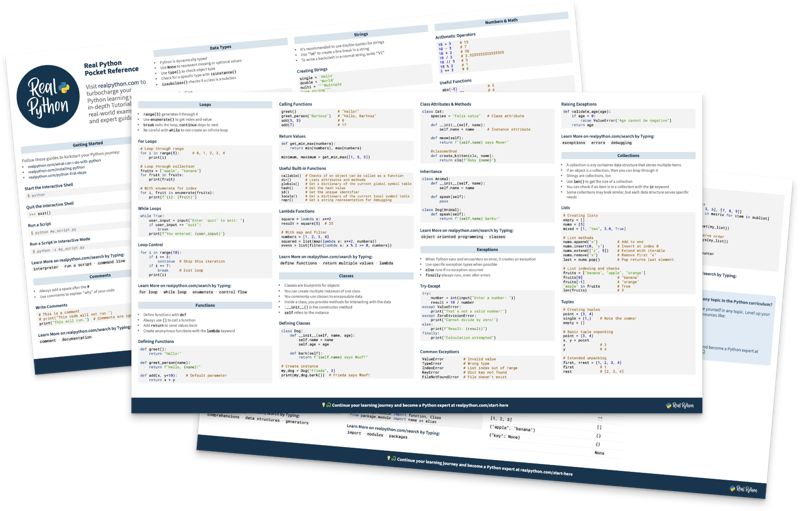
Download

Course Slides (.pdf)

858.0 KB
Download

Sample Code (.zip)

4.9 KB

00:00 Welcome to Start Building With FastAPI. My name is Christopher, and I will be your guide.

00:06 This course is about FastAPI, a framework for creating web-based REST API services. Along with learning about the core parts of the framework, you’ll also learn a bit about Pydantic, a data validation library that FastAPI uses to deal with data.

00:22 You’ll also learn about the variety of HTTP methods used to do create, read, update, and delete operations on data in REST, and how to use FastAPI’s built-in autodocumentation feature, a web interface you can use to interact with your API service.

00:40 The code in this course was tested using Python 3.14.2 and the standard FastAPI package version 0.128.0. I’m not doing anything terribly fancy, so if you’re not using the latest, you’re probably okay if you stick with a supported version.

00:58 The web can be more than just web pages. You can use the same technology to write programmatic interfaces as well. One of the more common ways of doing that is to build a REST-based API.

01:09 REST is a protocol that uses the same HTTP mechanisms your browser does, using URLs and HTTP message bodies for the exchange of data. Fast API is a framework for writing REST-based services, and it works by using function decorators to map a URL to some corresponding code. It takes care of handling the protocol, including serializing and deserializing your data, so that you can concentrate on the functional parts of your service. Fast API supports embedding variables into URLs known as URL arguments, as well as URL query parameters, basically treating them as arguments to your function, so you don’t have to think about them too much.

01:50 And it integrates with the Pydantic library for data validation, so you don’t have to worry if the client sent you something malformed. If all that’s not enough, it automatically generates a Swagger UI-based interface for your API, giving your users the ability to interact with the API directly in a browser, which helps to document your API, as well as provide a way to experiment with it, or let’s be real, to debug it.

02:17 Next up, I’ll dive right in and show you: “Hello, world!”, FastAPI style.

Become a Member to join the conversation.