Concurrency and Async Programming
Learning Path ⋅ Skills: Python, Concurrency, Async IO, Global Interpreter Lock, Thread Safety, Parallel Processing, Performance Optimization, Multithreading, Async Iterators, Free Threading
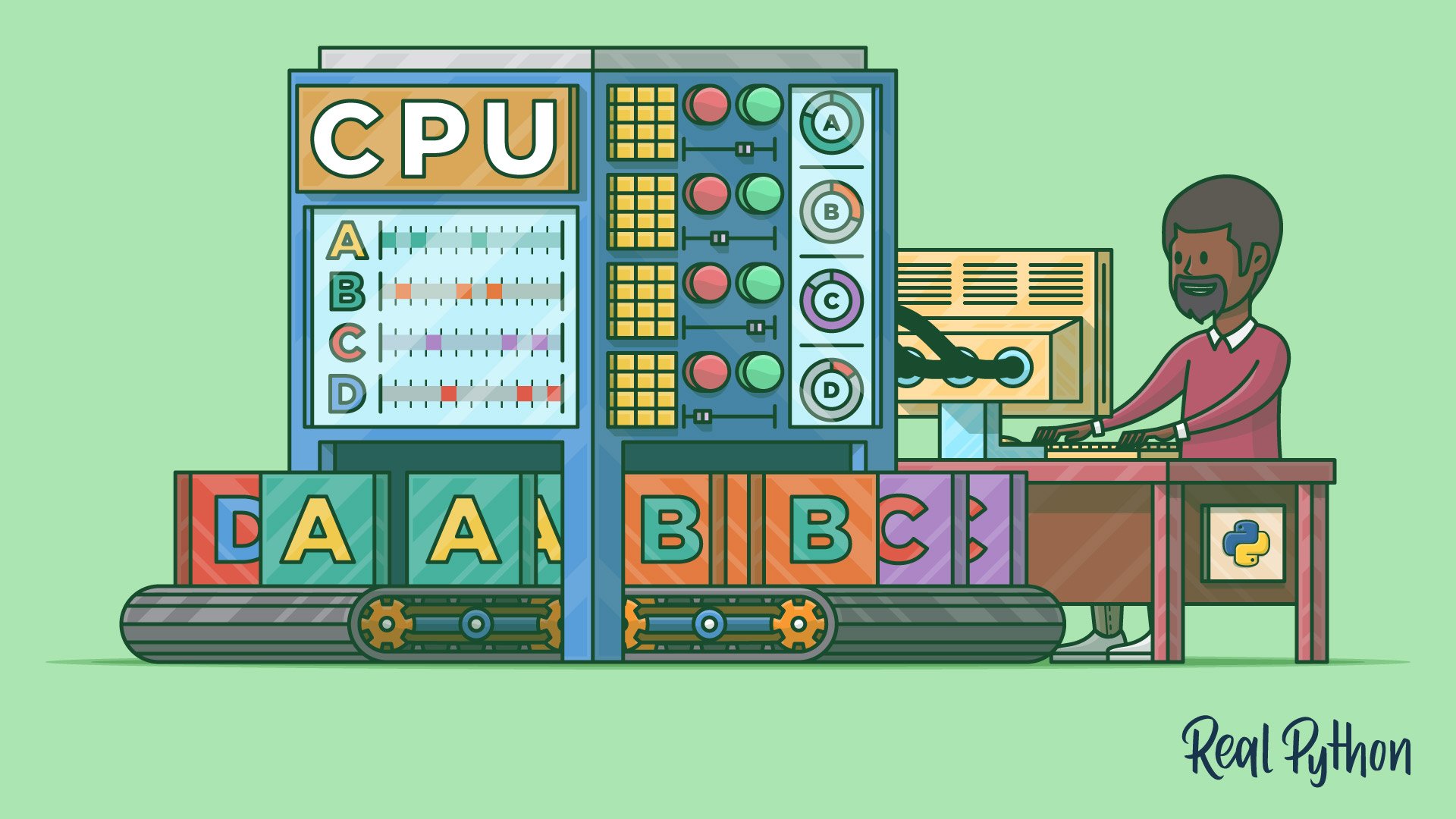
Python can do more than one thing at a time, but which tool you reach for depends on whether your work is I/O-bound or CPU-bound. You’ll start with an overview of Python’s concurrency options, then dig into the GIL that shapes all of them. From there, you’ll write threaded code and keep it safe with locks, build asynchronous programs with async/await and asyncio, and finish with parallel processing and free-threaded Python.
Concurrency and Async Programming
Learning Path ⋅ 10 Resources
Understanding Python Concurrency
Before diving deep, get an overview of what concurrency means in Python. You’ll learn about the different approaches to running code concurrently and when to use each one.
Course
Speed Up Python With Concurrency
Learn what concurrency means in Python and why you might want to use it. You'll see a simple, non-concurrent approach and then look into why you'd want threading, asyncio, or multiprocessing.
Interactive Quiz
Python Concurrency
The Global Interpreter Lock (GIL)
You’ve seen what concurrency means in Python and which approach suits which kind of work. Next, you’ll look at the GIL, the CPython lock that decides how much those approaches can actually speed up your code. Understanding it explains the threading and async trade-offs you’ll meet through the rest of this path.

Course
Understanding Python's Global Interpreter Lock (GIL)
Python's Global Interpreter Lock or GIL, in simple words, is a mutex (or a lock) that allows only one thread to hold the control of the Python interpreter at any one time. In this video course you'll learn how the GIL affects the performance of your Python programs.
Interactive Quiz
What Is the Python Global Interpreter Lock (GIL)?
Working With Threads
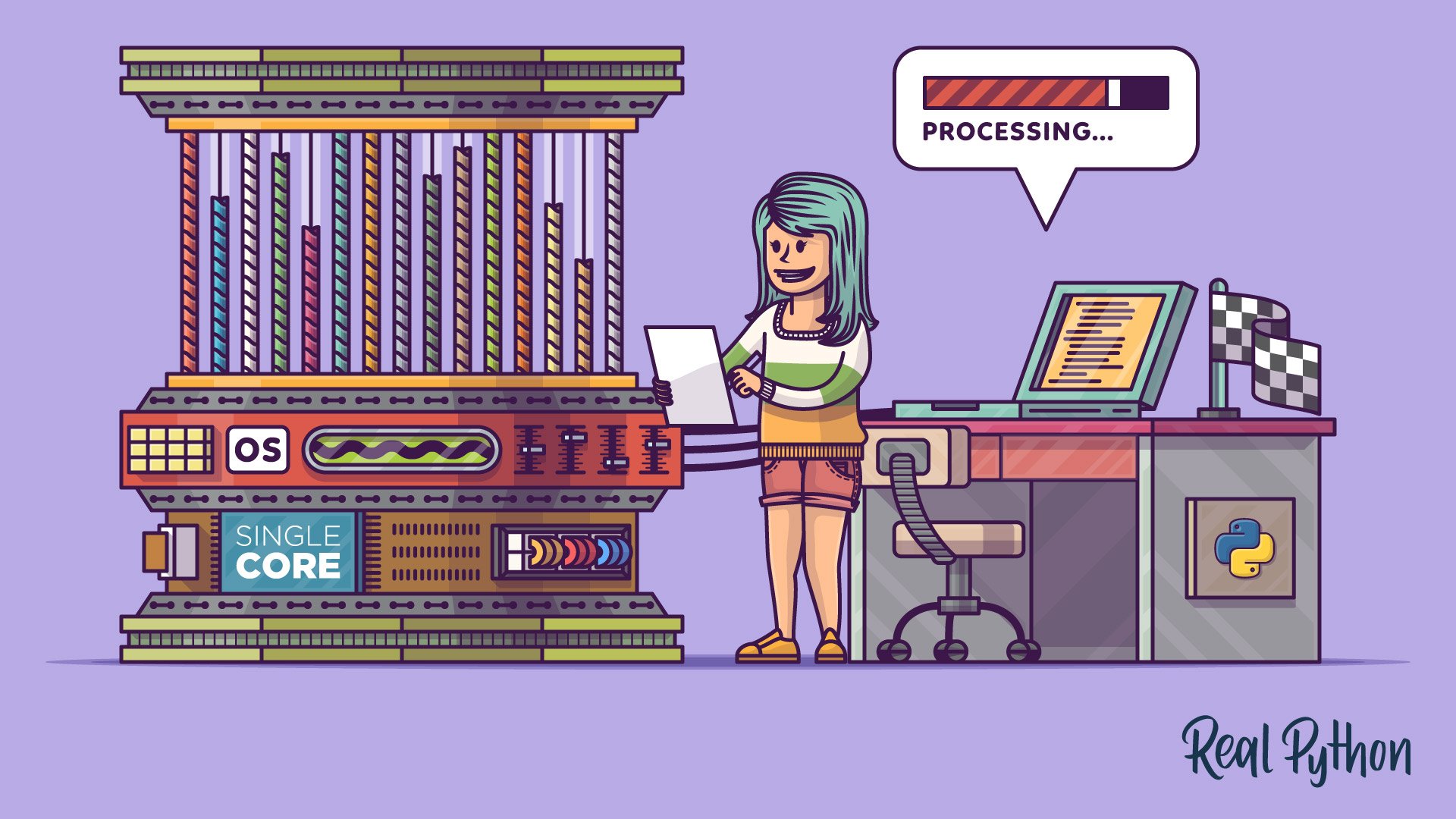
Now that you know why only one thread runs Python bytecode at a time, you can see where threads still pay off, namely I/O-bound work. You’ll use Python’s threading module, then guard shared state with locks and other techniques that keep race conditions out of your code.
Course
Threading in Python
In this intermediate-level course, you'll learn how to use threading in your Python programs. You'll see how to create threads, how to coordinate and synchronize them, and how to handle common problems that arise in threading.
Interactive Quiz
Python Threading

Course
Thread Safety in Python: Locks and Other Techniques
Learn about the issues that can occur when your code is run in a multithreaded environment. Then you'll explore the various synchronization primitives available in Python's threading module, such as locks, which help you make your code safe.
Interactive Quiz
Python Thread Safety: Using a Lock and Other Techniques
Asynchronous Programming With asyncio
Threads share memory, so you have to lock it. Async programming takes the other route, running I/O-bound work cooperatively in one thread. You’ll trace how coroutines grew out of generators, write async/await code with asyncio, and build asynchronous iterators and iterables of your own.
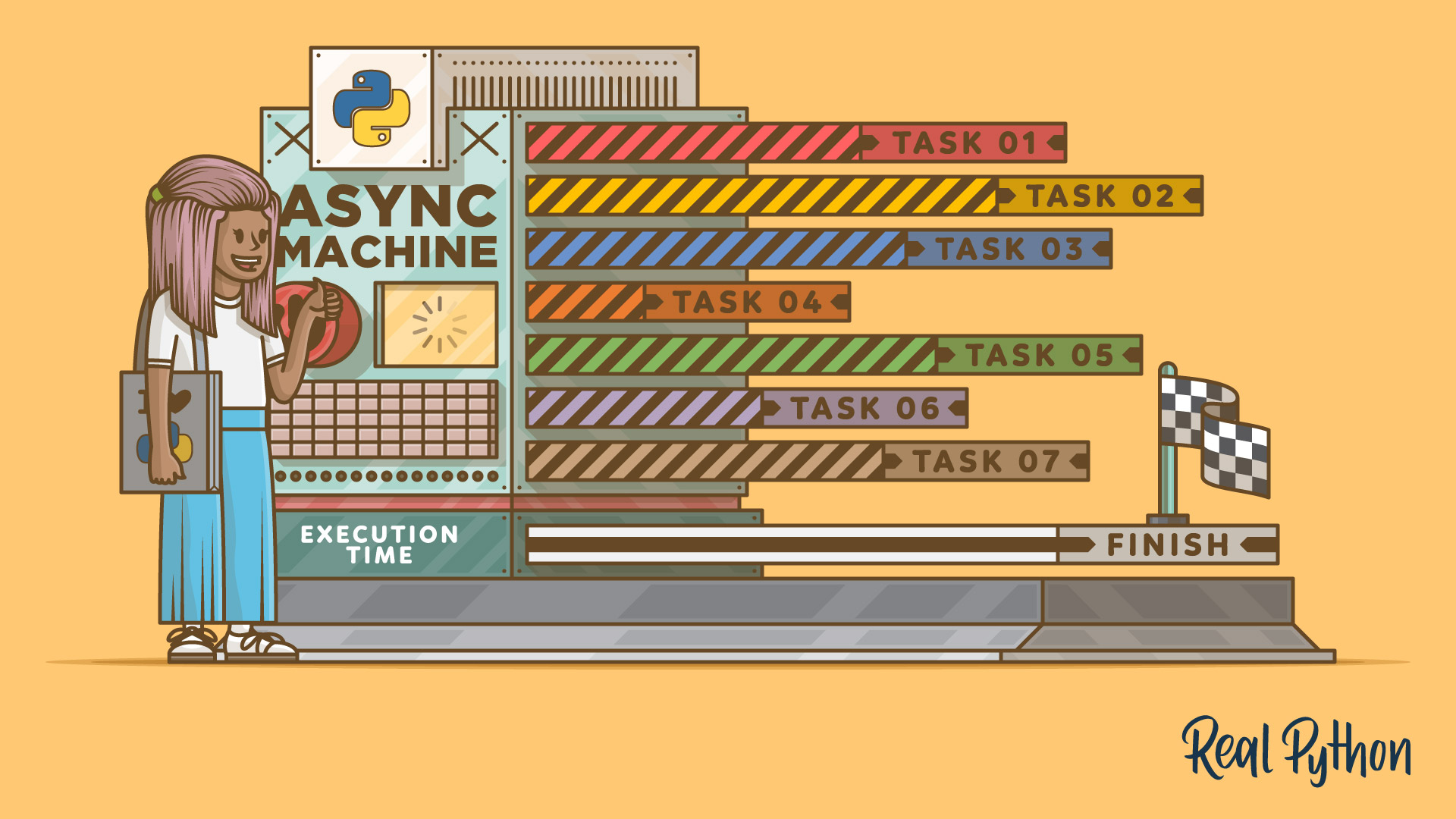
Tutorial
Async Programming in Python: From Generators to asyncio
Learn how Python async programming works. Write async functions with async and await, and run slow I/O operations concurrently with asyncio.
Interactive Quiz
Async Programming in Python: From Generators to asyncio
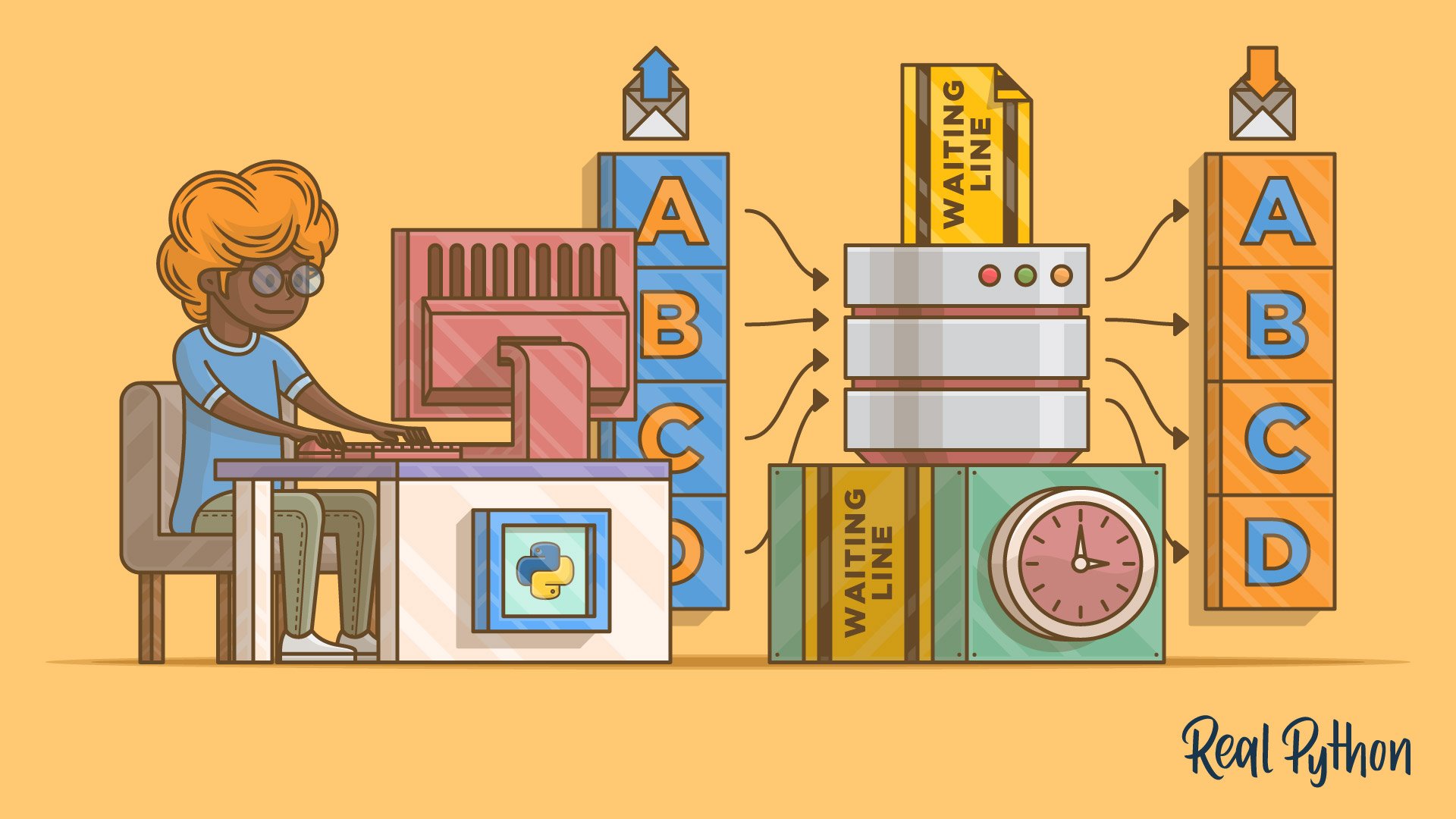
Course
Hands-On Python 3 Concurrency With the asyncio Module
Learn how to speed up your Python 3 programs using concurrency and the asyncio module in the standard library. See step-by-step how to leverage concurrency and parallelism in your own programs, all the way to building a complete HTTP downloader example app using asyncio and aiohttp.
Interactive Quiz
Python's asyncio: A Hands-On Walkthrough

Course
Exploring Asynchronous Iterators and Iterables
Learn to build async iterators and iterables in Python to handle async operations efficiently and write cleaner, faster code.
Interactive Quiz
Asynchronous Iterators and Iterables in Python
Going Beyond the GIL
For CPU-bound tasks, you’ll need to bypass the GIL. Learn about parallel processing techniques and Python 3.13’s new free-threading capabilities.
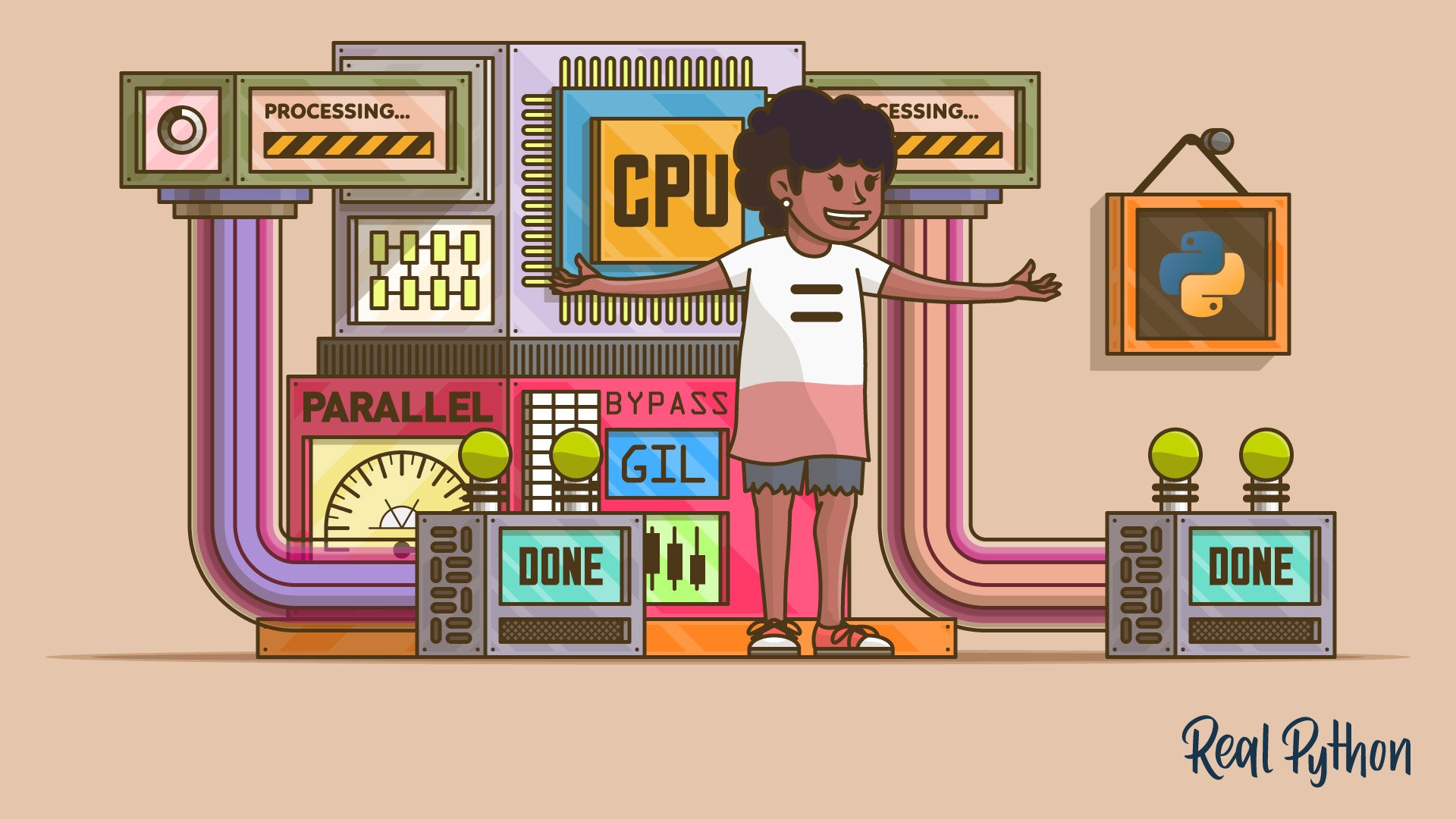
Tutorial
Bypassing the GIL for Parallel Processing in Python
In this tutorial, you'll take a deep dive into parallel processing in Python. You'll learn about a few traditional and several novel ways of sidestepping the global interpreter lock (GIL) to achieve genuine shared-memory parallelism of your CPU-bound tasks.
Interactive Quiz
Bypassing the GIL for Parallel Processing in Python

Tutorial
Python 3.13: Free Threading and a JIT Compiler
Python 3.13 enhanced Python performance. Make a custom Python build with Docker to enable free threading and a JIT compiler. Learn how these features affect the language's ecosystem.
Interactive Quiz
Python 3.13: Free Threading and a JIT Compiler

Test Your Knowledge
You’ve made it through the entire path! In the wrap-up quiz below, you’ll
revisit the most important ideas about Python concurrency, the GIL, threading,
thread safety, asyncio, async iterators, and free-threaded Python 3.13. Use
it to spot any topics that still feel rusty before moving on.
Interactive Quiz
Concurrency and Async Programming
Test your understanding of Python concurrency, the GIL, threading, thread safety, asyncio, async iterators, and free-threaded Python 3.13.
Congratulations on completing this learning path! You’ve learned how Python handles concurrency, from the fundamentals through threading, async programming, and strategies for bypassing the GIL.
Continue your advanced Python journey with the next learning path:

Learning Path
Database Access With Python
9 Resources ⋅ Skills: SQL Libraries, SQLite, SQLAlchemy, Redis, MySQL, MongoDB, ChromaDB, Data Management, NoSQL Databases, Vector Databases, DuckDB, TinyDB, SQL Security
You might also be interested in these related learning paths:
Got feedback on this learning path?
Looking for real-time conversation? Visit the Real Python Community Chat or join the next “Office Hours” Live Q&A Session. Happy Pythoning!