Real Python vs DataCamp: Which Fits Your Python Learning Goals?
You want to level up your Python skills and you’re looking for the right platform to help you achieve your goals. Both Real Python and DataCamp offer valuable learning experiences, but which one will accelerate your progress most effectively? In this article, you’ll learn how Real Python and DataCamp differ in helping you master Python and apply it confidently in your work. Find out where to invest your time and money to get the results you need.
You’ll look at Real Python’s Personal membership and DataCamp Premium for individuals. You won’t cover Team subscriptions on either platform, live bootcamps, and non-Python catalogs beyond how they affect value. You’ll see some brief notes about team and seat features for context with pointers to documentation.
At‑a‑Glance Recommendation
Choose a Real Python Membership if you want to become a trusted Python expert, stay current as Python evolves, and get direct guidance from experienced Python professionals who can accelerate your learning and help you overcome obstacles.
Pick DataCamp Premium if you want to laser-focus on data science skills and you need industry certifications and learning resources that are focused primarily on a data science career.
| Use Case | Real Python | DataCamp |
|---|---|---|
| You want to master Python deeply and stay aligned with the language’s evolution | ✅ | ❌ |
| You want to build data science skills with industry certifications | ❌ | ✅ |
A Real Python membership helps you become a Python expert with live support from professionals, while DataCamp Premium helps you build data science skills.
If you’re unsure about which platform is right for you, then start with a free trial at Real Python or a monthly plan at DataCamp (which doesn’t offer a free trial for Premium), then validate your outcome by trying to learn a specific topic or complete a concrete micro‑project.
Tip: Start a free trial to assess Real Python for your learning journey.
If you want more details to support these quick and broad suggestions then keep reading!
Review Criteria
Before talking specifics, it helps to consider which features deliver an effective continuous learning experience that produces real results. Python and the software world evolve quickly, so you need a platform that helps you grow your expertise and stay relevant over time.
In this comparison of Real Python vs DataCamp, you’ll explore criteria that determine how quickly you’ll gain practical Python skills and how confidently you’ll apply them in your work:
- Curriculum depth and Python coverage
- Learning modalities (video, text, interactive)
- Review rigor and technical accuracy
- Practice and feedback (quizzes and projects)
- Update cadence and Python version alignment
- Instructor quality, pedagogy, and accessibility
- Community and human support
- Pricing and total value
To measure these criteria, the article relies on publicly available information from both platforms listed in the Evidence Locker.
Metrics Comparison Table
In this section, you’ll compare metrics relevant to the considered criteria side by side so you can see trade‑offs quickly:
| Metric | Real Python | DataCamp Premium |
|---|---|---|
| Python Content Size | Python‑only library with 700+ written tutorials and 4,400+ video lessons, with new content weekly. | 170+ Python-specific courses. |
| Learning Modalities | Written tutorials, video courses, live courses, podcasts, quizzes, coding exercises, and community Q&A. | Text and video lessons, browser-based exercises. |
| Quality Assurance | Documented professional multi‑stage editorial process by Python experts and editors. | Courses developed by instructors with an automated quality check process. |
| Content Freshness | Weekly publishing of 2 tutorials, 1 video course, 1 podcast episode, multiple quizzes, and more. | Ongoing course updates noted on page, cadence varies by course. |
| Python Version Alignment | Coverage of Python 3.14 changes and news. | Python courses don’t consistently specify exact versions used. |
| Guided Learning | Curated skill- and career-focused Learning Paths centered around the Python ecosystem. | Career Tracks and courses focused primarily on data science roles. |
| Interactive Exercises | Quizzes and 220+ in-browser coding exercises with automated tests and progressive hints. | Browser‑based coding exercises and projects. |
| Certificates of Completion | Shareable certificates per completed course. | Course certificates plus industry certifications. |
| Accessibility | Screen reader accessible, all videos have subtitles and transcripts. | Documented commitment to WCAG 2.1 Level AA compliance. |
| Price | Free trial, then monthly and annual membership subscriptions, discount offered for annual plans. | Monthly and annual membership subscriptions, discount offered for annual plans. |
| Team Features | Admin dashboard, analytics, and seat assignment. | Admin dashboard, reporting, and content assignments. |
| Community and Office Hours | Private community chat and live Office Hours directly with the Real Python team. | Competitions, webinars and events, forums deprecated. |
Takeaway: Real Python helps you become a trusted Python expert through deep, current content and direct access to professionals, while DataCamp Premium helps you build data science skills with structured tracks and industry certifications.
Walkthrough: Learn a Topic
Numbers and metrics aside, what counts most is how effectively you’ll actually learn and retain new concepts so you can apply them confidently in your work.
In this section, you’ll see how each platform helps you master a challenging Python topic and what learning experience you can expect.
Python decorators are an amazingly useful feature in Python, but can appear quite arcane at first:
>>> def do_twice(func):
...     def wrapper_do_twice(*args, **kwargs):
...         func(*args, **kwargs)
...         func(*args, **kwargs)
...     return wrapper_do_twice
...

>>> @do_twice
... def greet(name):
...     print(f"Hello, {name}!")
...

>>> greet("World")
Hello, World!
Hello, World!
Now you’ll see how you’d go about to deeply understand Python decorators on Real Python vs DataCamp.
Studying Python Decorators With Real Python
At Real Python you immerse yourself in a topic and explore it deeply with a variety of learning modalities, such as video courses, written tutorials, interactive quizzes, quick references, and podcast interviews.
Start by typing decorator into the Real Python search box:
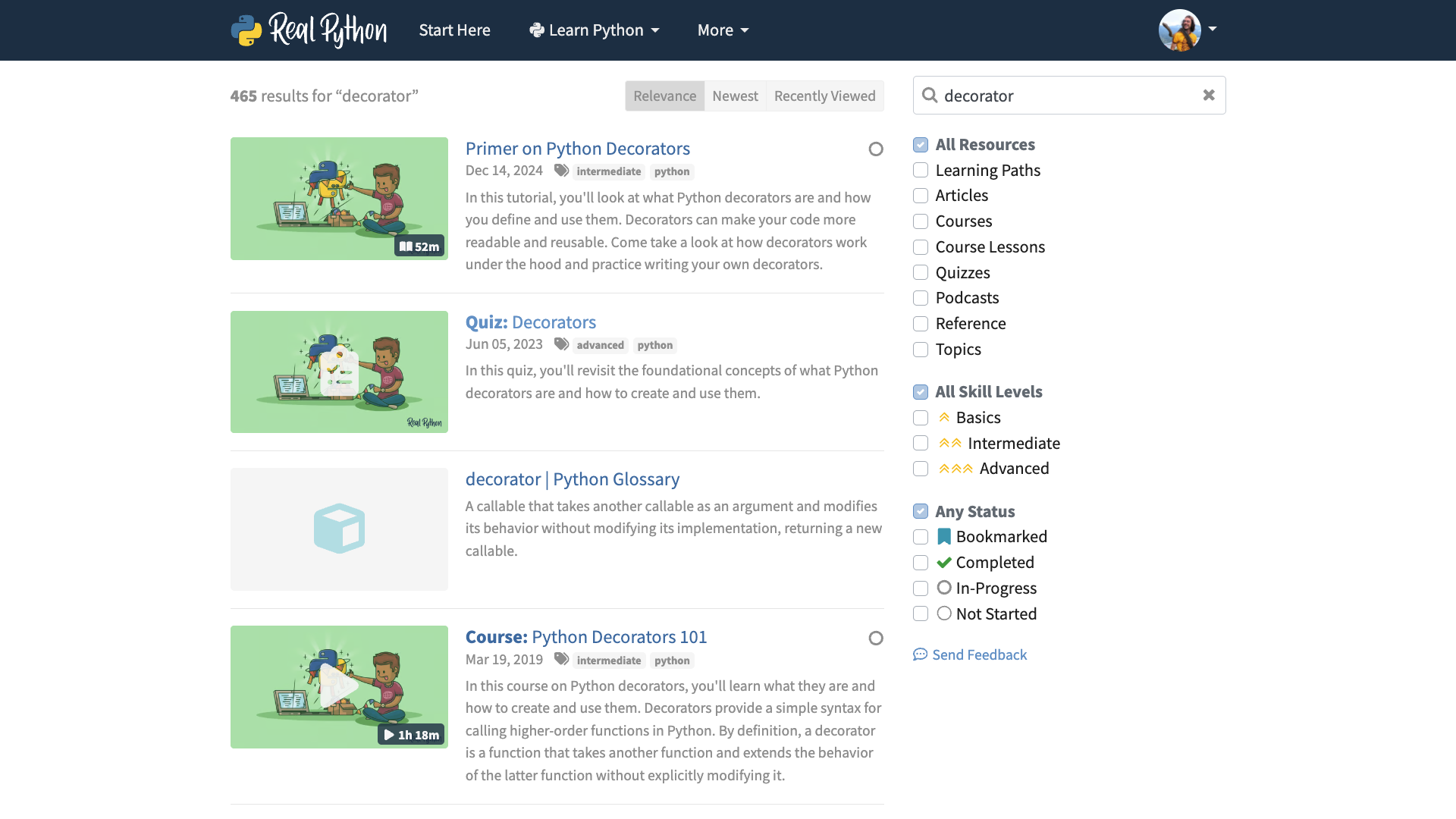
With that search, you’ll find 465 results that cover a variety of different learning types and resources.
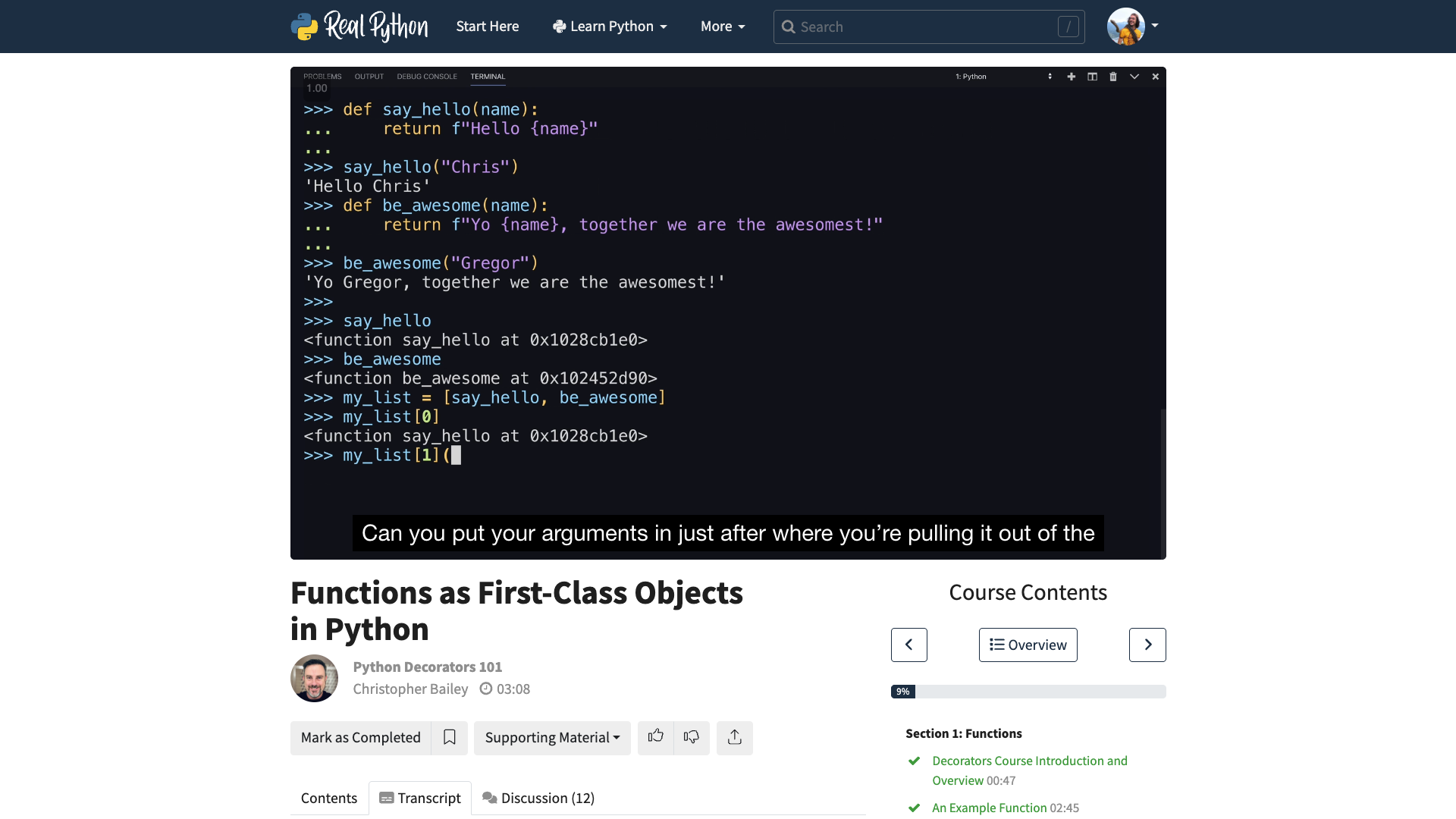
A step-by-step video course features expert instructors that explain concepts with slides and live-coding to showcase real world scenarios and get you up to speed quickly. Each bite-sized lesson that you can complete in just a few minutes at a time also comes with clickable, timestamped transcripts to read along and revisit key moments:
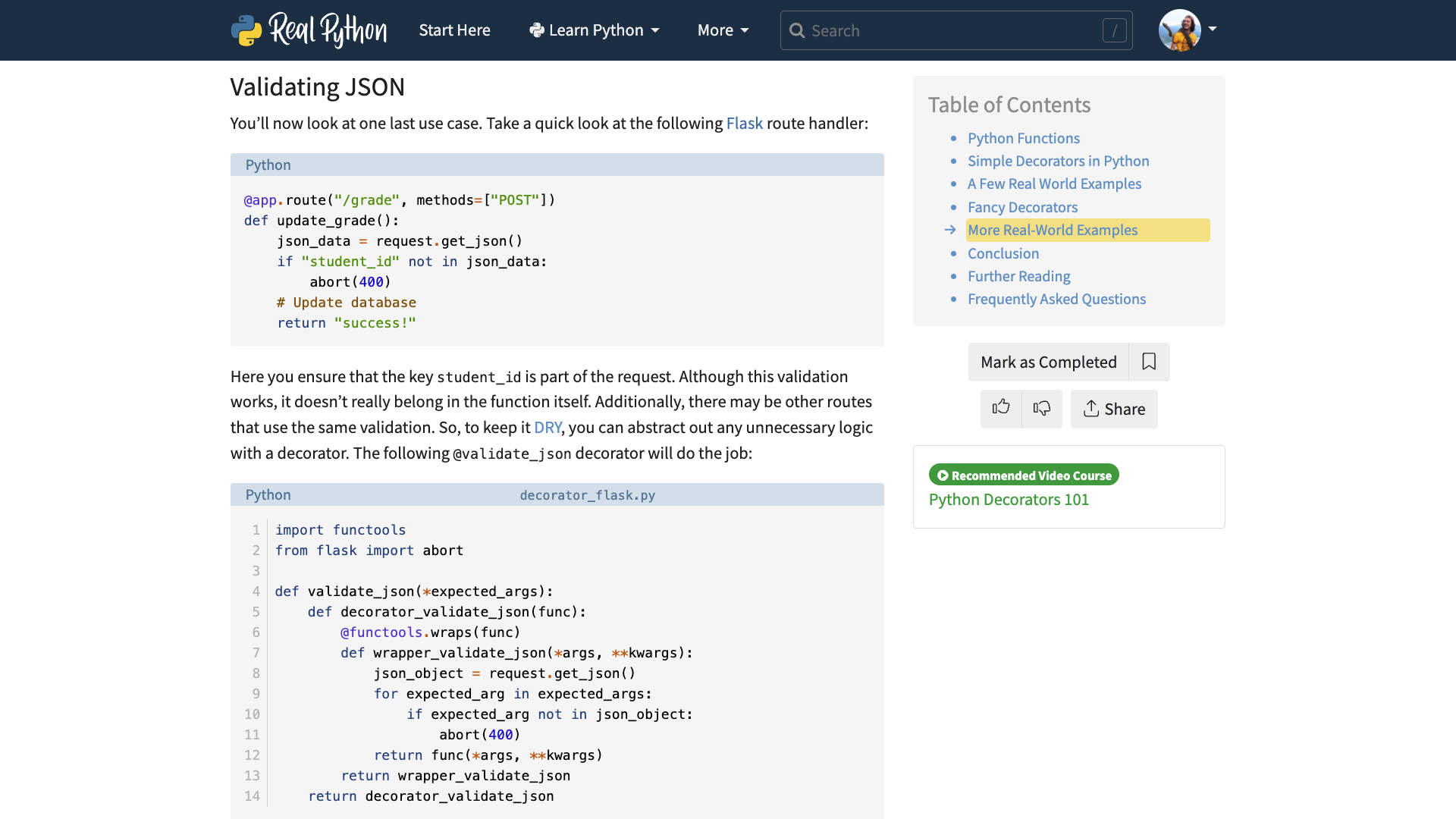
An in-depth article allows you to explore real world decorator use cases in great detail, with copyable code snippets:
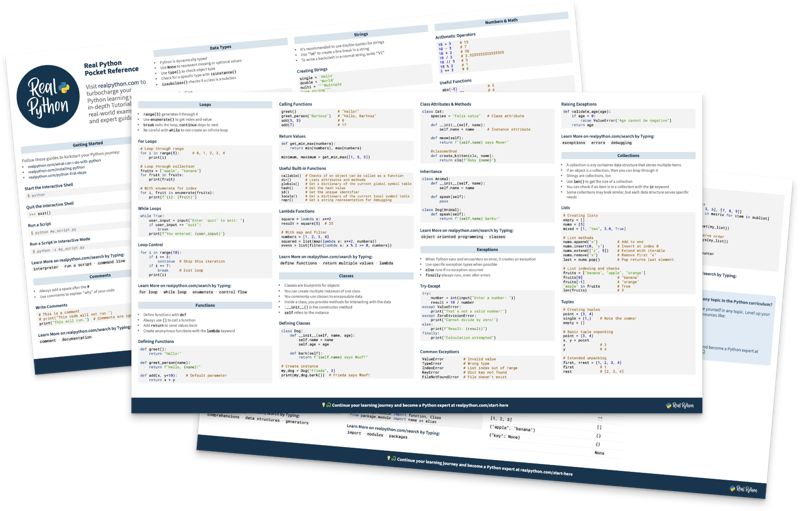
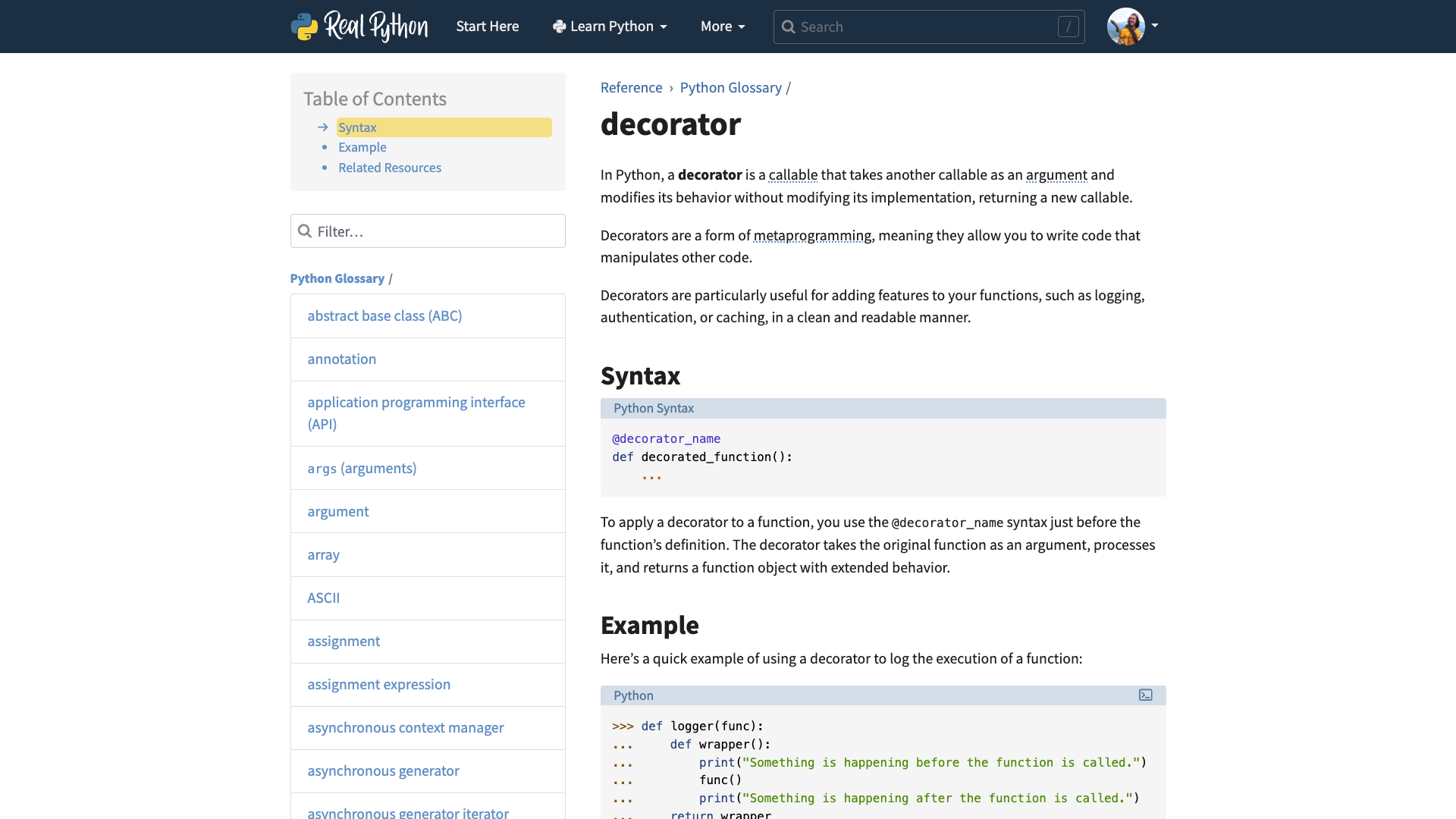
A quick reference article presents a high-level overview and helps you revisit and remember important concepts effectively:
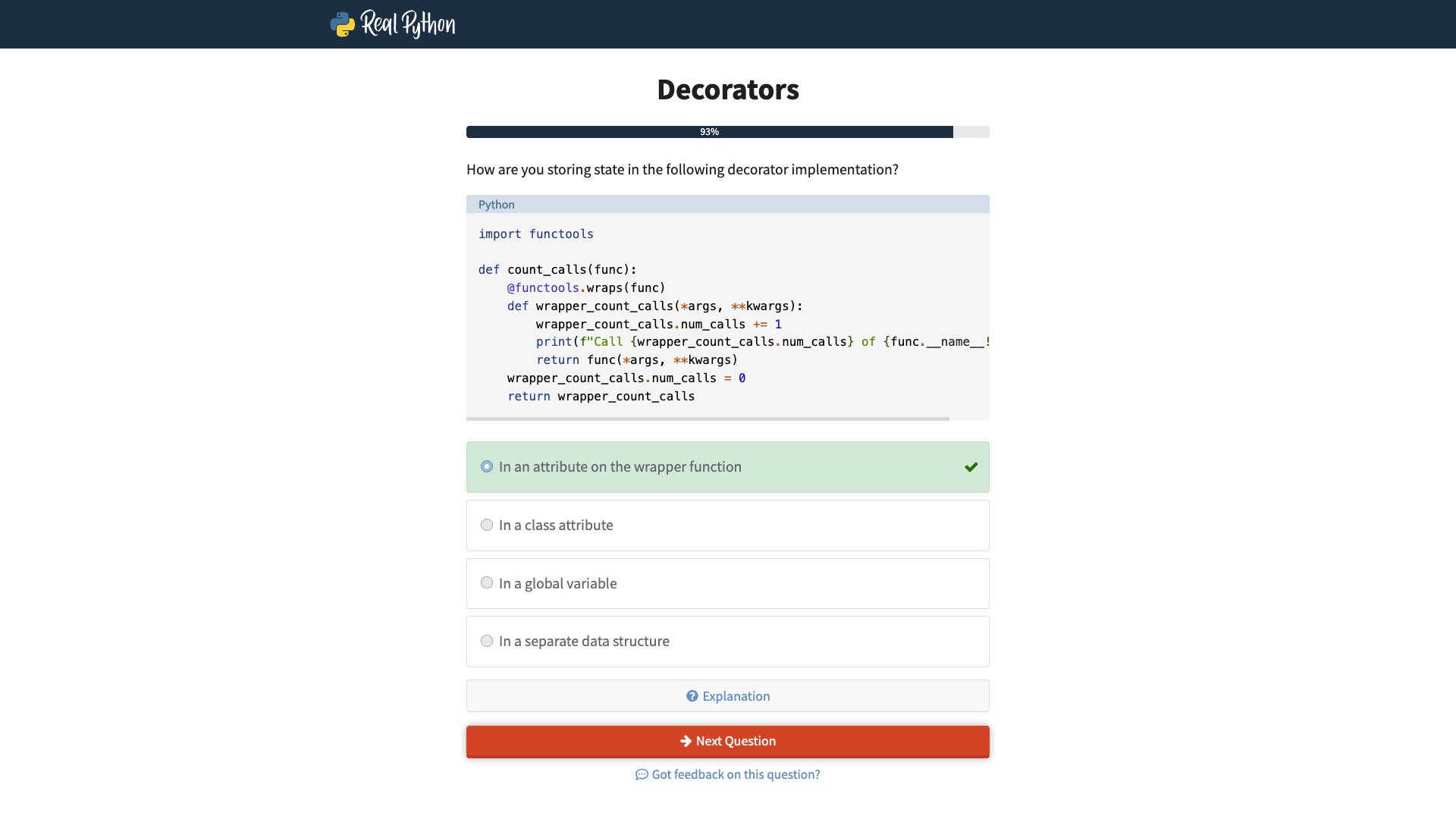
An interactive quiz gives you a chance to test your knowledge of Python decorators:
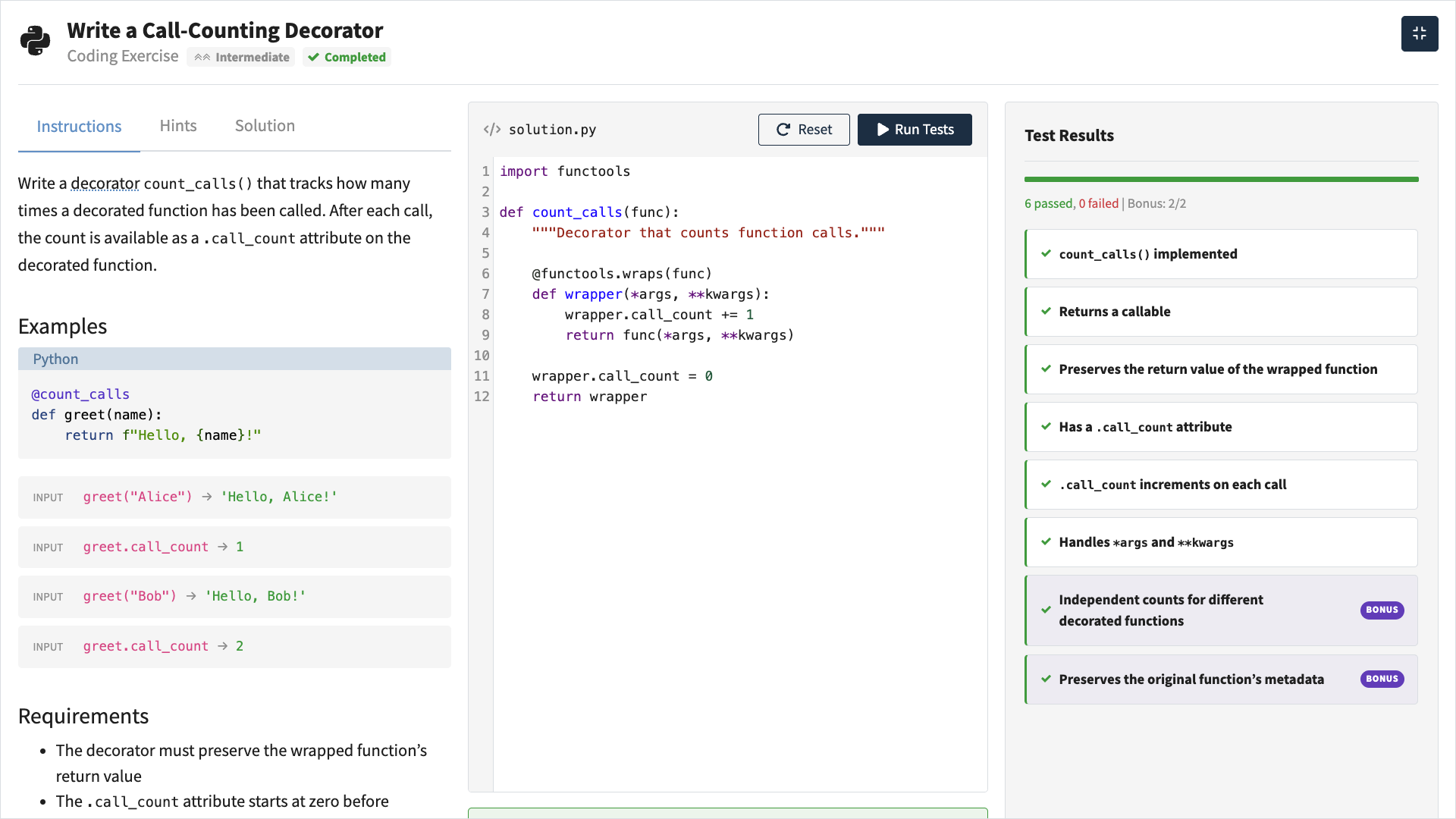
Coding exercises embedded in the course let you practice writing decorators directly in the browser. Each exercise presents a clearly scoped task with starter code and automated tests that give you immediate feedback. If you get stuck, progressive hints guide your thinking without giving away the answer, and once you submit a passing solution, you can compare it with a reference solution and detailed notes:
A Q&A transcript from a Real Python Community Chat event records expert knowledge where our staff of Python experts answered members’ questions about decorators.
You’ll also find more tutorials and courses that leverage decorators in practice for writing clean and Pythonic code.
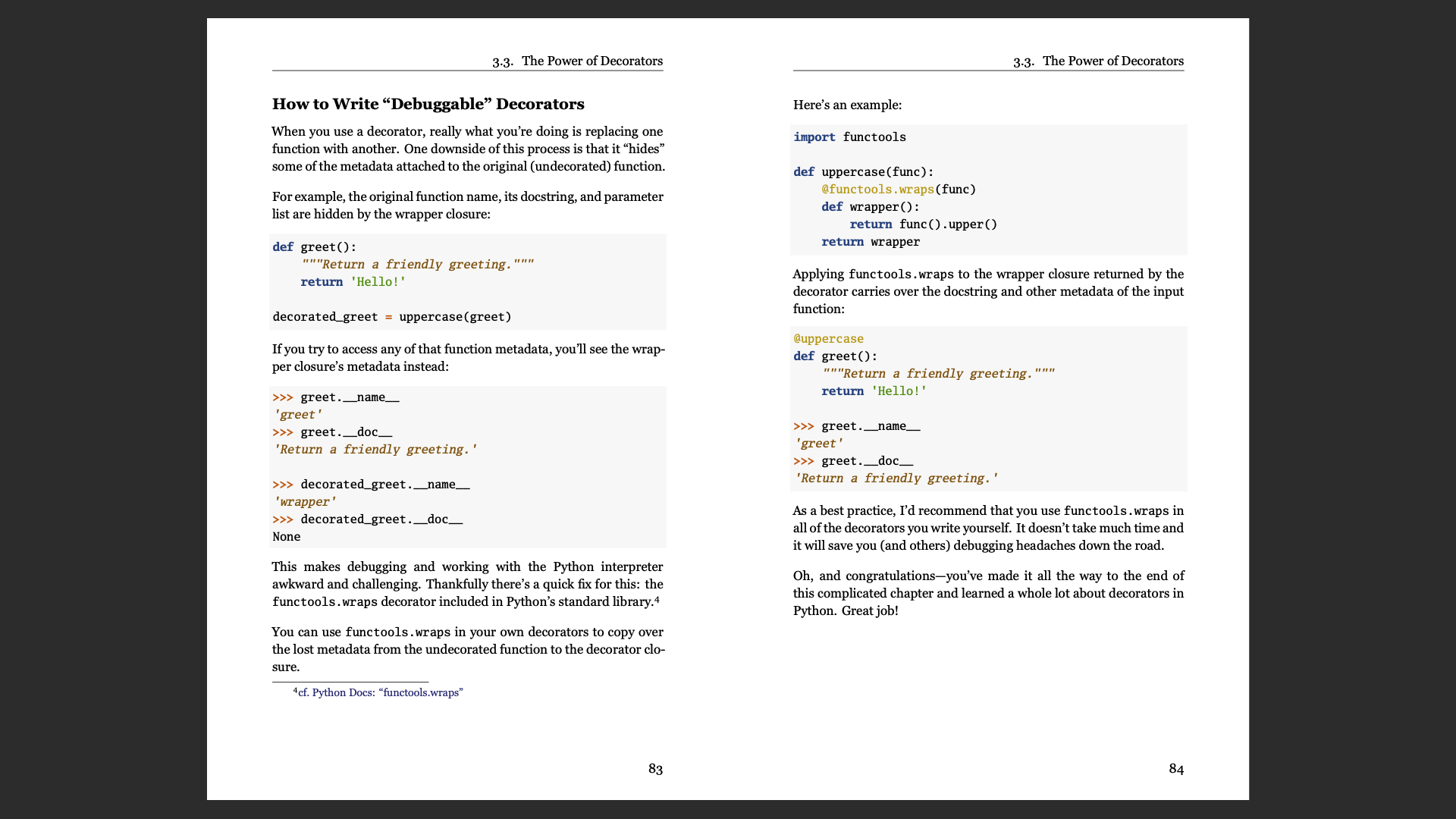
The Python Tricks book, that you can order as a physical or digital copy, shows you how to use decorators and other Python-specific features for maximum productivity (Books are separate purchases):
You can also take advantage of the AI Code Mentor tool. With Code Mentor, you can get hands-on experience by asking for practice examples or receiving step-by-step guidance through practical tasks related to decorators:
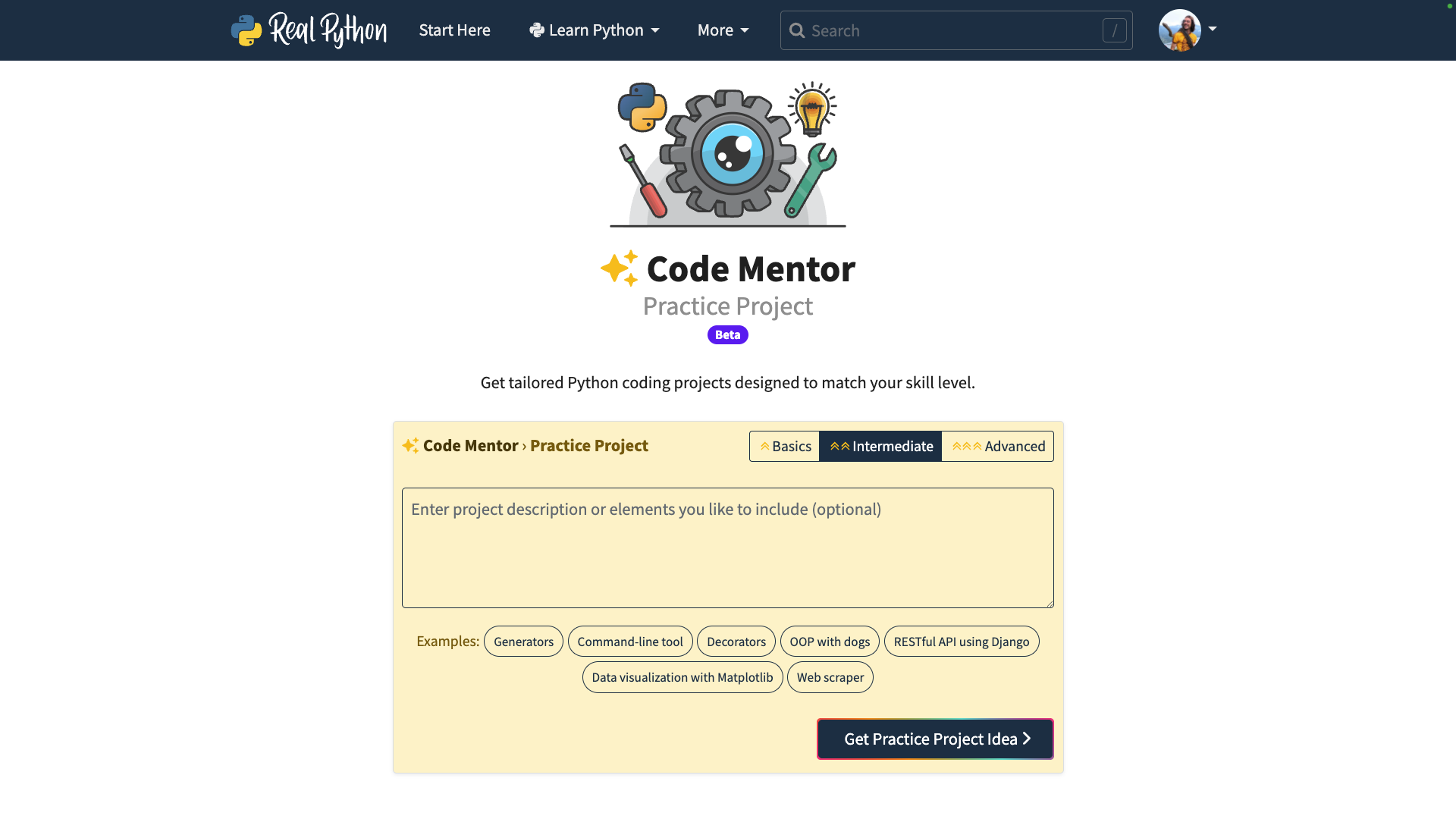
Once you’ve written your code, you can paste it into the tool to get detailed reviews, suggestions, and explanations, helping you understand what you’ve done well and where you can improve. This interactive mentorship accelerates your learning and gives you confidence as you develop your Python skills.
Finally, you can listen to multiple podcast interviews that explore the topic further in a conversational style:
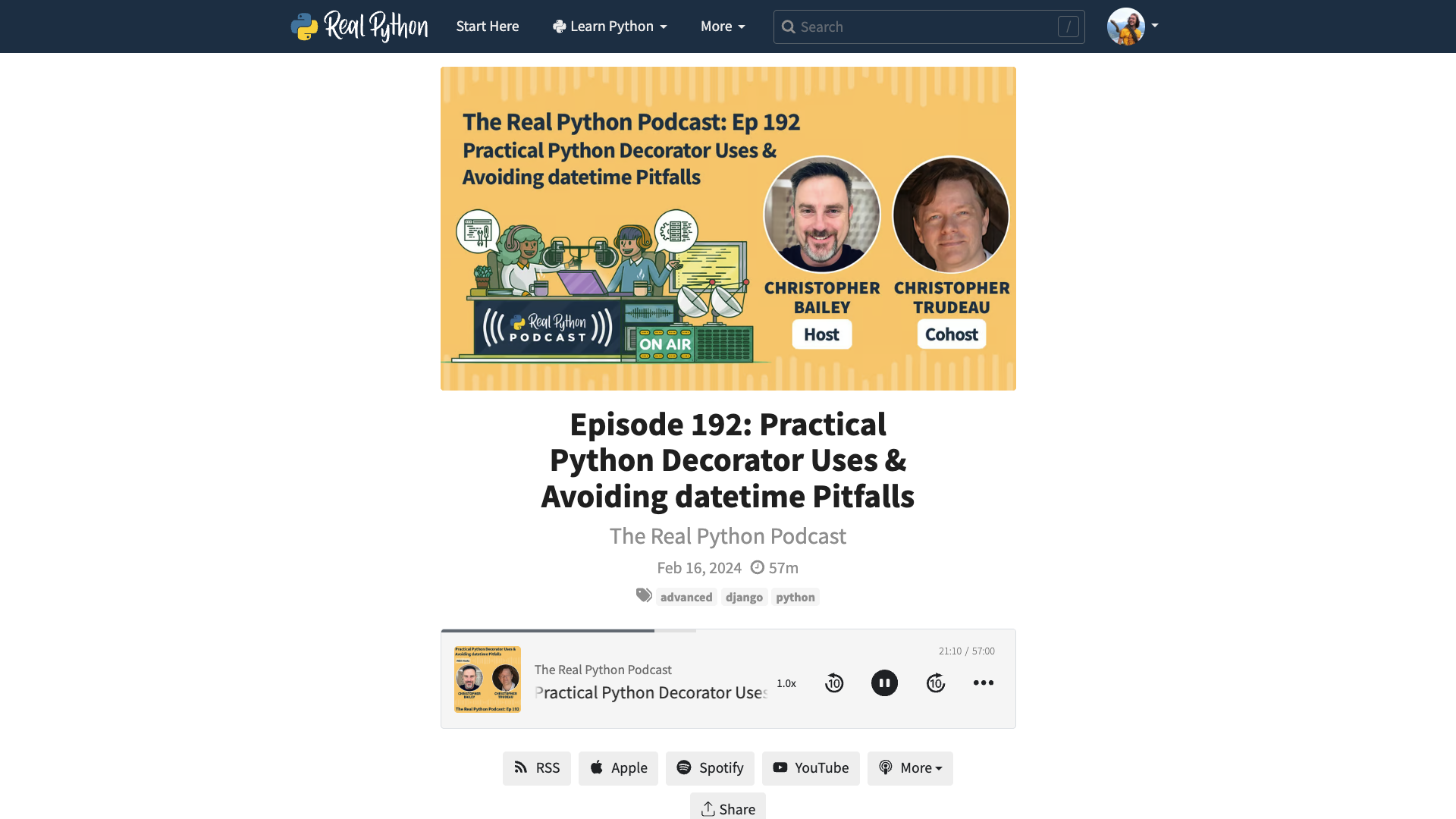
If you want structured, instructor-led learning, the Intermediate Python Deep Dive live course covers decorators with hands-on exercises and direct expert feedback in a small cohort setting.
This immersive, multi-angle approach helps you truly master Python topics so they stick. You’ll understand not just what to do, but why and when to apply each technique.
Tip: Start a zero-risk free trial to learn a new skill with Real Python.
Think of Real Python as your training ground for building deep Python expertise that compounds over time. You’ll continuously discover new insights and techniques that make you more effective in your work.
Studying Python Decorators With DataCamp Premium
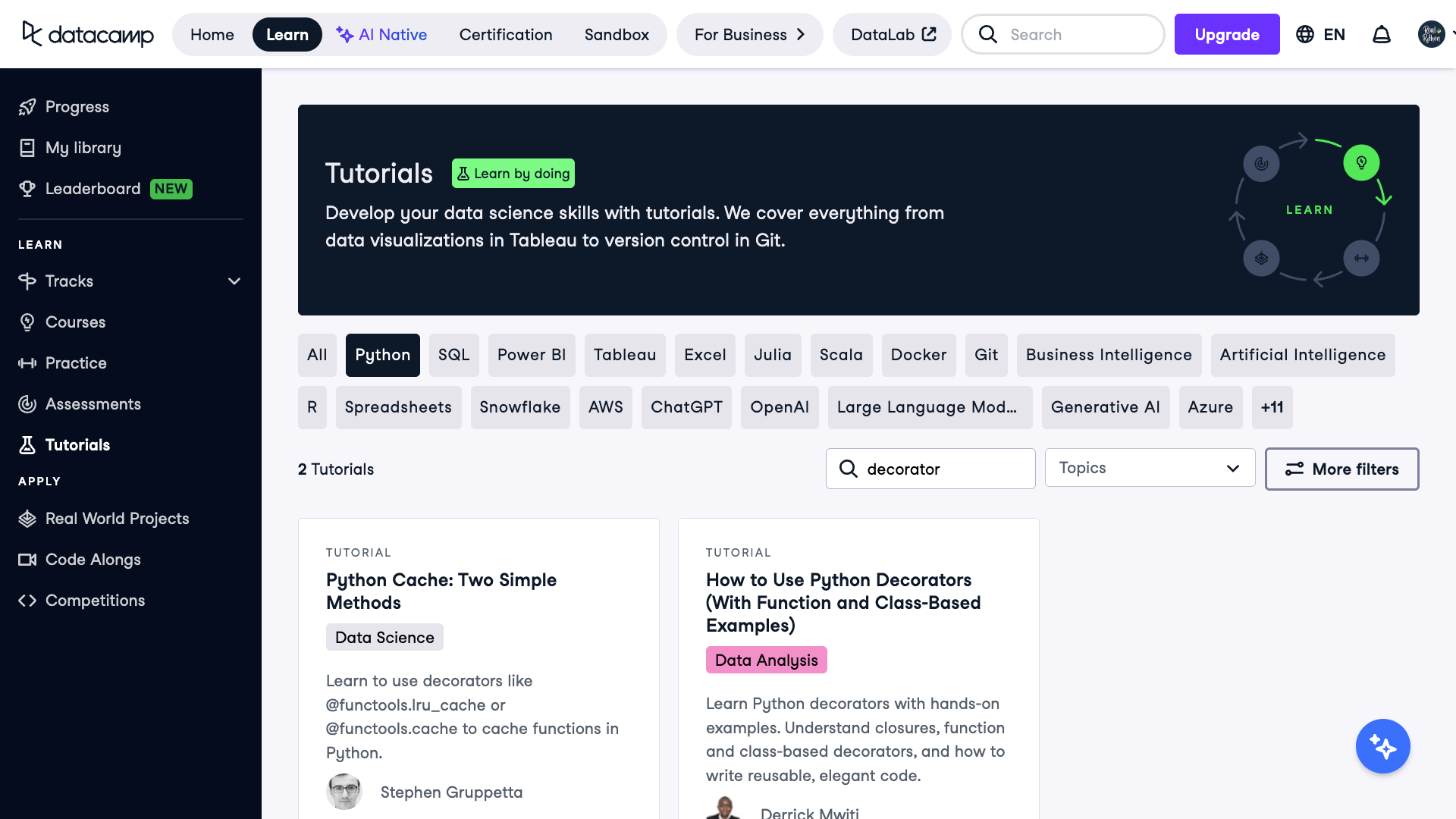
At DataCamp, you can learn about Python topics through different resource types. In the Learn sidebar, you can start by picking what resource type you want, select Python, and type your search query. For example, you’ll see 2 results for written tutorials on decorators:
If you want all resource types, then you can search for decorator (login required) in the overall DataCamp catalog, after checking Python as technology:
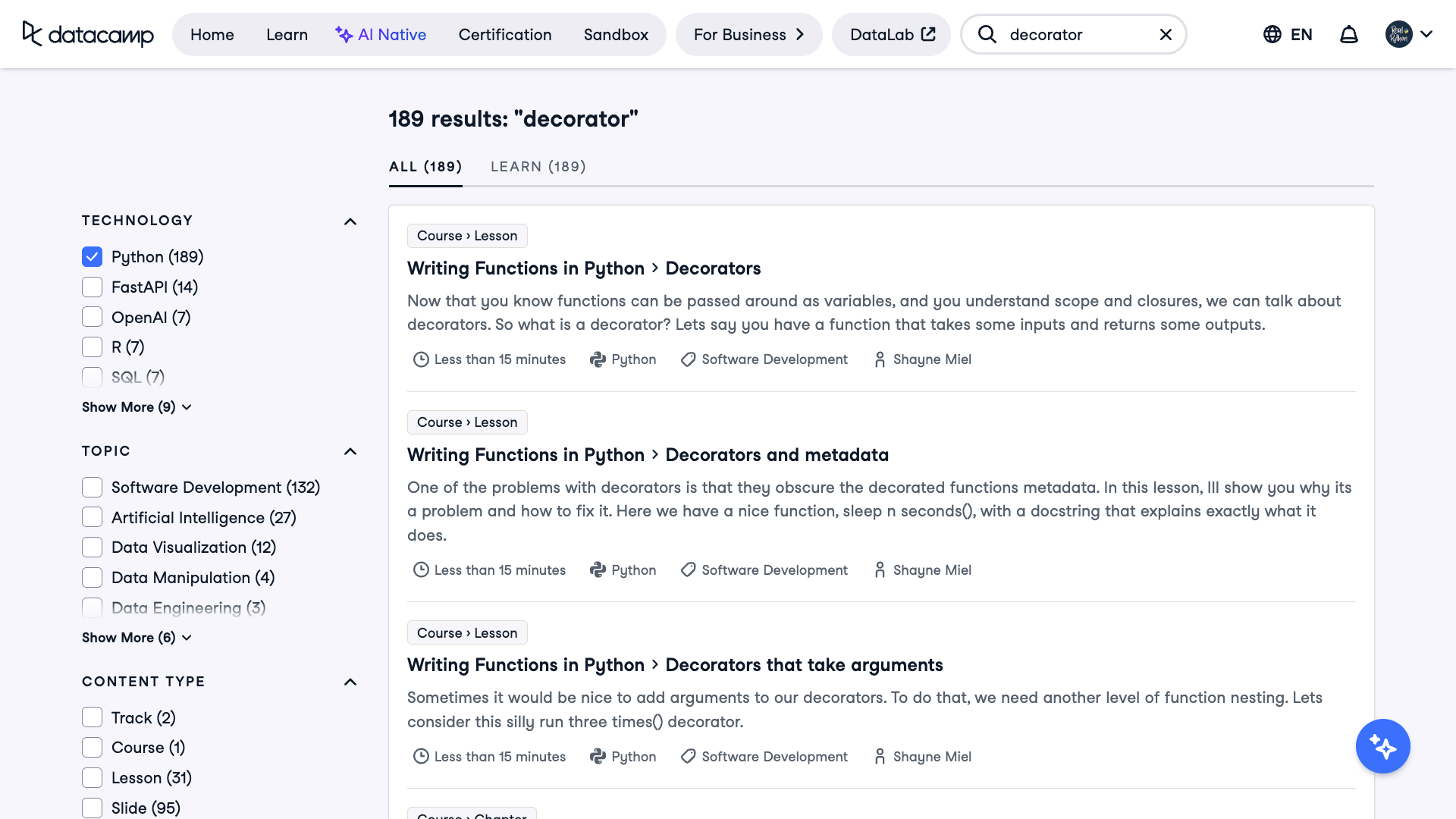
With that search, you’ll find a variety of results, for example individual video lessons on decorators:
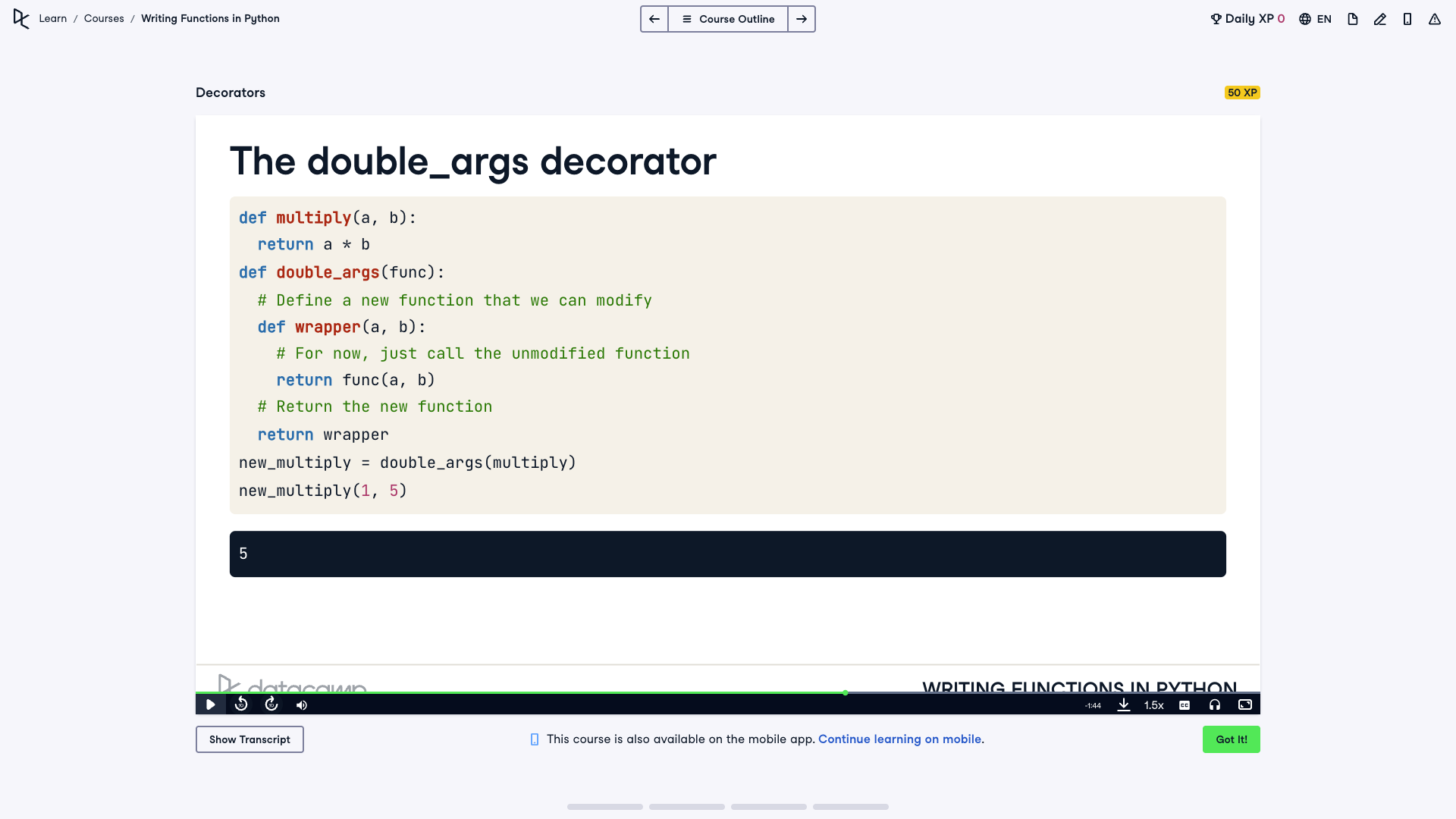
The content in the video lessons is covered using slides and a voice-over, without live instructor-led live coding.
You’ll also get a chance to practice decorators with browser-based fill-in-the-blanks coding exercises:
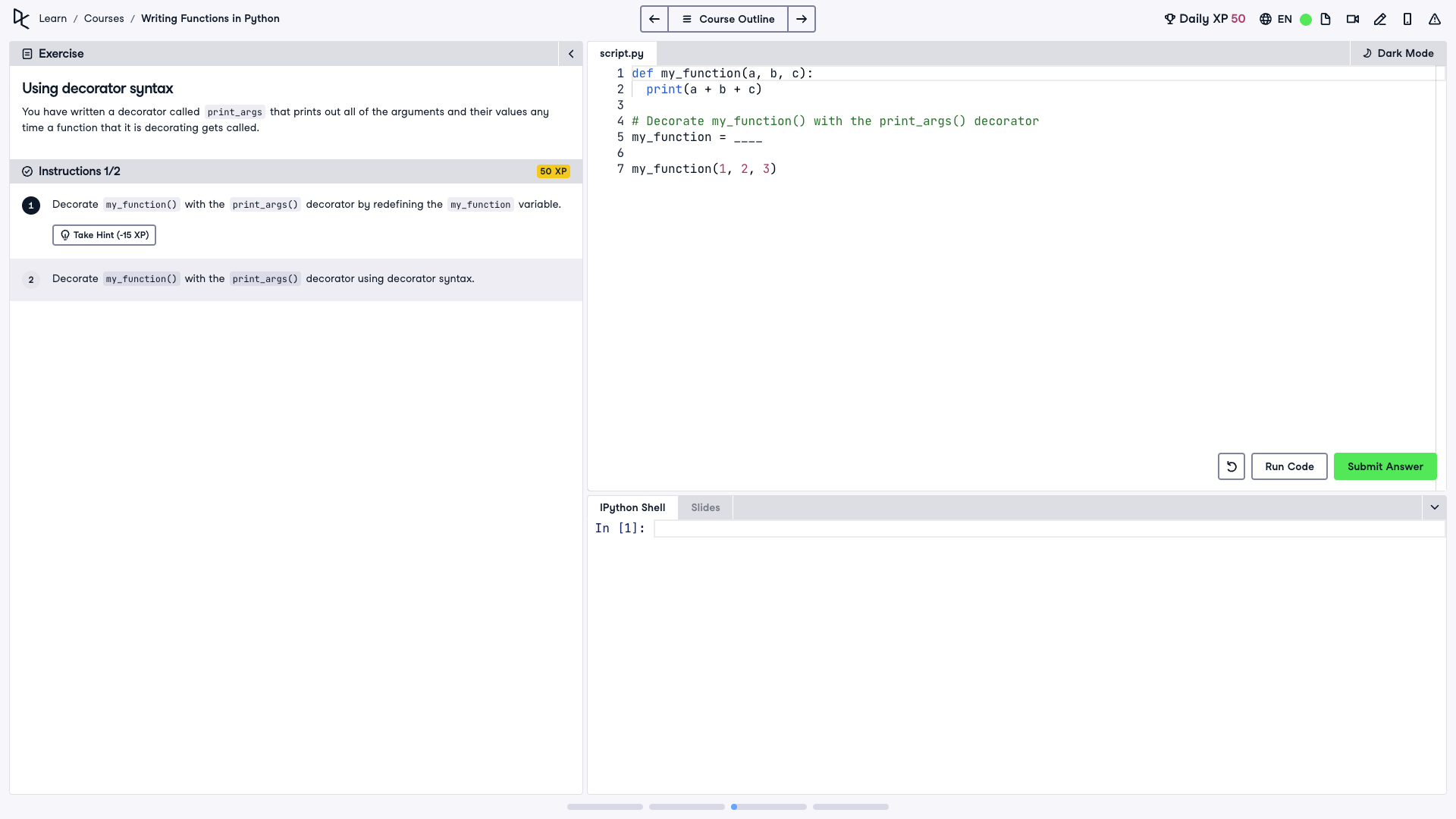
DataCamp also has structured Python learning that covers decorators more directly. For example, the course on Writing Functions in Python has dedicated chapters on decorators, paired with exercises.
Walkthrough: Accomplish a Task
While deep learning builds your foundation, you also need to solve specific problems quickly when they arise at work.
In this section, you’ll see how each platform helps you tackle a practical task that you might encounter in real-world development:
Task: Speed up a slow script that makes multiple API calls by implementing concurrent requests with
asyncio.
You don’t need to understand the specifics of this task, it’ll just serve as a guideline to map out how you’d tackle a task on both platforms.
Implement asyncio Concurrent Requests With Real Python
To put concepts into practice, Real Python gives you a variety of actionable tools, guides, and expert support which will help you implement real-world solutions.
Here’s how you might approach this sample task using the resources and expert support that’s available for you on Real Python:
-
Search for asyncio on Real Python to see a selection of relevant learning resources. You can filter for learning modalities, such as Courses, Articles, Quizzes, and more.
-
Open the in-depth guide Python’s asyncio: A Hands-On Walkthrough and search for relevant sections to your task. Or, read the tutorial to understand the fundamentals of async/await, event loops, and coroutines with detailed explanations and code examples.
-
Watch Hands-On Python 3 Concurrency With the asyncio Module for visual explanations that make abstract concepts like event loops concrete and memorable. You can search the lesson transcripts and jump directly to relevant timestamps.
-
Study Speed Up Your Python Program With Concurrency and the video course Speed Up Python With Concurrency to understand when async is the right choice versus threading or multiprocessing for your specific use case.
-
Review practical API examples in Async IO in Python and follow a step-by-step guide to Build a Site Connectivity Checker in Python to practice real-world patterns with
aiohttpand error handling. Download the provided best-practice code for the project and compare it to your solution. -
Test your understanding with quizzes, such as the Python Async Features quiz, to reinforce key concepts.
-
For AI support with writing or reviewing your code, use the Code Mentor tool. You can ask Code Mentor to draft example code, review your implementation, point out improvements, or suggest alternative approaches for your asyncio solution.
-
Bring your implementation to Office Hours to get expert feedback on your approach, discuss edge cases like rate limiting and error handling, and validate that your concurrency strategy fits your problem.
With Real Python, you gain access to high-quality explanations, practical code samples, and a supportive community ready to help you tackle real-world coding challenges. No matter your experience level, you’ll find the guidance and resources needed to confidently implement solutions using industry best practices.
Implement asyncio Concurrent Requests With DataCamp Premium
With DataCamp Premium, you get a variety of resources on data science workflows. However, specific tasks like the sample task may require seeking outside resources, as DataCamp’s curriculum focuses on data science applications rather than general Python programming patterns.
Here’s what solving this example problem on DataCamp Premium might look like:
-
Search for asyncio (login required) in DataCamp’s main catalog to find relevant resources.
-
Read over the two tutorials (login required), though missing syntax highlighting in some code examples may make it hard to stay on track.
-
Use DataCamp’s browser-based coding environment to experiment with basic Python async patterns. For some topics, you may have dedicated exercises or assessments, although asynchronous programming doesn’t show any.
-
Search external resources like Python’s official
asynciodocumentation or Real Python’s in-depthasyncioguide to learn the syntax and concepts not covered on the platform. -
Use DataLab, DataCamp’s collaborative notebook environment, to implement your async API calls by bringing in code examples from external tutorials and adapting them to your use case.
-
Post questions in community forums about which approach to use and how to handle common async pitfalls like blocking calls or proper error handling.
DataCamp Premium’s hands-on platform provides a strong foundation for data science workflows, but for general Python programming tasks like async API calls, you’ll likely need to supplement with external resources.
Criteria Deep Dives
Now that you’ve seen how each platform works in practice, you can explore the specific features that determine how effectively you’ll learn and how confidently you’ll apply your Python skills.
This section breaks down each criterion and includes links for deeper reading to help you understand which platform will deliver the results that you need.
Curriculum Depth and Python Coverage
Real Python has a Python‑only focus with 700+ in‑depth tutorials and 4,400+ video lessons spanning the core language, tooling, web, data, AI, and modern features, with new content shipping weekly.
DataCamp has a broad data science catalog covering Python, R, SQL, spreadsheets, Tableau, Power BI, and more. The Python catalog includes 170+ courses, but coverage focuses on data science applications rather than the full breadth of Python development.
Takeaway: If you want to master Python deeply across web development, scripting, automation, and data science, Real Python’s Python‑first library helps you build expertise that compounds over time.
Learning Modalities
Real Python offers multiple learning formats to match different learning styles and situations. You can choose from 700+ written tutorials for deep reading and reference, 4,400+ video lessons organized into courses for visual learning, podcast episodes for conversational exploration, quick reference articles to revisit concepts or get initial peeks, interactive quizzes and custom Code Mentor practice projects for testing your knowledge, and in-browser coding exercises with automated tests for hands-on practice. Each video includes full transcripts and searchable content, so you can find specific topics and jump to the relevant timestamp. For learners who want accountability and live instruction, Real Python also offers cohort-based live courses with expert educators.
DataCamp centers on short video lessons followed by browser-based coding exercises. You watch brief explanations and then practice in an integrated coding environment. Additionally, you can complete assessments and coding projects. This format emphasizes hands-on repetition, though the platform offers fewer expert-vetted high-quality resources for in-depth reference and topic immersion.
Takeaway: Real Python provides diverse learning formats including video courses, extensive written tutorials, in-browser coding exercises, and podcasts, while DataCamp emphasizes slideshow-based videos with browser-based practice.
Review Rigor and Technical Accuracy
At Real Python, the content passes through four phases during the editorial process and includes four rounds of reviews by Python subject‑matter experts and editors. Articles often link to PEPs and new‑version changes and include hands‑on code written and tested by staff. Real Python has editorial independence (separation from sponsorship influence) and technical corrections are typically addressed quickly when reported.
DataCamp courses are developed by globally distributed contractors, including some industry practitioners and academics. However, the platform’s content guidelines page (instructor-support.datacamp.com/courses/course-development/content-guidelines) that’s linked in their creator documentation returns a 404, so there aren’t publicly viewable quality assurance standards.
Takeaway: Real Python’s transparent, multi‑stage editorial process that often involves 20-40 hours of expert review helps ensure you’re learning accurate, best-practice Python that you can trust in professional work.
Practice and Feedback
Real Python offers integrated quizzes and in-browser coding exercises in tutorials and courses. The coding exercises come with starter code, automated tests for immediate feedback, and progressive hints that guide your thinking without giving away the answer. It also features access to an AI-driven Code Mentor tool, and Office Hours with human experts for real-time feedback on your code and questions. Further, it includes direct downloads for tutorial source code and bonus resources, with explicit permission for commercial use of example code and sample projects.
DataCamp offers browser‑based coding exercises integrated into lessons, plus projects and skill assessments. The platform includes an AI assistant for help during exercises. Premium subscribers also get access to competitions and code-alongs.
Takeaway: Both platforms offer in-browser coding practice integrated into lessons. Real Python pairs its exercises with automated tests, progressive hints, and direct access to Python professionals who can help you overcome obstacles.
Update Cadence and Python Alignment
Real Python publishes regular Python news updates and features coverage for new and upcoming Python releases (for example, lazy annotations in 3.14 and free‑threaded builds in 3.13), indicating rapid alignment with upstream CPython.
Stay Current: Click here to stay on top of Python releases, third-party libraries, and new Python dev tools worth your time.
DataCamp updates courses over time, but doesn’t prominently document which Python versions courses target or maintain a public changelog for version alignment. The focus on data science libraries means core Python version features may receive less attention.
Takeaway: Real Python keeps you current with cutting‑edge Python features, helping you write modern code and stay relevant as the language evolves.
Community and Support
Real Python: Membership comes with access to a private Community Chat and weekly live Office Hours sessions for question and answer time directly with Python experts on Real Python’s core team. Real Python has a Support Center where you can get answers to platform and subscription related requests. All feedback submissions are constantly monitored by the internal team, and you’ll get direct email replies to your questions and suggestions.
DataCamp: All community forums have been deprecated (Slack, Certified, making webinars and events currently the only option to connect to real humans and other learners. For support, DataCamp has a Help Center and an AI-chat to resolve common support questions.
Takeaway: Real Python gives you direct access to a community of learners and professionals, to staff Python experts, and responsive human support, while DataCamp has retired its discussion forums and now mainly offers webinars and help center support.
Pricing and Total Value
Real Python: On Real Python’s join page you’ll see current pricing, and you can save with an annual plan. You can also start a free trial for a risk-free assessment. Real Python also includes direct downloads for tutorial source code and bonus resources, with explicit permission for commercial use of example code and sample projects.
DataCamp Premium: On DataCamp’s pricing page, you’ll see current pricing, and you can save with an annual plan. DataCamp doesn’t provide free trials for individuals.
Takeaway: Both platforms offer affordable professional development. See the final price at checkout, and remember that many employers reimburse learning investments.
Decision Guidance
After absorbing all this information, you may find it’s time to decide which platform fits your Python needs best. Below, you’ll find a quick summary of the strengths of each platform, and a decision table that maps out scenarios to your best pick.
How Real Python Helps You Succeed:
- Stay current effortlessly: Weekly fresh content and news tracking keep you aligned with Python’s evolution without hunting for updates.
- Trust what you learn: Multi‑stage editorial review ensures you’re building skills on accurate, best-practice foundations.
- Get unstuck faster: Community and Office Hours connect you with Python professionals who provide expert guidance when you need it.
Together, these help you become a confident Python expert who stays current and solves problems effectively, embedded in a professional network.
Tip: Start a free trial to assess Real Python for your learning journey.
How DataCamp Helps You Succeed:
- Focus on data science: Structured career tracks help you build skills specifically for data analyst, data scientist, and data engineer roles.
- Earn industry certifications: Certifications from DataCamp and industry partners can demonstrate your qualifications to employers.
- Practice in the browser: Integrated coding exercises let you practice immediately without setup friction.
Together, these help you build data science skills and credentials for career advancement in analytics roles.
Decision Table
Browse this decision table that maps scenarios of what you may be looking for in a learning platform to suggestions on which to pick, based on the analysis in this article:
| If you… | Choose Real Python | Choose DataCamp |
|---|---|---|
| Want to become a trusted Python expert with deep, current knowledge | ✅ | ❌ |
| Want to focus specifically on data science with structured career tracks | ❌ | ✅ |
| Value direct access to Python professionals who can guide your learning | ✅ | ❌ |
| Need industry certifications to demonstrate qualifications to employers | ❌ | ✅ |
| Want to stay aligned with Python’s evolution as new versions release | ✅ | ❌ |
| Want to learn Python for web development, scripting, and automation | ✅ | ❌ |
| Look for a community of real people to discuss and learn with | ✅ | ❌ |
Choose Real Python to master Python deeply with expert guidance and real connections, or DataCamp Premium to build data science skills with industry certifications.
Alternatives to DataCamp and Real Python
If none of the scenarios fit your situation and neither Real Python nor DataCamp seem like a good match for your needs, then you can consider the following alternatives:
- Codecademy: A good fit if you want to build skills across many technologies (HTML, CSS, JavaScript, Python, and more) under one subscription.
- Coursera: A good fit if you need academic branding or credit from their university‑backed Python specializations.
- Python.org Docs: Python’s official documentation for reference‑first learners.
These options can complement or substitute for the platforms above depending on your goals.
Conclusion
If you want to become a Python expert who writes confident, current code and has access to experienced professionals when you need guidance, then Real Python delivers the depth, accuracy, and human support to help you succeed.
Tip: Start a risk-free free trial to assess Real Python for your learning journey.
If you want to focus specifically on data science and analytics, with structured career tracks and industry certifications to demonstrate your qualifications, then DataCamp Premium provides the specialized curriculum and credentials you need.
Next Steps
Experience each platform firsthand to discover which accelerates your learning most effectively:
-
Test Real Python: Start a free trial and tackle a real project to experience the depth of content, then join Office Hours to see how direct access to Python professionals can accelerate your progress. You’ll quickly see if this approach helps you build the expertise you’re looking for.
-
Test DataCamp Premium: Purchase a monthly subscription and work through a data science track to experience the browser-based learning environment and explore how the certifications align with your career goals. You’ll discover whether the data science focus matches your needs.
Choose the platform where you make the most progress, and cancel within the trial period (for Real Python) or the first paid month (for DataCamp) if it doesn’t deliver the results you need.
Frequently Asked Questions
Yes. Real Python offers shareable completion certificates for finished courses, and DataCamp provides course certificates plus industry certifications for Data Scientist, Data Analyst, Data Engineer, and other roles.
Real Python regularly covers Python 3.14 features and news, while DataCamp doesn’t prominently document which Python versions its courses target.
Real Python membership includes community chat and weekly live Office Hours with Python experts. DataCamp doesn’t offer straightforward access to peer or expert support.
Real Python Team Memberships offer team dashboards, analytics, and seat management, and DataCamp for Business includes admin dashboards with reporting, assignments, and custom learning tracks.
DataCamp’s curriculum focuses on data science, analytics, and related tools (Python, R, SQL, Tableau, Power BI). If you want to learn Python for web development, automation, or general programming, Real Python offers broader coverage of the Python ecosystem.
Evidence Locker
Note: The publicly available information was captured on 2026-01-09.
Real Python Sources:
- Real Python membership page: Features, library size, editorial process, community, and captions
- Real Python Office Hours: Members‑only live questions and answers
- Real Python certificates (support and examples): Shareable completion certificates
- Real Python learning paths: Curated skill paths and career paths in the Python ecosystem
- Real Python editorial guidelines: Editorial process documentation
- Real Python for Teams features: Dashboards, analytics, and reporting
- Real Python Team Membership: Team management, analytics, and dashboards
- Real Python community chat: Connect and get live help from expert developers
- Python version alignment (Real Python news and articles): Python 3.14 coverage
- Real Python free trial signup: Access to risk-free trial experience
DataCamp Sources:
- DataCamp pricing page: Plan prices, features, and subscription options
- DataCamp Python catalog: Python course offerings
- DataCamp certification: Industry certifications and credentials
- DataCamp career tracks: Structured career paths for data roles
- DataCamp for Business: Team and enterprise features
- DataCamp accessibility statement: WCAG 2.1 Level AA compliance commitment
- DataCamp content guidelines (archived): Original URL no longer accessible
- DataCamp course development (
instructor-support.datacamp.com/courses/course-development): Returns 404 - DataCamp DataLab: Collaborative notebook environment