
You may have begun your Python journey interactively, exploring ideas within Jupyter Notebooks or through the Python REPL. While that’s great for quick experimentation and immediate feedback, you’ll likely find yourself saving code into .py files. However, as your codebase grows, knowing where things should go in your script becomes increasingly important.
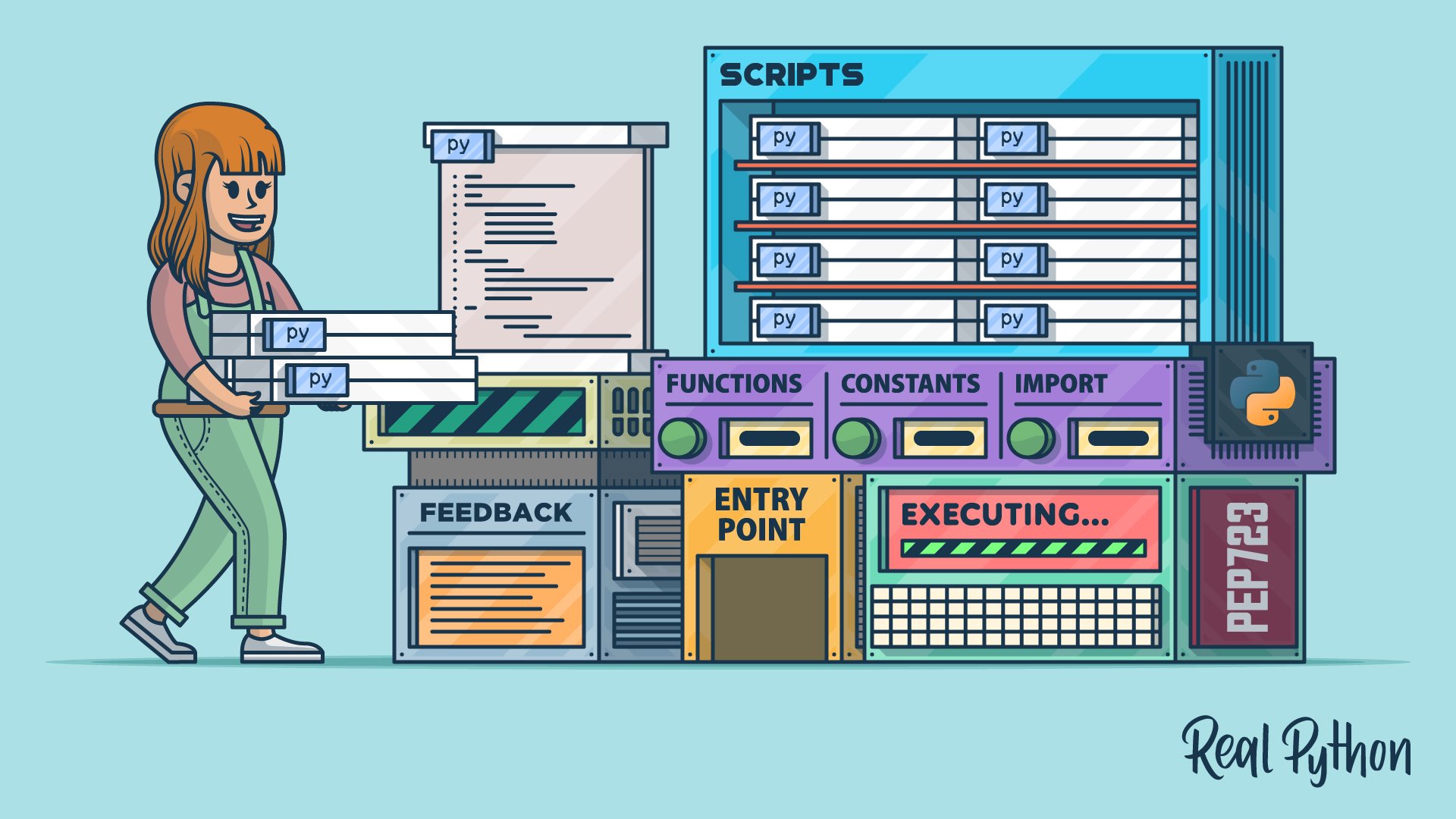
Transitioning from interactive environments to structured scripts helps promote readability, enabling better collaboration and more robust development practices. This video course shows you the foundations of organizing a Python script: where the runnable bits go, how to arrange your imports, and how to refactor with constants and a fixed entry point.
By the end of this video course, you’ll know how to:
- Make a script directly executable on Unix-like systems with a shebang line
- Organize your import statements using standard grouping conventions
- Automatically sort imports and format your code with the
rufflinter - Replace hard-coded values with meaningful constants
- Define a clear script entry point using
if __name__ == "__main__"
Without further ado, it’s time to start working through a concrete script and progressively shape it into well-organized, shareable code.
What’s Included:
- 10 Lessons
- Video Subtitles and Full Transcripts
- 2 Downloadable Resources
- Accompanying Text-Based Tutorial
- Interactive Quiz to Check Your Progress
- Hands-On Coding Exercise
- Q&A With Python Experts: Ask a Question
- Certificate of Completion

Downloadable Resources: