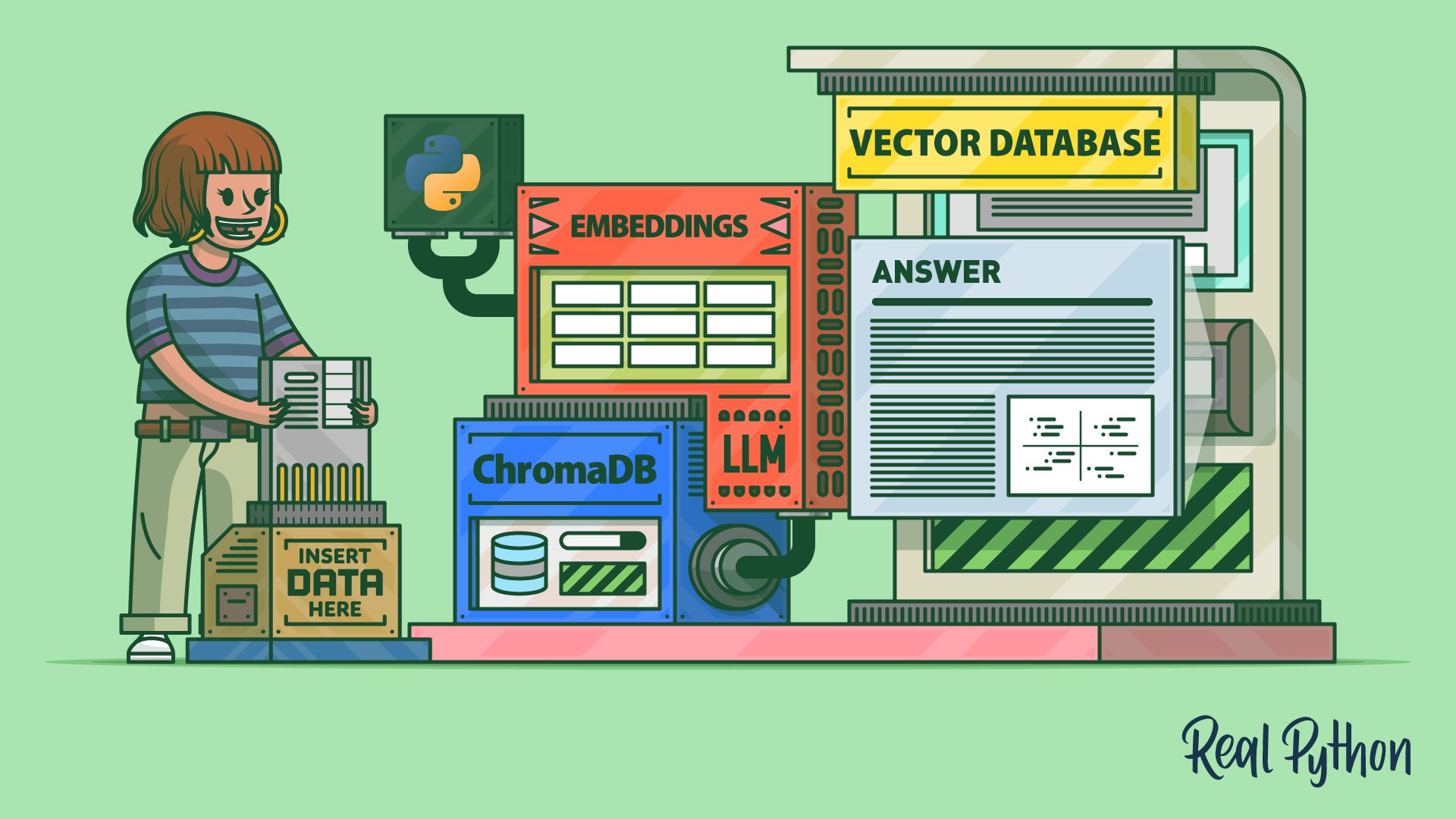

The era of large language models (LLMs) is here, bringing with it rapidly evolving libraries like ChromaDB that help augment LLM applications. You’ve most likely heard of chatbots like OpenAI’s ChatGPT, and perhaps you’ve even experienced their remarkable ability to reason about natural language processing (NLP) problems.
Modern LLMs, while imperfect, can accurately solve a wide range of problems and provide correct answers to many questions. However, due to the limits of their training and the number of text tokens they can process, LLMs aren’t a silver bullet for all tasks.
You wouldn’t expect an LLM to deliver relevant responses about topics that don’t appear in its training data. For example, if you asked ChatGPT to summarize information in confidential company documents, you’d be out of luck. You could show some of these documents to ChatGPT, but there’s a limit to how many documents you can upload before you exceed ChatGPT’s maximum token count. How would you select which documents to show ChatGPT?
To address these limitations and scale your LLM applications, a great option is to use a vector database like ChromaDB. A vector database allows you to store encoded unstructured objects, like text, as lists of numbers that can be compared to one another. For instance, you can find a collection of documents relevant to a question you’d like an LLM to answer.
In this video course, you’ll learn about:
- Representing unstructured objects with vectors
- Using word and text embeddings in Python
- Harnessing the power of vector databases
- Encoding and querying over documents with ChromaDB
- Providing context to LLMs like ChatGPT with ChromaDB
After watching, you’ll have the foundational knowledge to use ChromaDB in your NLP or LLM applications. Before watching, you should be comfortable with the basics of Python and high school math.
What’s Included:
- 17 Lessons
- Video Subtitles and Full Transcripts
- 2 Downloadable Resources
- Accompanying Text-Based Tutorial
- Interactive Quiz to Check Your Progress
- 4 Hands-On Coding Exercises
- Q&A With Python Experts: Ask a Question
- Certificate of Completion

Downloadable Resources:
Related Learning Paths: