Advanced Python Tutorials
These tutorials take you under the hood of Python. If you’re comfortable with object-oriented programming, decorators, testing, and building multi-module projects, you’ll find plenty to explore here.
If some of those topics are still new to you, check out our intermediate Python tutorials first.
Note: Browse all resources below, or commit to a structured sequence of guided advanced Learning Paths with progress tracking.
Free PDF Download: Python 3 Cheat Sheet
Not Sure Where You Stand?
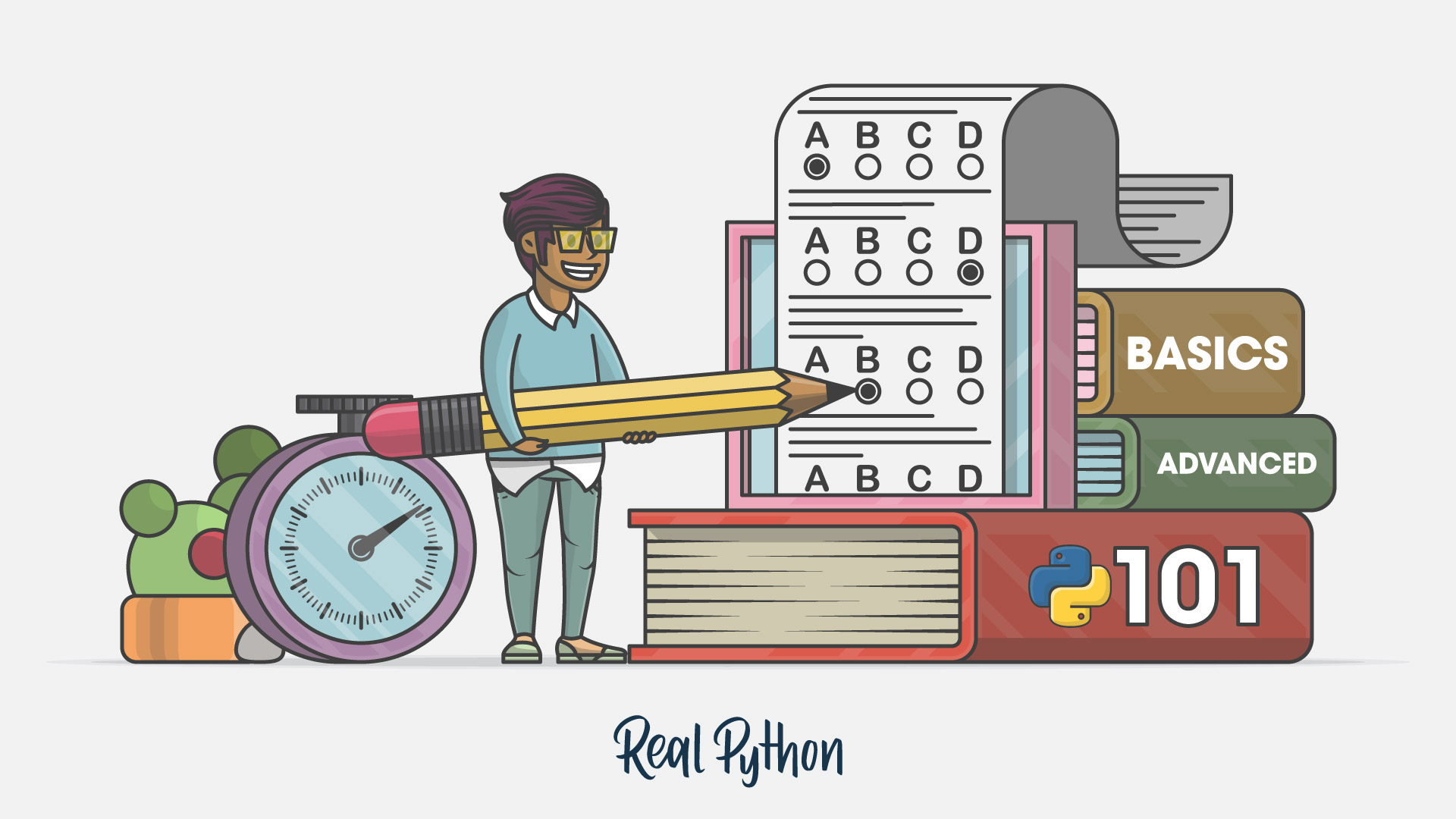
Take the Python Skill Test to find out which level fits you best:
Take the Quiz: Test your knowledge with our interactive “Python Skill Test” quiz. You’ll receive a score upon completion to help you track your learning progress:
Interactive Quiz
Python Skill TestTest your Python knowledge in a skills quiz with basic to advanced questions. Are you a Novice, Intermediate, Proficient, or Expert?
You should have a solid grasp of intermediate Python concepts like object-oriented programming, decorators, generators, context managers, error handling, and testing. If you can comfortably design and build a multi-module Python project, you’re ready for advanced content. If that sounds like a stretch, check out our intermediate tutorials first.
Intermediate Python focuses on writing well-structured, production-ready code. Advanced Python goes deeper into topics like concurrency, metaprogramming, performance optimization, CPython internals, and C extensions. You’ll learn how Python works under the hood and how to push the language to its limits.
Follow our advanced learning paths for a structured sequence with progress tracking. If you prefer to explore on your own, pick a topic that’s relevant to your current work or interests. Advanced topics tend to be more independent of each other, so you have flexibility.
Advanced Python skills are valuable for backend engineering, data engineering, machine learning, DevOps, framework development, and open-source contribution. If you want to build libraries, optimize performance-critical systems, or contribute to Python itself, these tutorials are for you.
Keep building! Contribute to open-source projects, explore specialized domains like data science or web development, and dive into our learning paths to discover new areas. You can also deepen your expertise by reading CPython source code and following Python Enhancement Proposals (PEPs).