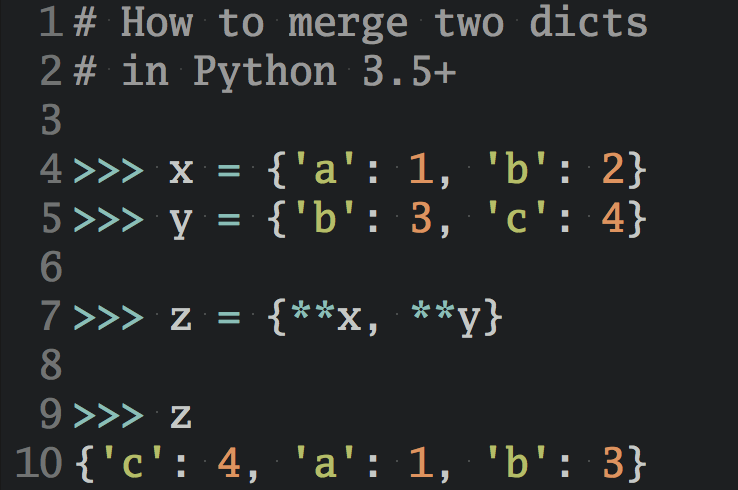
As we welcome 2026, it’s time to look back on an exciting year for Python. Python 3.14 arrived with a wave of developer-focused improvements, from lazy annotations that finally resolve long-standing type hinting quirks to clever new t-strings that give you more control over string interpolation.
Meanwhile, 2025 was the year AI tools truly became part of everyday Python development. From agentic coding with LangGraph to connecting LLMs to your data via MCP servers, Python solidified its position as the language of choice for AI-powered workflows.
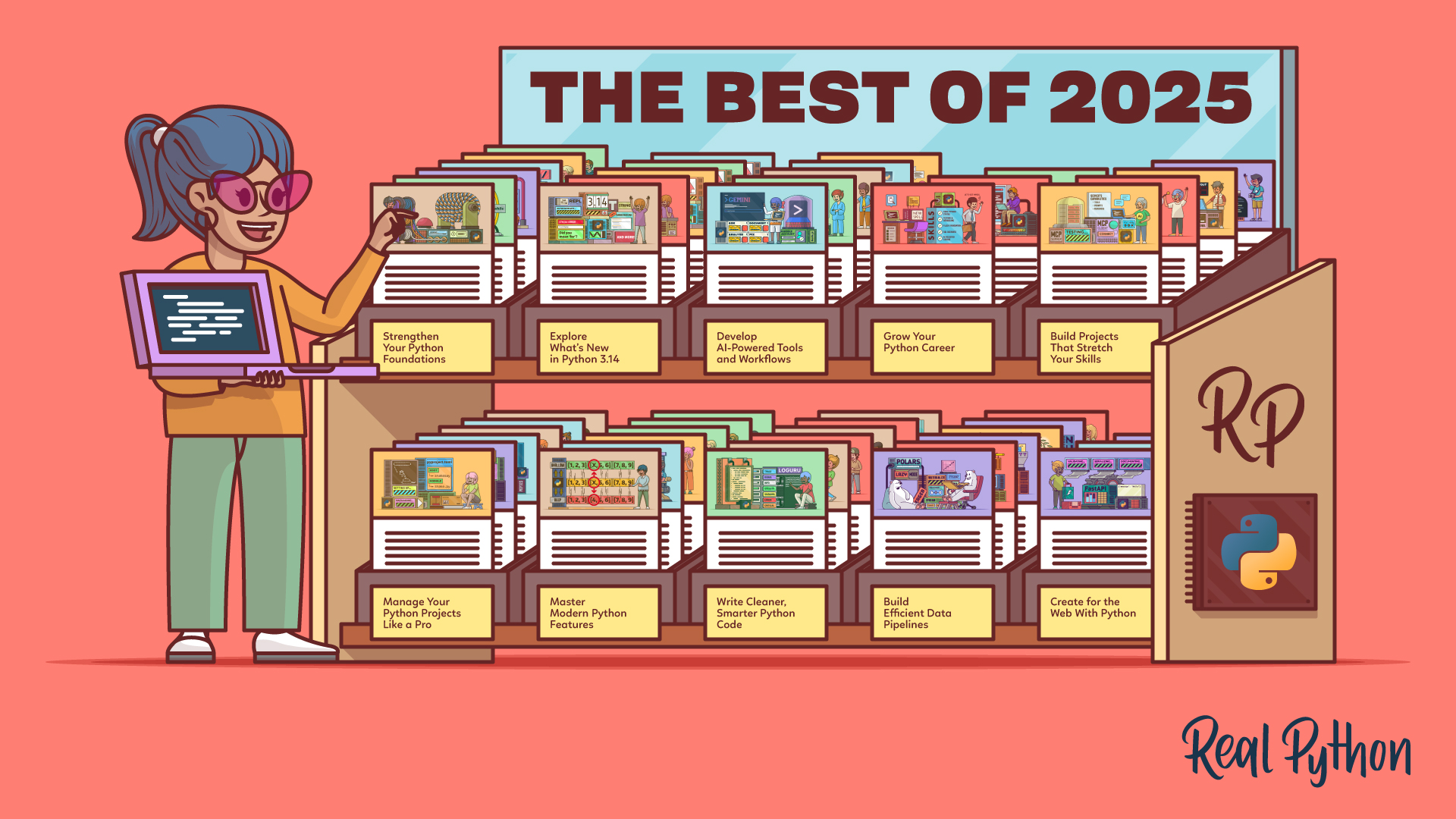
Here at Real Python, we’re excited to showcase the tutorials and video courses that resonated most with our community throughout 2025. Whether you’re just starting out with Python, leveling up your skills, or diving into advanced topics, this collection has something for you.
Join Now: Click here to join the Real Python Newsletter and you’ll never miss another Python tutorial, course, or news update.
Take the Quiz: Test your knowledge with our interactive “Python Skill Test” quiz. You’ll receive a score upon completion to help you track your learning progress:
Interactive Quiz
Python Skill TestTest your Python knowledge in a skills quiz with basic to advanced questions. Are you a Novice, Intermediate, Proficient, or Expert?
Strengthen Your Python Foundations

If you’re just getting started with Python, building a solid foundation is the best investment you can make. The fundamentals you learn now will support everything you do later, from data analysis to web development to AI.
These beginner-friendly tutorials and courses help you sharpen the core skills you’ll use every day in Python, including loops, operators, lists, and functional techniques:
- How to Join Strings in Python
- Skip Ahead in Loops With Python’s continue Keyword
- Nested Loops in Python
- Python Operators and Expressions
- Exploring Python’s list Data Type With Examples
- Using Functional Programming in Python
If you’re looking to accelerate your learning with live instruction, then check out our Python for Beginners Live Course, where you can learn alongside other students and get real-time feedback from experienced instructors.
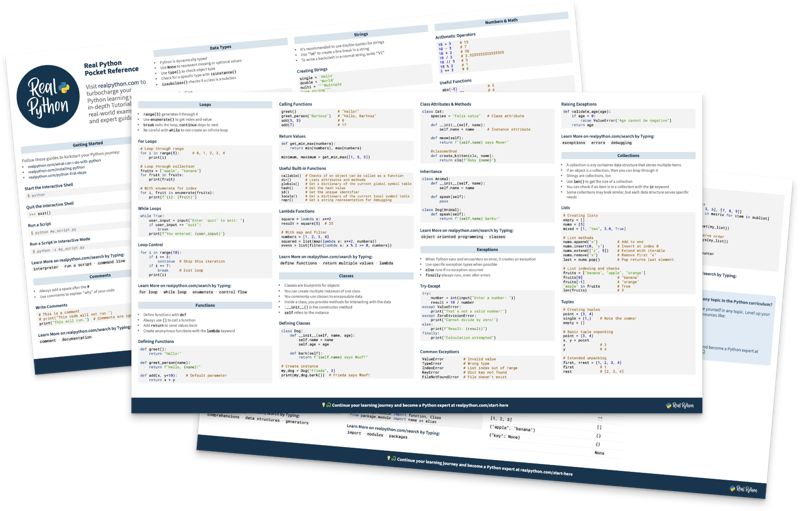
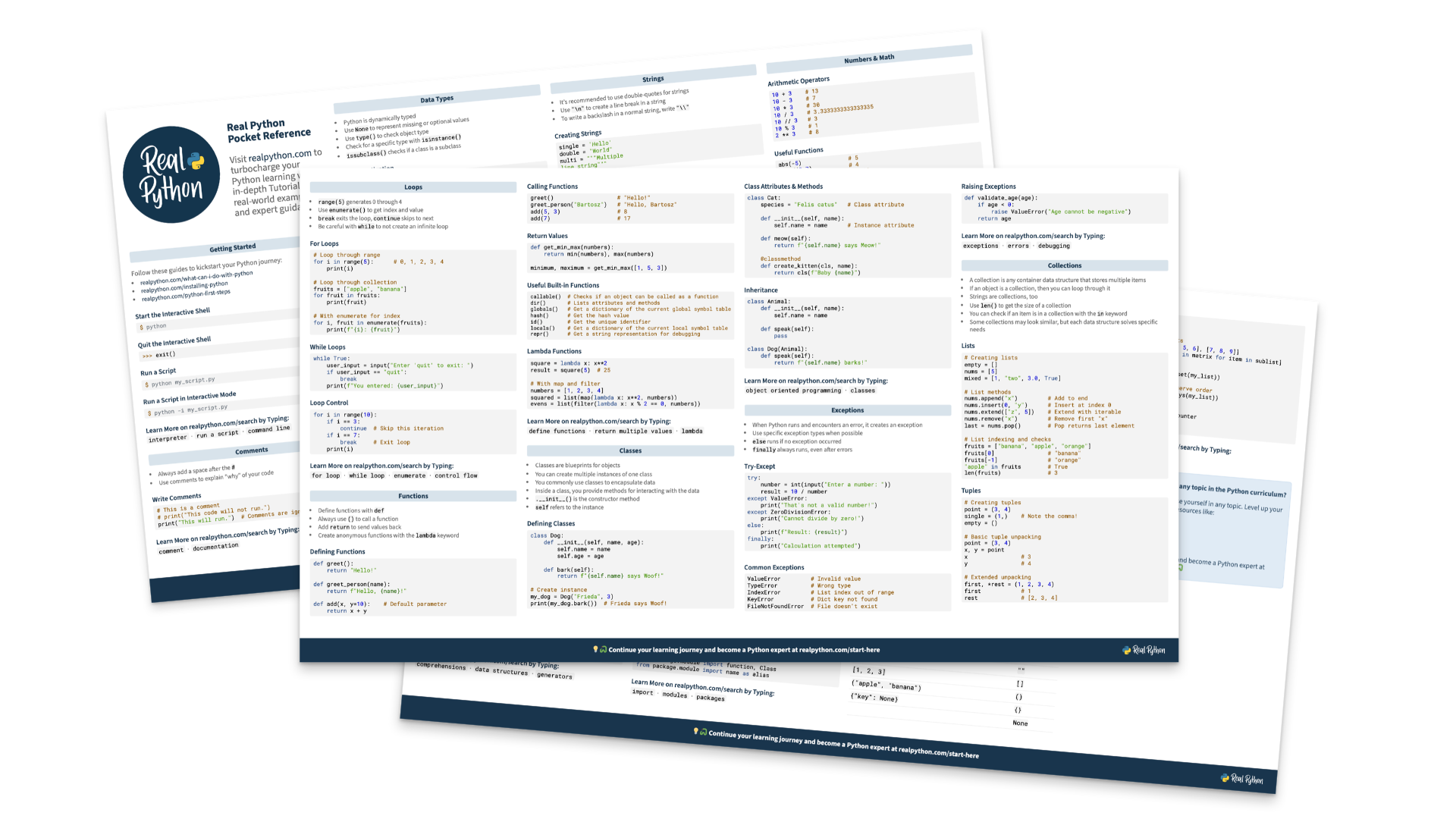
And don’t forget to grab our downloadable Python 3 Cheat Sheet to keep essential syntax and concepts at your fingertips:
Explore What’s New in Python 3.14
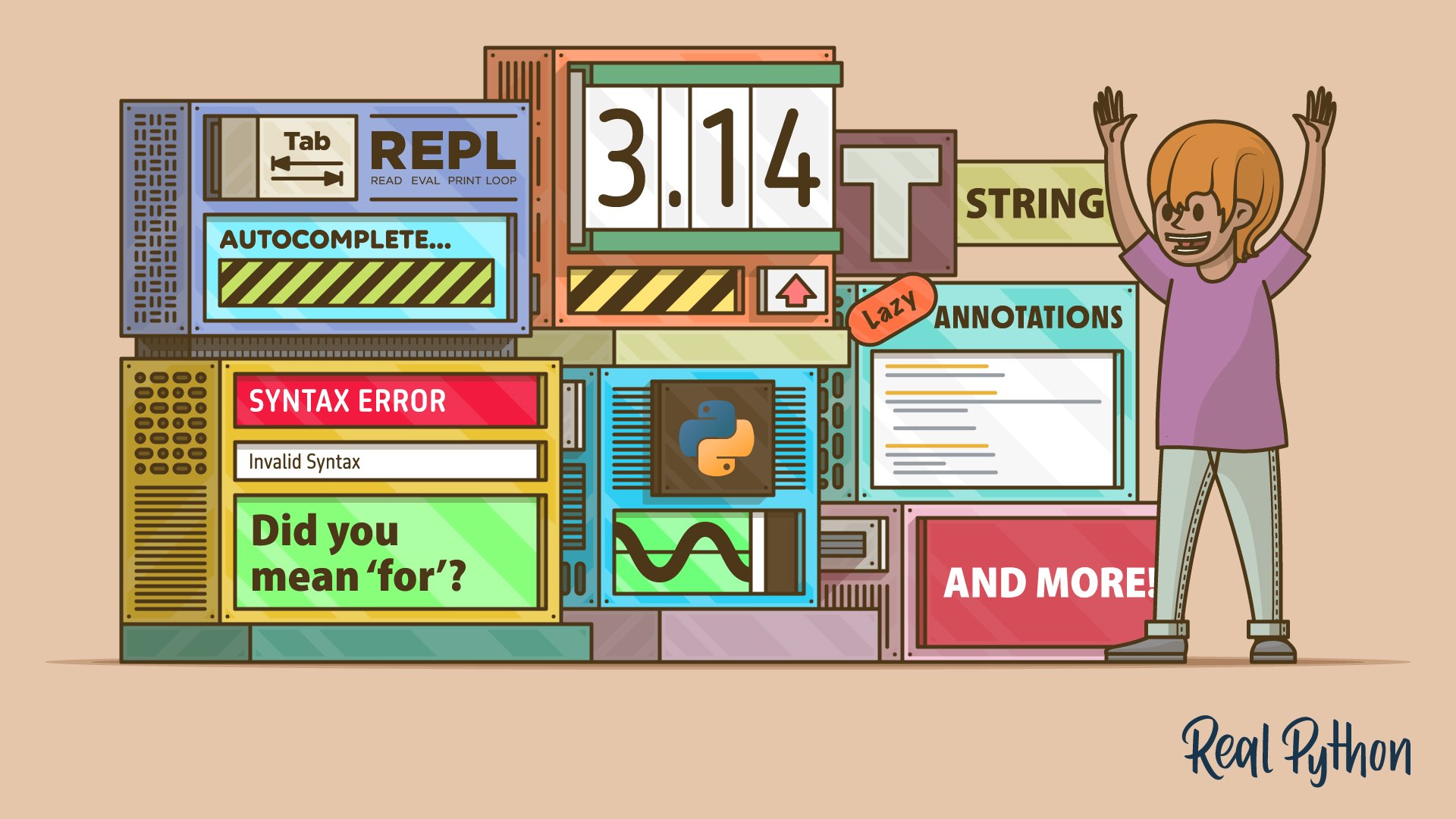
Python 3.14 brought a collection of thoughtful improvements that make writing and debugging code more enjoyable. The REPL now feels like a proper modern shell, making third-party REPLs like IPython, ptpython, and bpython less necessary. Type hints behave more intuitively, error messages point you in the right direction faster, and t-strings open up new possibilities for string processing.
These tutorials walk you through the updates you’ll want to start using right away:
- Python 3.14: Cool New Features for You to Try
- Python 3.14: Lazy Annotations
- Python 3.14: REPL Autocompletion and Highlighting
- Python 3.14: Better Syntax Error Messages
- Python 3.14: Template Strings (T-Strings)
If you’re curious about any other new features, you can also read the 3.14 release notes. Staying current with new Python releases helps you write cleaner code and take advantage of performance improvements as they land.
Develop AI-Powered Tools and Workflows

AI was one of the defining themes of 2025, with Python at the center of it all. The year marked the rise of agentic coding, and AI-assisted development began delivering truly impressive results. From orchestrating multi-agent systems to connecting LLMs directly to your data, Python developers gained powerful new ways to build intelligent applications.
These resources show you how to take advantage of today’s cutting-edge AI tools:
- LangGraph: Build Stateful AI Agents in Python
- LlamaIndex in Python: A RAG Guide With Examples
- Python MCP Server: Connect LLMs to Your Data
- How to Use Google’s Gemini CLI for AI Code Assistance
- Getting Started With Claude Code
If you’re looking for a structured path to get started working productively with AI assistance as a Python developer, then check out our new learning path:
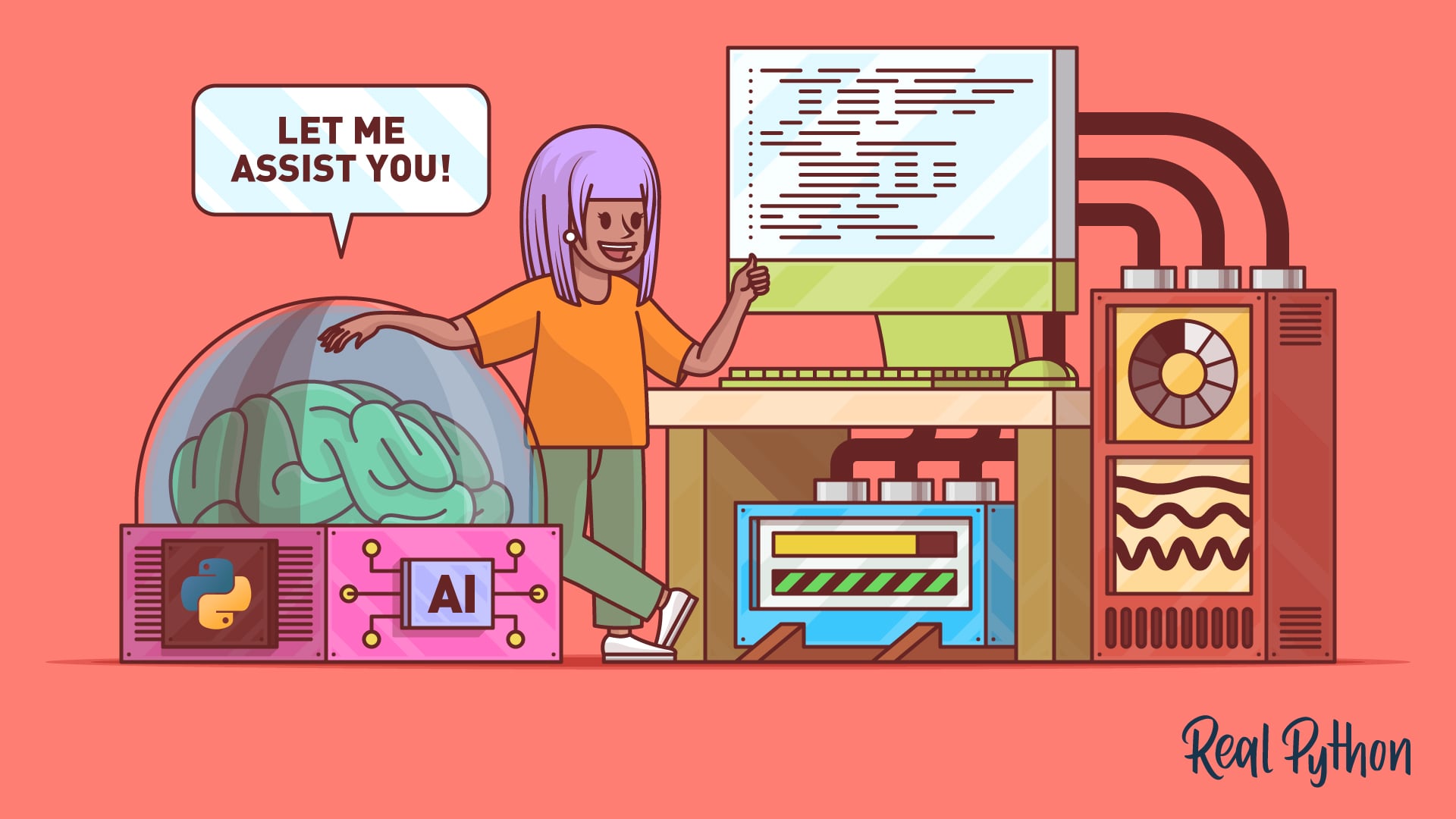
Learning Path
Python Coding With AI
5 Resources ⋅ Skills: Claude Code, Cursor, Gemini CLI, AI-Assisted Development
You can also explore our new AI Coding Tools reference area and the AI Coding Glossary to discover new tools and deepen your understanding of the rapidly evolving AI landscape.
Grow Your Python Career
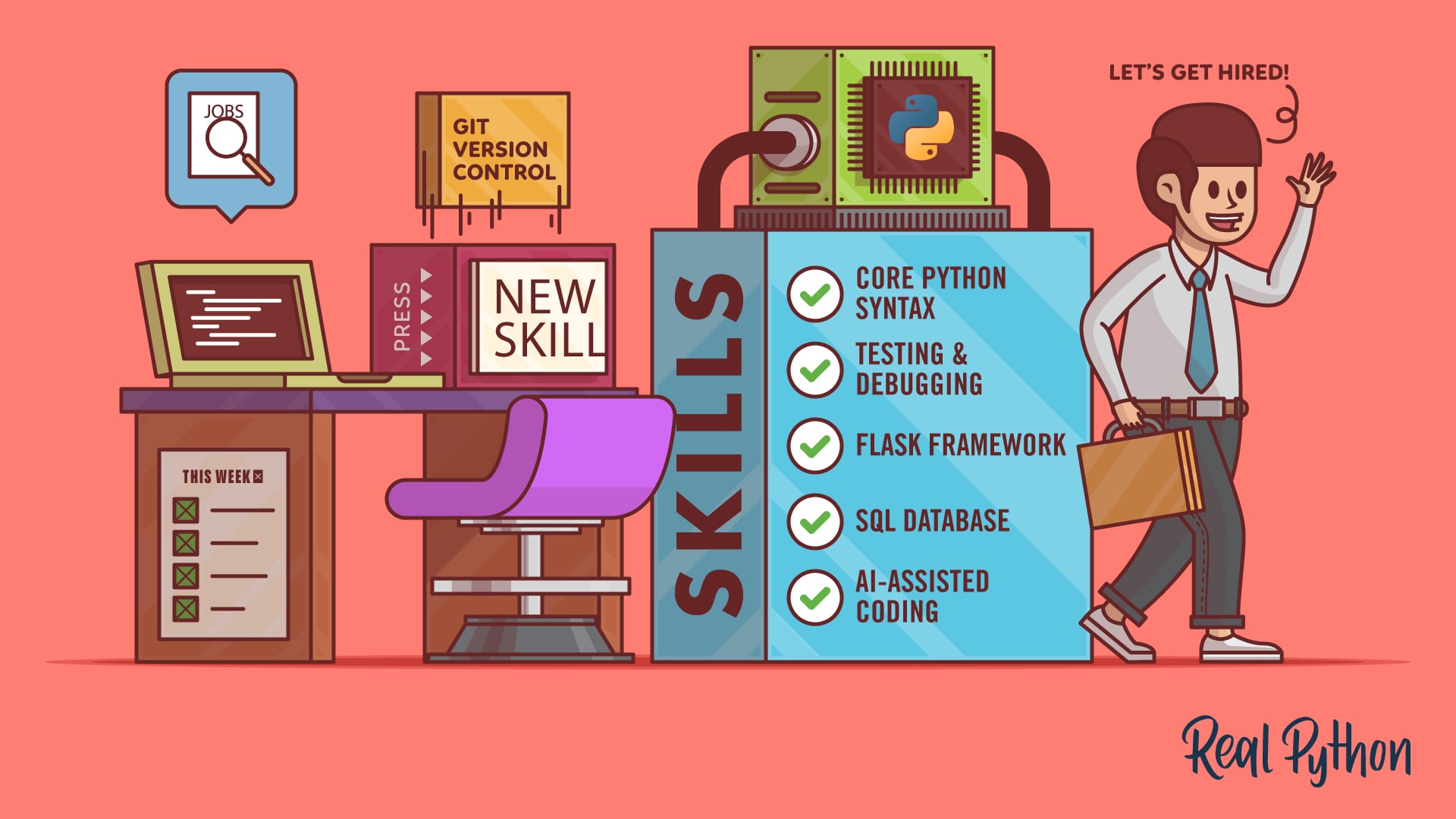
Python opens doors to a wide range of career opportunities, from software development and data science to automation and machine learning. But knowing the language is just one piece of the puzzle. Understanding how to position yourself, which skills employers value most, and how to demonstrate your abilities can make all the difference.
These resources help you turn your Python knowledge into meaningful career progress:
- What Can You Do With Python?
- How to Build the Python Skills That Get You Hired
- How to Use Python: Your First Steps
If you’re serious about building job-ready Python skills, consider joining one of our live courses. Working through problems alongside peers and an experienced instructor mirrors what you’ll encounter in technical interviews and on the job. Collaboration and clear communication matter just as much as writing correct code!
The real-time feedback and structured challenges help you build confidence and develop the problem-solving habits that employers look for.
If you’re just starting out, our Python for Beginners Live Course gives you a strong foundation with expert guidance. Already comfortable with the basics? The Intermediate Python Deep Dive pushes you further and prepares you for more complex, real-world challenges.
Build Projects That Stretch Your Skills
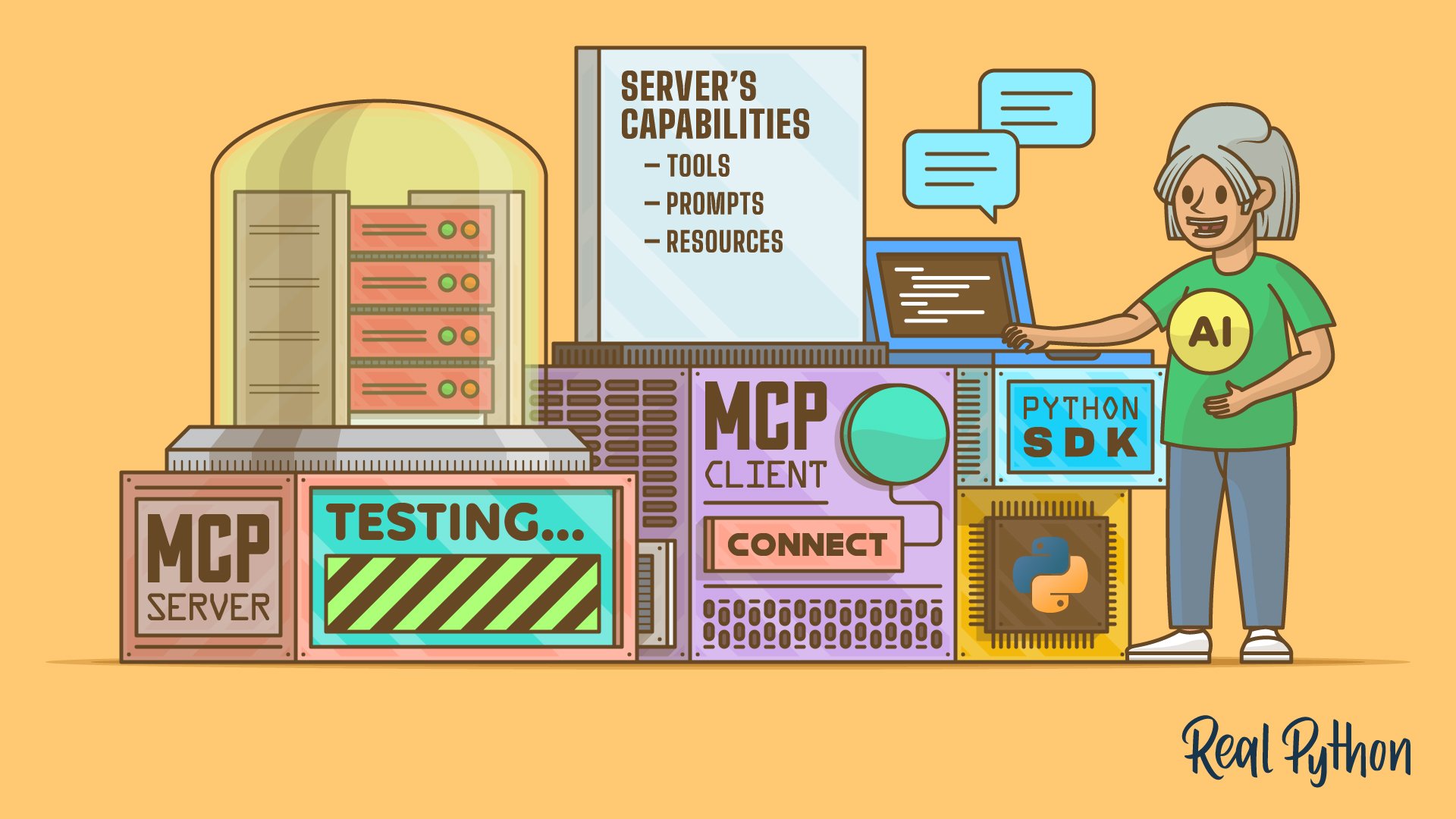
One of the best ways to grow as a developer is to roll up your sleeves and build something real. Projects push you beyond tutorials and exercises, forcing you to make decisions, debug unexpected issues, and tie together concepts you’ve learned separately. The result? Deeper understanding, stronger problem-solving instincts, and something tangible to show potential employers or talk about in interviews.
These hands-on resources guide you through building practical applications:
- A Close Look at a FastAPI Example Application
- Build a Python MCP Client to Test Servers From Your Terminal
- Python Textual: Build Beautiful UIs in the Terminal
- Building a Code Image Generator With Python
Each project teaches you something different, from working with APIs and web frameworks to crafting polished terminal interfaces. Pick one that sparks your curiosity and start building!
Manage Your Python Projects Like a Pro

As your projects grow, so does the need for better organization and tooling. Managing dependencies, structuring your code, and automating repetitive tasks can mean the difference between a smooth development experience and constant frustration. Modern Python tooling has come a long way, making it easier than ever to keep your projects clean, maintainable, and production-ready.
These tutorials and courses help you master the skills and tools that support professional Python development:
- How Can You Structure Your Python Script?
- How to Manage Python Projects With pyproject.toml
- uv vs pip: Managing Python Packages and Dependencies
- Python Project Management With uv
- Astral’s ty: A New Blazing-Fast Type Checker for Python
- Python Continuous Integration and Deployment Using GitHub Actions
With a solid project management workflow, you’ll spend less time wrestling with setup and more time building features that matter.
Master Modern Python Features
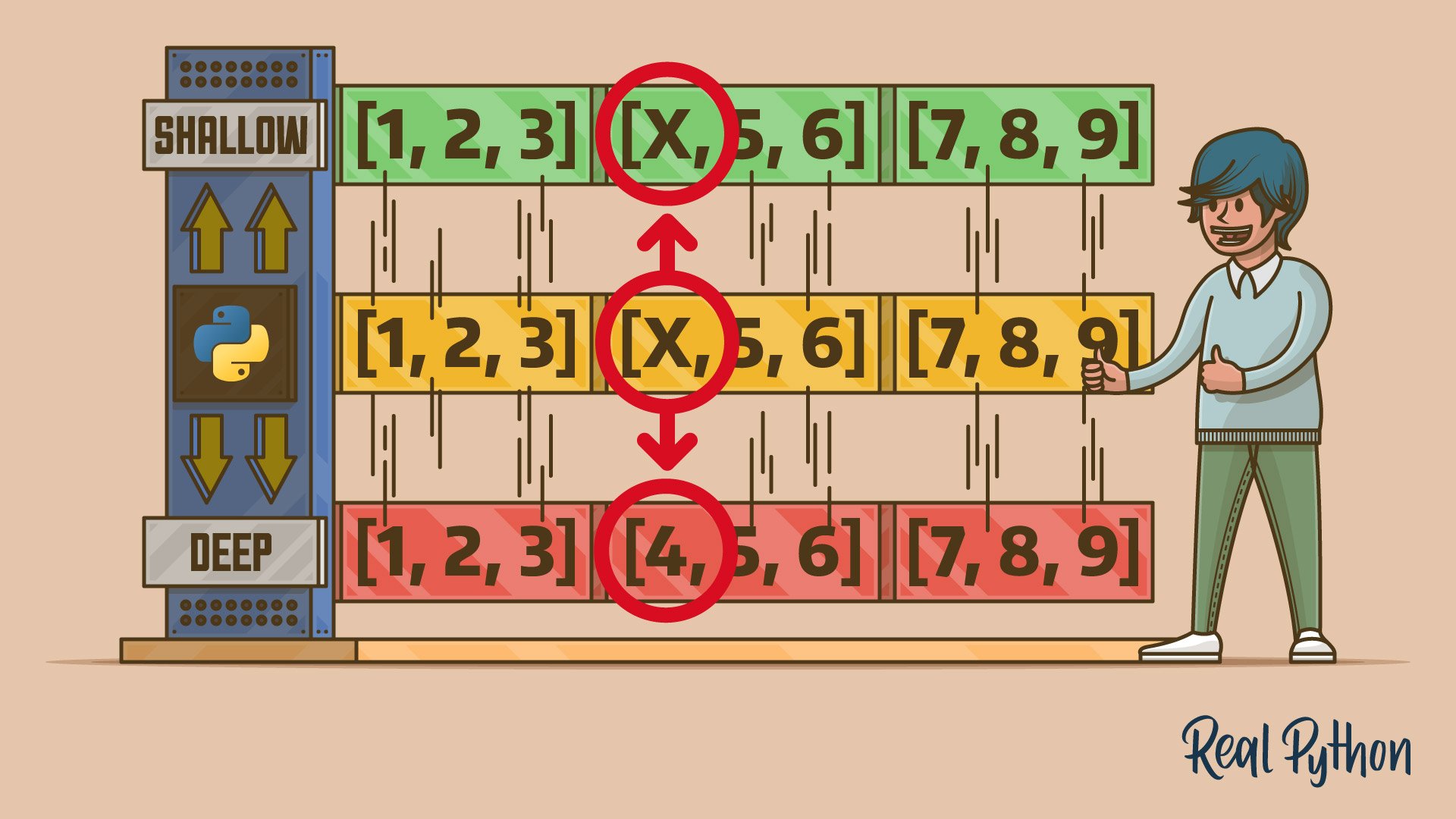
Once you’re comfortable with the basics, exploring Python’s deeper mechanisms helps you write clearer, more efficient, and more expressive code. Understanding concepts like shallow vs deep copying, how bytes work under the hood, and what those arrow annotations actually mean will give you a stronger mental model of how Python operates.
These tutorials and courses unpack important modern features of the language:
- What Does -> Mean in Python Function Definitions?
- How to Copy Objects in Python: Shallow vs Deep Copy Explained
- Bytes Objects: Handling Binary Data in Python
- Exploring Python Closures: Examples and Use Cases
- Using Structural Pattern Matching in Python
- Speed Up Python With Concurrency
Ready to truly understand what’s happening under the hood? The Intermediate Python Deep Dive is an 8-week cohort-based course that takes you from it works to I understand why it works. You’ll master Python’s object model, special methods, closures, decorators, and more, all with live instruction, hands-on exercises, and a supportive community.
Past participants say they gained the confidence to dive deep into Python and read other people’s code with greater clarity and understanding.
Write Cleaner, Smarter Python Code

Good code is readable, maintainable, and easy to reason about. Developing healthy coding habits early pays dividends throughout your career, and leveraging the right tools makes it much easier to catch mistakes before they become bugs. From logging and linting to understanding Python’s naming conventions, these resources help you write code that your future self (and your teammates) will thank you for.
These tutorials and courses help you level up your Python code quality:
- How to Use Loguru for Simpler Python Logging
- Python’s raise: Effectively Raising Exceptions in Your Code
- Modern Python Linting With Ruff
- Single and Double Underscore Naming Conventions in Python
- Python Descriptors
- Profiling Performance in Python
Writing clean code isn’t just about aesthetics. It’s about building software you can confidently extend, debug, and share with others. That’s becoming even more important with AI-assisted engineering.
Build Efficient Data Pipelines

Python’s data stack continues to evolve, offering faster and more powerful ways to prepare, transform, and analyze data. Tools like Polars and DuckDB have emerged as serious alternatives to traditional workflows, while pandas and NumPy remain essential skills for any data practitioner. And with the rise of LLMs, knowing how to prepare documents for AI pipelines has become a valuable skill in its own right.
These tutorials and courses help you build efficient, modern data workflows:
- Introduction to pandas
- NumPy Techniques and Practical Examples
- How to Work With Polars LazyFrames
- Introducing DuckDB
- Python MarkItDown: Convert Documents Into LLM-Ready Markdown
- Getting Started With marimo Notebooks
By exploring these tools, you’ll be equipped to handle data at any scale and prepare it for analysis, visualization, or feeding into AI models.
Create for the Web With Python
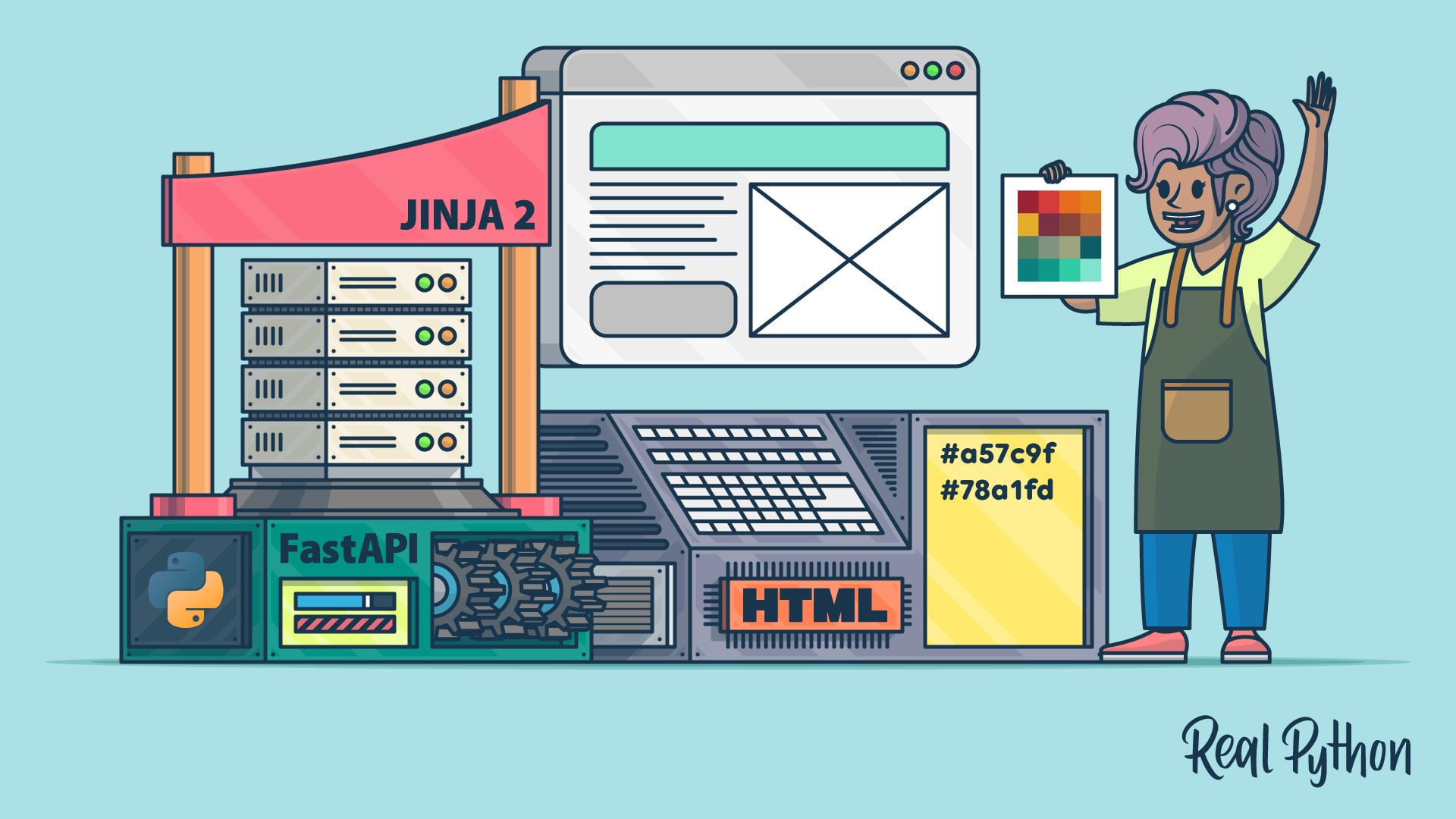
Python has become a go-to choice for web development, powering everything from lightweight APIs to full-featured web applications. FastAPI has quickly risen as a favorite for building fast, modern backends, while Flask and Django remain reliable workhorses for projects of all sizes. And with browser automation tools like Selenium, you can interact with websites programmatically for testing, scraping, or workflow automation.
These resources help you get hands-on with Python web development:
- Get Started With FastAPI
- How to Serve a Website With FastAPI Using HTML and Jinja
- Modern Web Automation With Python and Selenium
- Creating a Scalable Flask Web Application From Scratch
From spinning up your first API to automating browser tasks, you’ll build a solid foundation for working on the web with Python.
Conclusion
As we wrap up 2025, Python’s growth shows no signs of slowing down. Python 3.14 brought meaningful improvements to the developer experience, and the explosion of AI tooling made Python more central than ever to building intelligent applications. It’s been an exciting year to be a Python developer.
At Real Python, we’ve enjoyed sharing the latest community news, quizzes, Office Hours, and more with you throughout the year. Our Office Hours have featured some great conversations and live showcases of modern AI Coding Tools, so put Office Hours on your calendar for 2026 if you haven’t already!
Note: This year we also launched our reference content, a new way to quickly look up Python terms and concepts. Across the site, you’ll now encounter link previews on hover for handy reminders—for example, what’s a callable again? Click to dive deeper or browse the whole catalog.
For structured ways to continue learning next year, explore our Python Learning Paths, which guide you through topics at basic, intermediate, and advanced levels. For ongoing friendly and insightful conversations with Python developers from around the world, tune in to The Real Python Podcast.
Tip: If you’re ready to accelerate your learning in 2026, our live courses are returning in February! Join the Python for Beginners course to build a strong foundation, or take the Intermediate Python Deep Dive to master advanced patterns and write better Python. There’s no better way to level up than learning alongside peers with expert guidance.
Thank you for being part of the Real Python community, and to the Python Software Foundation for continuing to support the language and ecosystem we all love. Here’s to a productive and inspiring 2026!
Join Now: Click here to join the Real Python Newsletter and you’ll never miss another Python tutorial, course, or news update.