Model Context Protocol (MCP)
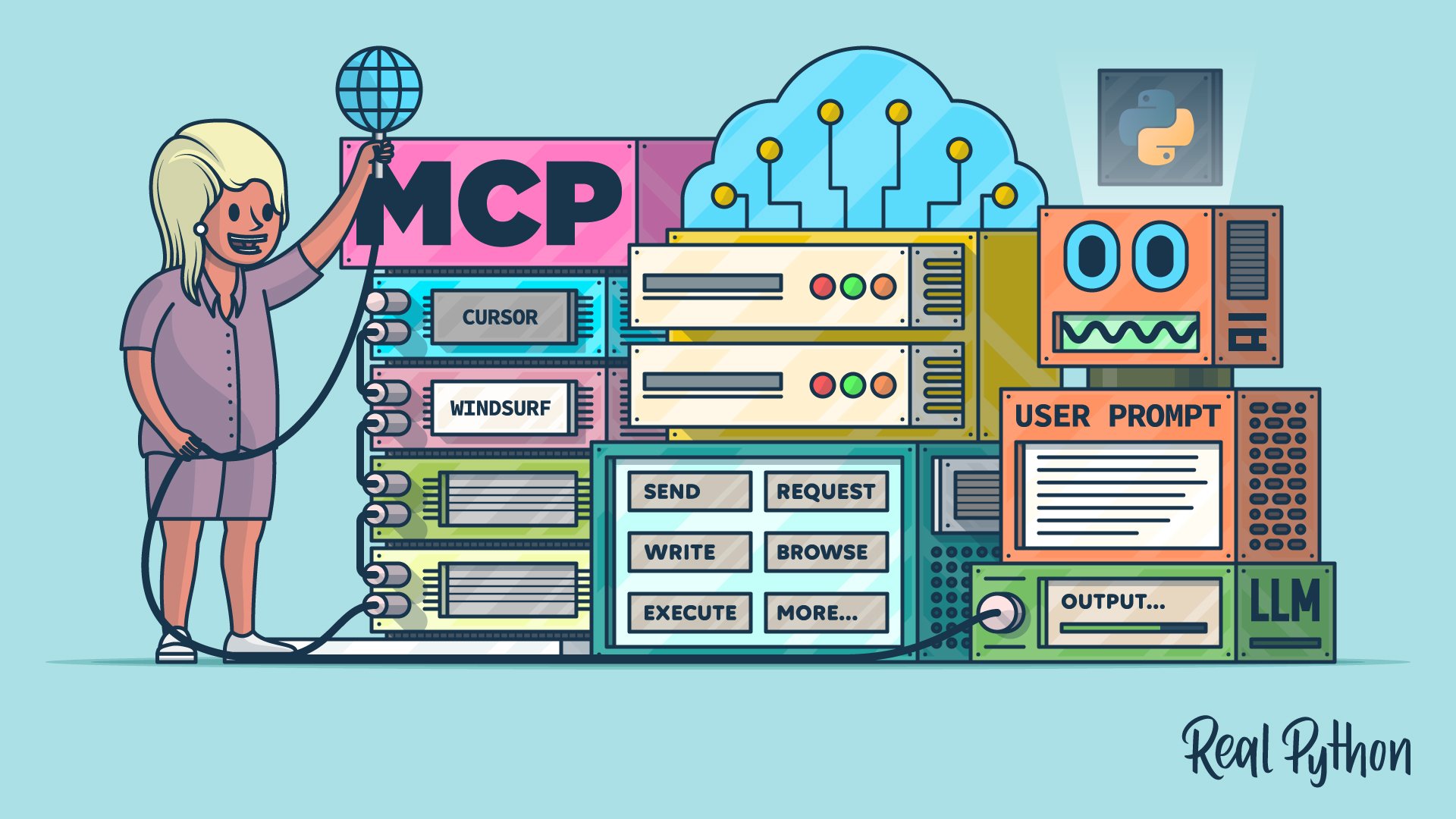
Model Context Protocol (MCP) is an open, client-server communication standard that lets AI applications connect to external tools, resources, and predefined prompts through a consistent interface.
MCP defines how a client discovers and invokes server-provided capabilities:
- Tools are callable actions or API requests that the client can ask the server to perform.
- Resources are structured data or context, such as files, database tables, documents, and schemas, accessible by URI, which the client or model can reference.
- Prompts are predefined prompt templates that clients can fetch, fill with arguments, and execute to drive structured interactions with language models.
MCP also lets a server ask for more information mid-call. Through elicitation, a server can answer a request by asking the client to gather extra input or a confirmation from the user, and the client then retries the original request with the user’s answers attached.
As of protocol version 2026-07-28, MCP is a stateless protocol: every request carries its own protocol version and capabilities, and clients that want to learn a server’s capabilities up front can call the optional server/discover request.
MCP encodes messages using JSON-RPC 2.0 over one of its two standard transports: stdio for local processes or streamable HTTP for remote servers.
The goal is interoperability and portability across assistants, hosts, and integrations, so developers can build a connector once and reuse it in many AI apps.
Related Resources
Tutorial
Python MCP Server: Connect LLMs to Your Data
Learn how to build a Model Context Protocol (MCP) server in Python. Connect tools, prompts, and data to AI agents like Cursor for smarter assistants.
For additional information on related topics, take a look at the following resources:
- Build a Python MCP Client to Test Servers From Your Terminal (Tutorial)
- Connecting LLMs to Your Data With Python MCP Servers (Course)
- Testing MCP Servers With a Python MCP Client (Course)
- MCP Gets Its Biggest Rewrite and Other Python News for August 2026 (Tutorial)
- Python MCP Server: Connect LLMs to Your Data (Quiz)
- Build a Python MCP Client to Test Servers From Your Terminal (Quiz)
Have a question about this? Mentor AI can show you examples, compare related terms, and point you to tutorials.
Ask Mentor AI

By Leodanis Pozo Ramos • Updated Oct. 5, 2026
