vibe coding
Vibe coding is an AI-assisted programming style where a developer describes goals in natural language and accepts AI-generated code without carefully reviewing or fully understanding it. The developer iterates by running the code and asking the model to fix issues or add features.
In popular usage, the term has broadened well past this strict sense. Collins Dictionary, which named vibe coding its Word of the Year 2025, defines it as “the use of artificial intelligence prompted by natural language to write computer code.” That definition drops the no-review criterion that practitioners use to distinguish it from ordinary AI-assisted development.
It emphasizes conversational, rapid prototyping over deep code comprehension, and is often contrasted with augmented coding, a term Kent Beck popularized as its deliberate counterpoint. In augmented coding, the developer still cares about the code’s quality, complexity, and test coverage, inspecting the agent’s diffs and tests rather than accepting output unseen.
Critics have pointed to several risks of this coding approach, including code quality degradation, security vulnerabilities, lack of maintainability, difficulty in debugging, and accountability gaps.
Related Resources
Tutorial
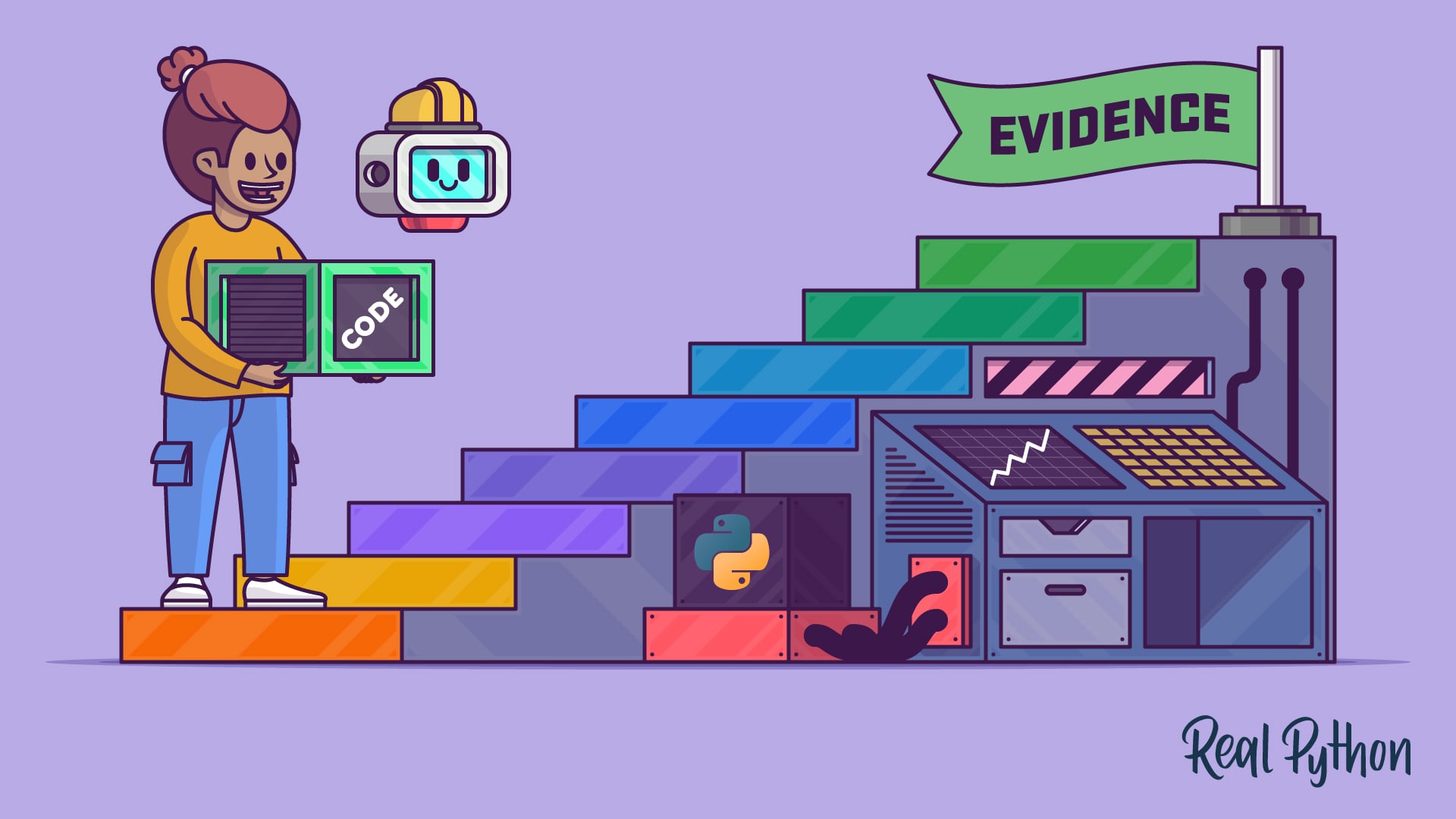
Agentic Engineering in Python: From Vibes to Evidence
Move from vibe coding to agentic engineering in Python, using tests, types, and code review to prove an AI agent's changes are safe to keep.
For additional information on related topics, take a look at the following resources:
- Tips for Using the AI Coding Editor Cursor (Course)
- AI Coding Agents Guide: A Map of the Four Workflow Types (Tutorial)
- How to Debug Python Code With an AI Agent (Tutorial)
- Agentic Engineering in Python: From Vibes to Evidence (Quiz)
- Exploring AI Coding Agent Workflows (Course)
- AI Coding Agents Guide: A Map of the Four Workflow Types (Quiz)
- How to Debug Python Code With an AI Agent (Quiz)
Have a question about this? Mentor AI can show you examples, compare related terms, and point you to tutorials.
Ask Mentor AI

By Leodanis Pozo Ramos • Updated Oct. 17, 2026