Jupyter
Jupyter, or Project Jupyter, is a free, open-source project that builds the standards and applications behind browser-based interactive computing. It grew out of IPython in 2014, and its name nods to Julia, Python, and R.
Jupyter is a family of programs rather than a single one. Jupyter Notebook and JupyterLab are the two editing surfaces, JupyterHub serves them to a whole classroom or team, and Voilà turns a notebook into a standalone web app. Underneath sit two open standards, the JSON .ipynb document format and a messaging protocol that connects the interface to a kernel:
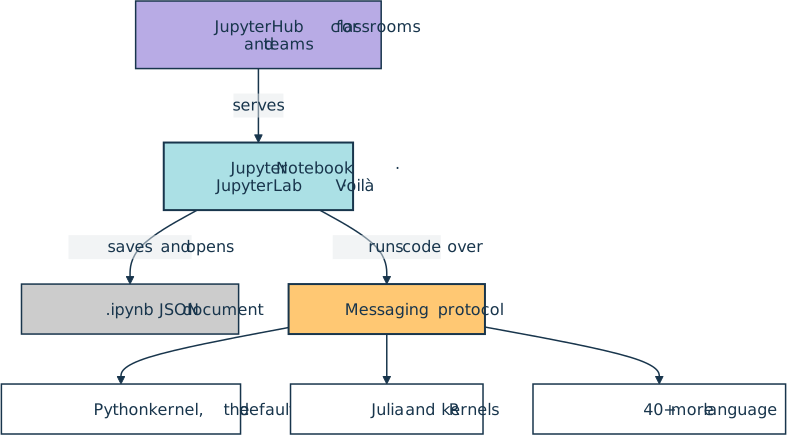
Kernels are what make Jupyter language-agnostic, and they exist for more than forty languages. Python is the default, so you can get started with pip install jupyterlab or pip install notebook, or with the Anaconda distribution. The code is released under the modified BSD license.
Other tools build on the same standards. Google Colab is a hosted notebook service, and Visual Studio Code opens .ipynb files and runs them on Jupyter kernels. For a different approach, the marimo project offers reactive notebooks that it stores as plain Python files.
For AI assistance inside a notebook, the JupyterLab organization also incubates Jupyter AI, an extension that brings a chat interface and coding agents into JupyterLab.
Official website: jupyter.org
Related Resources
Tutorial
Jupyter Notebook: An Introduction
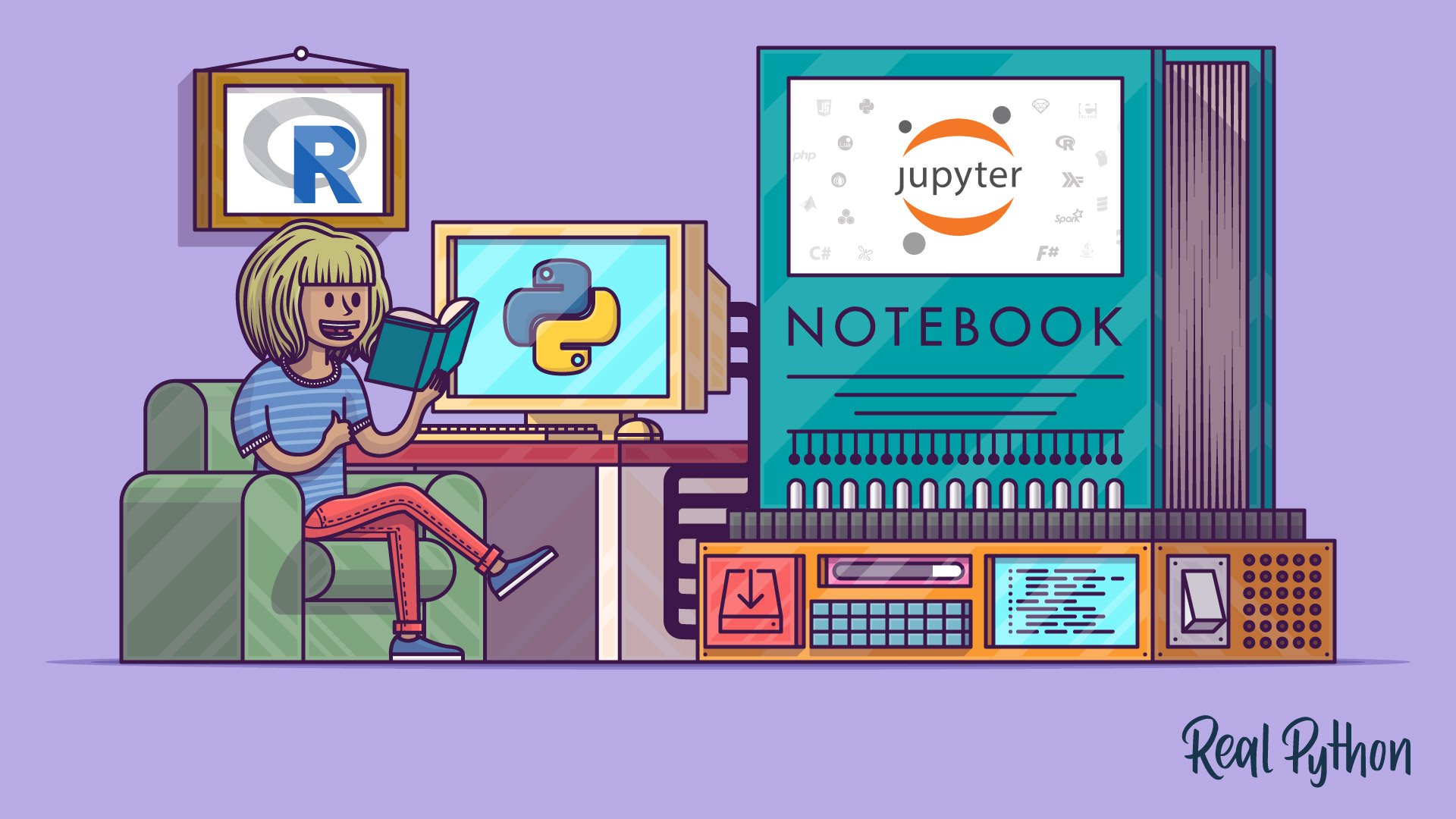
In this step-by-step Python tutorial, you learn how to get started with The Jupyter Notebook, an open source web application that you can use to create and share documents that contain live code, equations, visualizations, and text.
For additional information on related topics, take a look at the following resources:
- Using Jupyter Notebooks (Course)
- JupyterLab for an Enhanced Notebook Experience (Tutorial)
- Unlock IPython's Magical Toolbox for Your Coding Journey (Tutorial)
- marimo: A Reactive, Reproducible Notebook (Tutorial)
- Jupyter Notebook: An Introduction (Quiz)
- Getting Started With marimo Notebooks (Course)
- marimo: A Reactive, Reproducible Notebook (Quiz)
Have a question about this? Mentor AI can show you examples, compare related terms, and point you to tutorials.
Ask Mentor AI

By Martin Breuss • Updated Sept. 29, 2026
