lexicographic order
Lexicographic order is a way of ordering sequences by comparing their elements one position at a time, generalizing the alphabetical order of words in a dictionary to any symbols that can be ranked.
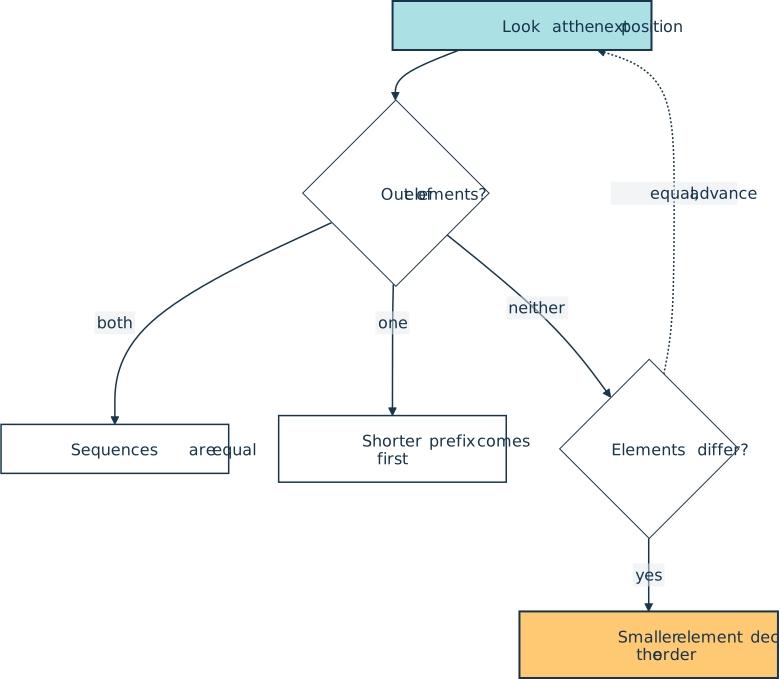
The comparison looks at the first element of each sequence. If those elements differ, they alone decide the outcome. If they’re equal, the comparison moves to the next position, and so on. A sequence that runs out while still matching the other is a prefix of it and comes first, which is why "car" sorts before "cart".
Any element type with a defined order works, such as characters ranked by Unicode code point or numbers ranked by value. The whole comparison reduces to one left-to-right pass:
Programming languages rely on lexicographic order for string comparison and for compound sort keys. Python compares strings, tuples, and lists this way, so sorting tuples shaped like (last_name, first_name) groups people by last name and breaks ties on first name. The same principle explains why ISO 8601 timestamps written in the same format sort chronologically as plain strings.
The element-by-element rule also produces a classic surprise when digits are compared as characters. Because "1" ranks below both "2" and "9", sorting numbered filenames places chapter10.txt ahead of chapter2.txt and chapter9.txt, so chapter ten lands before chapters two and nine. Tools that need human-friendly results extract the digit runs and compare them as integers instead, a scheme known as natural sort order.
Related Resources
Tutorial
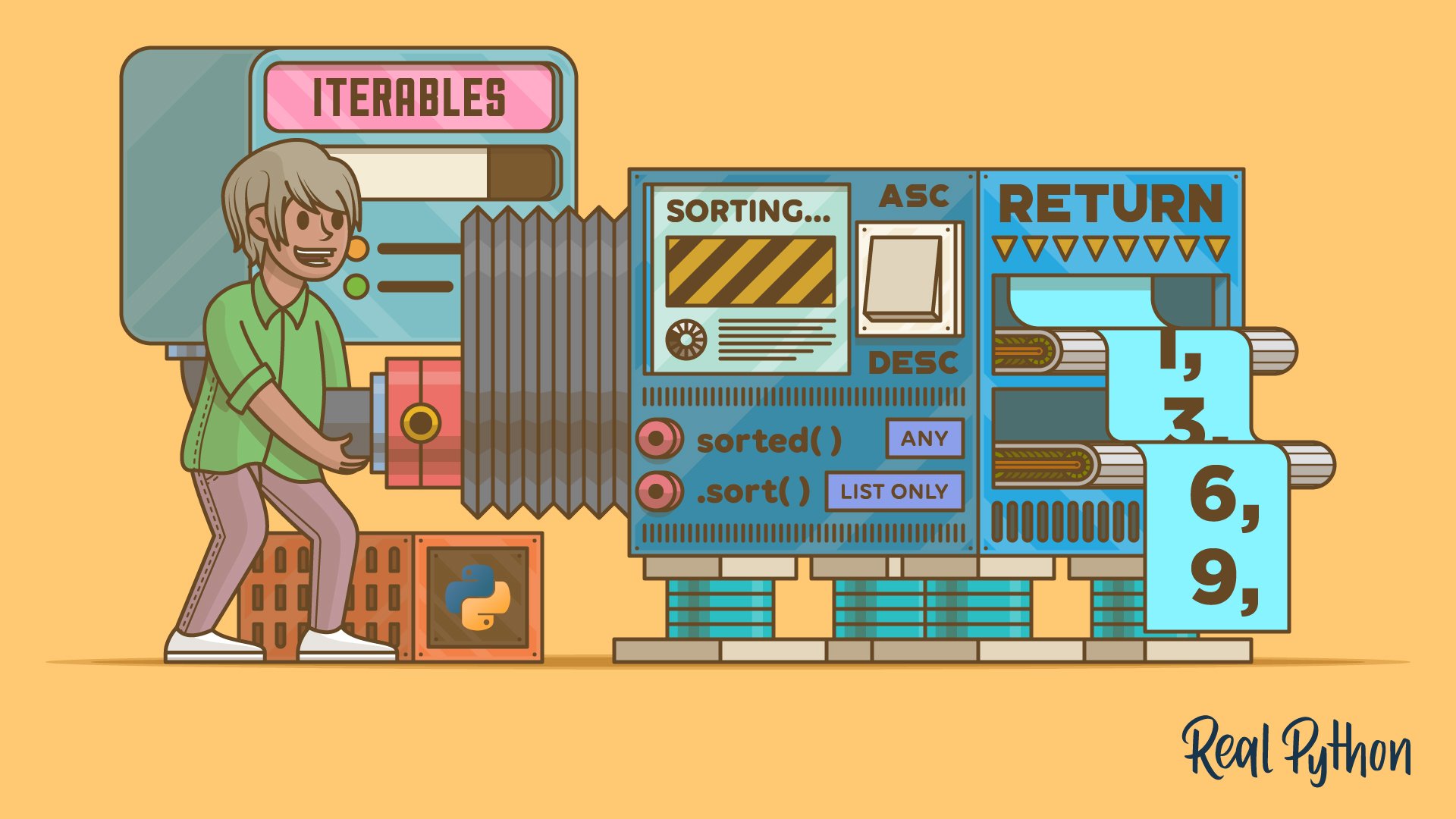
How to Use sorted() and .sort() in Python
In this tutorial, you'll learn how to sort various types of data in different data structures in Python. You'll explore custom sorting orders and work with two distinct ways of sorting.
For additional information on related topics, take a look at the following resources:
- Sorting Algorithms in Python (Tutorial)
- How to Sort Unicode Strings Alphabetically in Python (Tutorial)
- Sorting Data With Python (Course)
- Introduction to Sorting Algorithms in Python (Course)
- Sorting Dictionaries in Python: Keys, Values, and More (Course)
- How to Use sorted() and .sort() in Python (Quiz)
- Sorting Algorithms in Python (Quiz)
Have a question about this? Mentor AI can show you examples, compare related terms, and point you to tutorials.
Ask Mentor AI

By Martin Breuss • Updated Sept. 6, 2026