Auto-GPT
Auto-GPT is an open-source autonomous AI agent project from Significant Gravitas that takes a goal written in plain language, splits it into sub-tasks, and works through them without step-by-step prompting.
Toran Bruce Richards released the original Python program in March 2023, and it was one of the first public demonstrations of GPT-4 driving itself in a loop, using web search, files, and memory between model calls. That original code is now AutoGPT Classic, which the maintainers keep for study rather than use.
Drive the same goal both ways below to see what the loop replaces:
Active development moved to the AutoGPT Platform, branded without the hyphen and still shipping under beta-tagged releases. It pairs a Python backend with a drag-and-drop canvas where you assemble agents from blocks, a dashboard for scheduled or triggered runs, and a marketplace of community agents.
Python developers extend it by writing blocks as classes that subclass Block with typed input and output schemas. You can self-host with Docker and your own API keys, or pay for the hosted service. Classic is MIT licensed, while the platform carries the more restrictive Polyform Shield license, which is source-available rather than open source and bars reselling it as a competing hosted service.
CrewAI, LangGraph, and Pydantic AI now cover much of the same agent-orchestration ground in Python, with the loop written in code instead of left to the model.
Official website: agpt.co
Related Resources
Tutorial
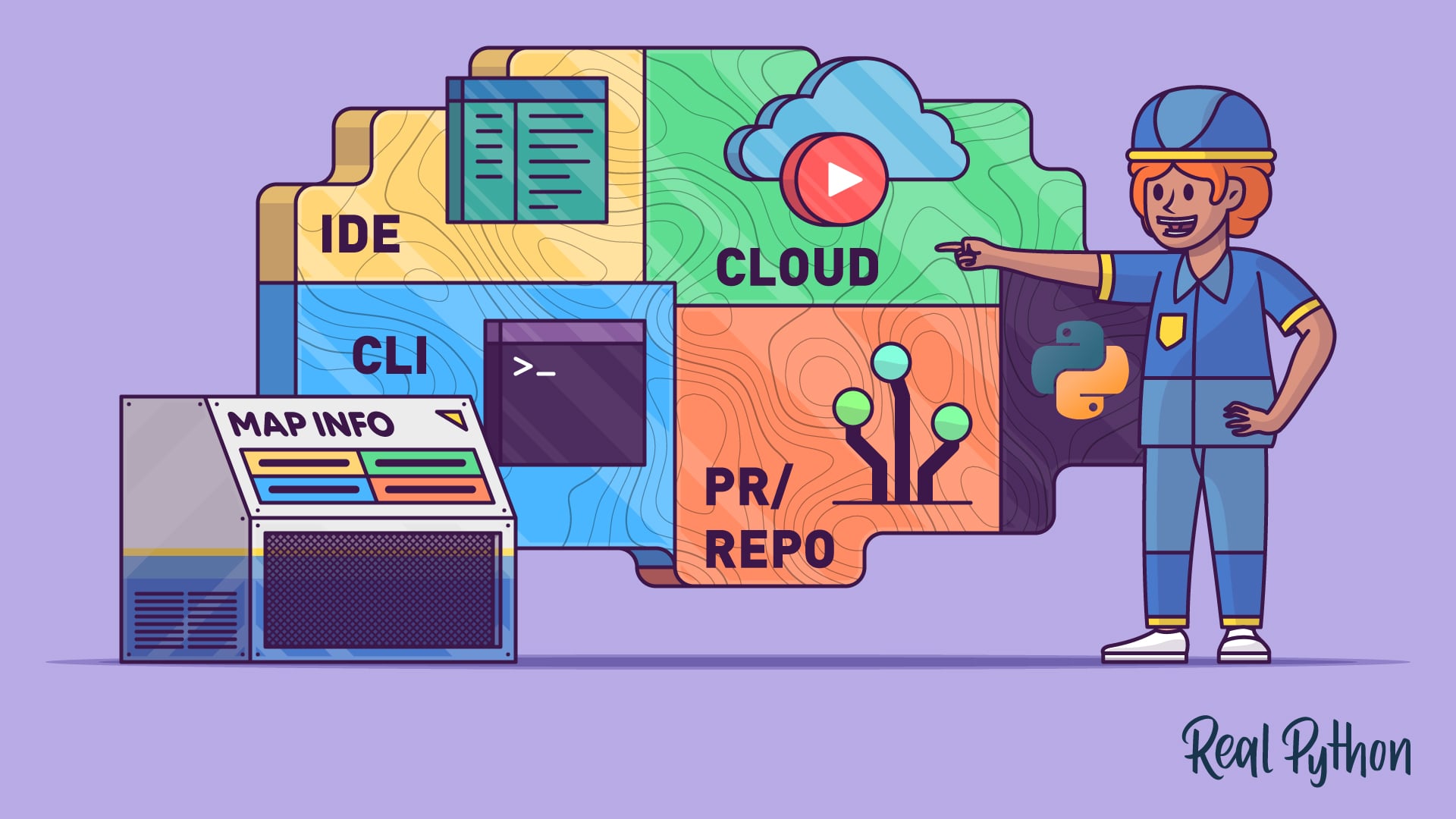
AI Coding Agents Guide: A Map of the Four Workflow Types
AI coding agents come in four types: IDE, terminal, PR, and cloud. Learn how each workflow fits into modern Python development.
For additional information on related topics, take a look at the following resources:
- LangGraph Tutorial: Build Stateful AI Agents in Python (Tutorial)
- CrewAI in Python: Coordinating Teams of AI Agents (Tutorial)
- Pydantic AI: Build Type-Safe LLM Agents in Python (Tutorial)
- Building Type-Safe LLM Agents With Pydantic AI (Course)
- Leverage OpenAI's API in Your Python Projects (Course)
- AI Coding Agents Guide: A Map of the Four Workflow Types (Quiz)
- LangGraph: Build Stateful AI Agents in Python (Quiz)
- CrewAI in Python: Coordinating Teams of AI Agents (Quiz)
- Pydantic AI: Build Type-Safe LLM Agents in Python (Quiz)
Have a question about this? Mentor AI can show you examples, compare related terms, and point you to tutorials.
Ask Mentor AI

By Martin Breuss • Updated Sept. 9, 2026