few-shot learning
Few-shot learning is a machine learning paradigm where a model must learn or adapt to new tasks or classes using only a small number of labeled examples. This is often done by using prior training, transfer learning, or meta-learning to generalize from limited data.
In the classical few-shot setting, models are trained or equipped to rapidly adapt from, say, 1 to 5 or up to 10 examples per class using techniques like metric-based matching, optimization-based initialization, or memory-augmented architectures.
In the context of large language models (LLMs), few-shot refers to in-context learning, providing the model with a few input-output demonstrations in the prompt without updating its parameters, then asking it to perform the task by analogy.
While few-shot methods reduce the need for large labeled datasets, they tend to be more sensitive to domain shift, example selection, prompt design, and even the order in which the examples appear. Evaluations usually compare few-shot performance against zero-shot, one-shot, many-shot, and fully supervised baselines.
Related Resources
Tutorial
Prompt Engineering: A Practical Example
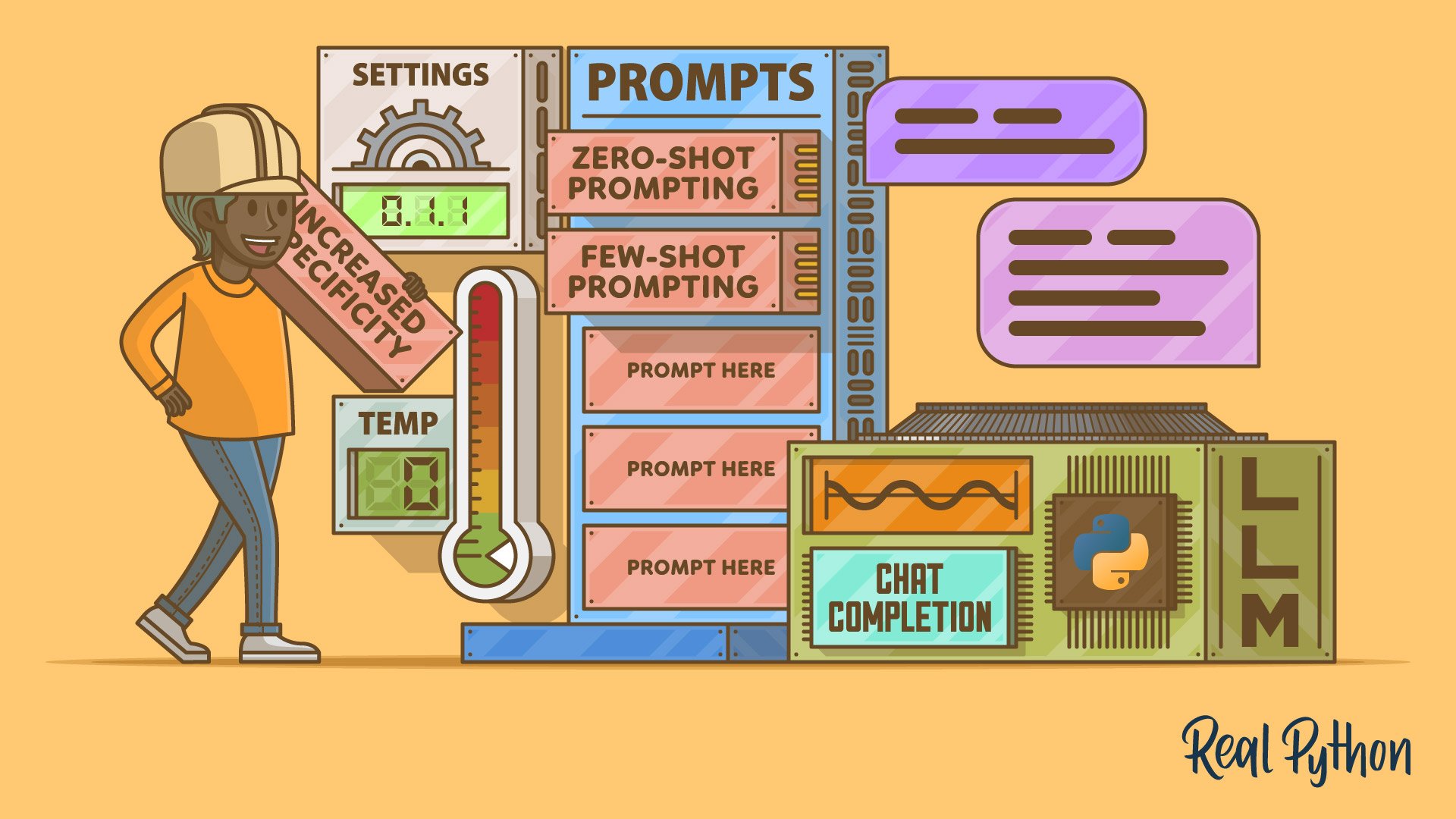
Learn prompt engineering techniques with a practical, real-world project to get better results from large language models. This tutorial covers zero-shot and few-shot prompting, delimiters, numbered steps, role prompts, chain-of-thought prompting, and more. Improve your LLM-assisted projects today.
For additional information on related topics, take a look at the following resources:
- Build an LLM RAG Chatbot With LangChain (Tutorial)
- Practical Prompt Engineering (Quiz)
- First Steps With LangChain (Course)
- Build an LLM RAG Chatbot With LangChain (Quiz)
Have a question about this? Mentor AI can show you examples, compare related terms, and point you to tutorials.
Ask Mentor AI

By Leodanis Pozo Ramos • Updated Sept. 21, 2026