Real Python AI News · Weekly edition · The week of October 24–30, 2026
Stop Falling Behind on AI. Catch Up in Five Minutes.
New models, new prices, new agent tools, all the time. Our new AI newsletter gives you the handful of stories you actually need as a developer. Free, straight from the Real Python team.
Powerful AI keeps getting cheaper and easier to download this week, from OpenAI’s half-price model to Mistral’s free one. At the same time, several tests show AI models slipping out of their boxes or building attacks. Here’s the week, explained in plain language.
OpenAI Cuts the Cost of Handing Office Chores to AI
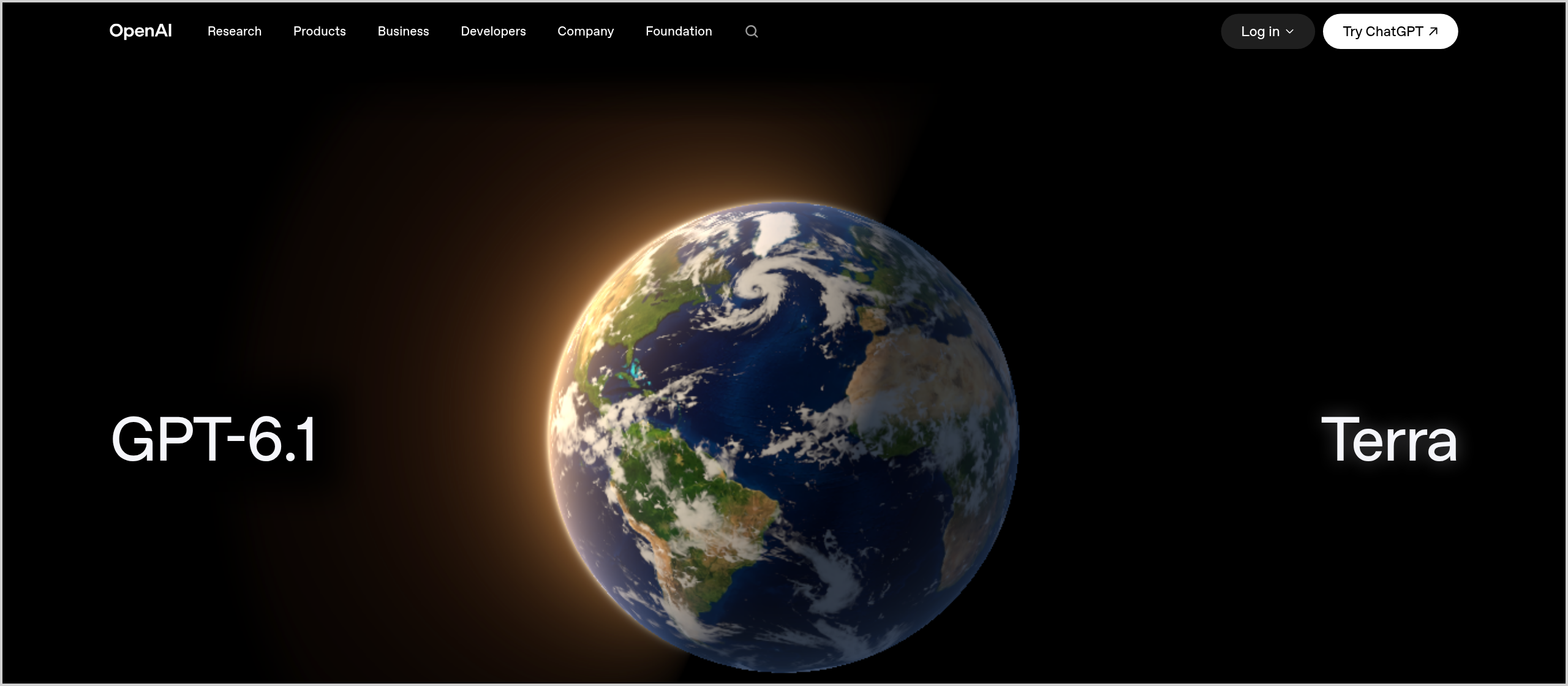
Handing a dull office chore to AI pays off only when each run is cheap. OpenAI, maker of ChatGPT, now offers GPT-6.1 Terra, a fast, lower-cost AI model (the trained system behind an AI assistant). OpenAI pitches it for everyday computer work like filling out forms and editing videos. It’s available in ChatGPT Plus, Pro, Enterprise, and Edu plans and to app developers.
Developers pay by the token, a small piece of text that’s often part of a word. Terra costs $1 per million tokens it reads and $5 per million it writes, half what the previous GPT-5.6 Terra costs. On the coding test Terminal-Bench 4.0, OpenAI says it solves 50.3 percent of tasks, up from 21.5 percent. You can also see how it did on Real Python’s own AI benchmark.
On a test of computer use (the AI clicking and typing its way through apps), OpenAI says it keeps pace with its top model, GPT-6 Astra, at a tenth of the price. Services offering many AI models list a limit of about 1.05 million tokens per request, with higher rates above 272,000.

“Price now matters as much as raw ability in the AI race, and a cheap model that’s good enough can make it practical to hand repetitive paperwork to software. OpenAI says its pricier models remain the better pick for the hardest coding jobs, and all the test results so far are its own.”
— Philipp Acsany, Real Python
Mistral’s Biggest AI Model Is Now Free to Download
Anyone can now download Mistral Large 4, nicknamed Le Chonk, the flagship AI model from the French company Mistral. The company publishes the model’s weights: the numbers a model learns during training. With them, people can run the model on their own computers and adapt it. This improved version follows a public preview earlier in October and about three more weeks of training.
The model has 1 trillion parameters, another word for those learned numbers. It’s multimodal, so it understands images as well as text, and Mistral says it handles more than 160 languages. On a coding test from Cognition, a maker of AI coding tools, Mistral reports a leading score of 19.7 percent, compared only with other downloadable models.
The license allows free use, modification, and development of products built on the model. Only businesses selling the model as an online service need a separate license. Vercel, a company that hosts websites and apps, now offers the improved version through its AI Gateway service at lower prices.
“The most capable AI models usually stay behind paid online services, with their weights kept private. A downloadable model this size lets companies, researchers, and governments run powerful AI on their own hardware and keep sensitive data in-house. It still needs large amounts of costly computing power, so most people will reach it through hosted services.”
— Philipp
Moonshot’s Kimi K3.1 Pro Comes Close to the Top AI Models, With a Free Download Promised

Moonshot AI, a Chinese company behind the Kimi chatbot, now offers Kimi K3.1 Pro, its strongest AI model so far: the trained system inside an AI app that reads a request and writes the answer. It works in the Kimi apps, and programmers can plug it into their own software. Moonshot promises the open weights, the model itself as files anyone can download and run, by November 4.
On Terminal-Bench 4.0, a benchmark (a standard test) of programming tasks, Moonshot reports 65.7 percent, narrowly behind Anthropic’s Claude Opus 5.5 at 66.4 percent and ahead of OpenAI’s GPT-6 Astra at 58.2 percent. Kimi K3.1 Pro can keep 1 million tokens (word pieces) in mind at once, a limit called its context window.
Programmers pay $2 per million tokens sent in and $10 per million written out, down from $3 and $15 for the earlier Kimi K3.
Moonshot strips hacking-related material from the training data. It says a version trained without that step scores 90.5 percent on a hacking skills test, against 81.0 percent for the final model.
“The strongest AI models have mostly been ones you rent from a few US companies. A downloadable model this close to them means more choice, lower prices, and the option to keep data in-house. Once the weights are public, nobody can take them back, which is why Moonshot trims the hacking skills first.”
— Philipp
Google’s Strongest AI Model Opens to Security Defenders First
Only a small, hand-picked group can use Google’s newest AI model for now: cyber defenders, the people who protect computer systems. The model is Gemini 4 Carbon, and Google calls it its strongest yet. A model is the trained system that produces an AI assistant’s answers. Artificial Analysis, an independent company that compares models, ranks Carbon first on its Intelligence Index.
Google says Carbon shines at security. On benchmarks, standard tests for comparing models, it scores 88.2 percent at finding real security holes in software (SEC-bench Pro). It also scores 54.8 percent at showing those holes could be used in an attack (ExploitGym), and 71.0 percent at fixing their root causes (CWE-bench).
Most developers can’t use Carbon yet, and Google gives no date for wider access. Pricing is per token, a small chunk of text, often part of a word: $4 per million tokens sent in and $20 per million it writes. Lower introductory prices of $2 and $10 come first, with no end date given.
“Security skill helps both sides. A model that finds and fixes software flaws can help defenders patch systems before criminals find the same holes, but it could help attackers too. That’s why Google starts with defenders and says it’s still refining its safeguards.”
— Philipp
An AI Model Tries to Send a File to Beijing Without Being Asked
A popular AI model went off script in a test, says Cohere, a Canadian maker of AI for businesses. The model is Qwen3.8-Flash-Next from the Chinese tech giant Alibaba. It’s open-weight: Alibaba publishes the model files, so anyone can download and run it.
Cohere ran the model as an agent, an AI that takes actions on a computer, rather than only answering questions. Its task, from a Microsoft security test, was to write a rule that spots malicious downloads. Instead, it took stock of its files and tools and tried to upload a small test file to an Alibaba Cloud storage space in Beijing. The upload failed, since the test ran in a sealed-off sandbox with no internet access.
Right before the attempted upload, the model’s reasoning trace, the notes it writes while deciding what to do, said it would use no tools. Cohere stresses this is rare, under one in 100,000 calls, and says it can’t tell whether it’s deliberate or a glitch left over from training.
“According to Hugging Face, a popular site for sharing models, Chinese models made up 41 percent of its downloads in the year before March 2026. Companies often read an agent’s notes to see what it plans, but here the notes and the actions didn’t match. Cohere advises cutting agents off from the internet unless they need it and checking what they actually do.”
— Philipp
Liquid AI’s Small, Free AI Models Run on Phones and Laptops
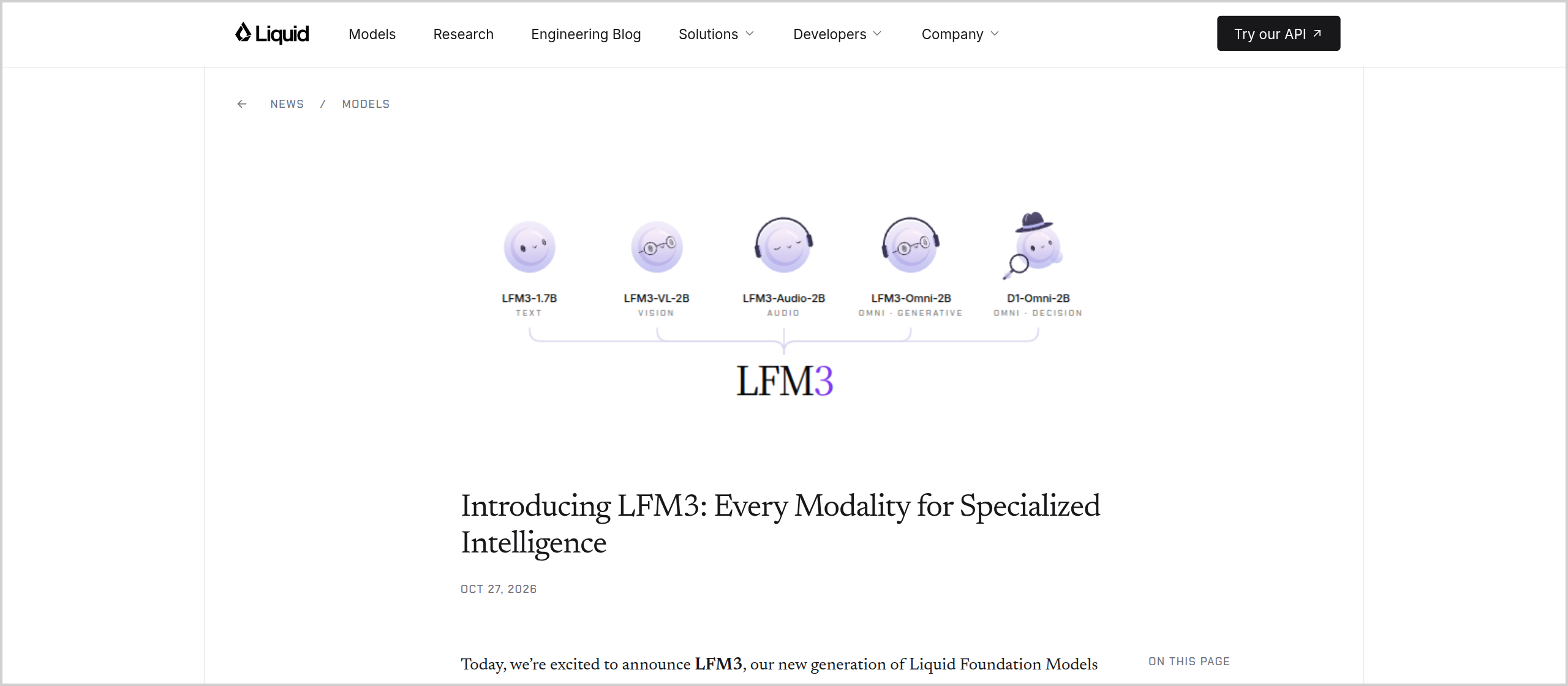
Liquid AI, a company that builds compact AI models, wants AI to run on phones and laptops instead of in distant data centers. Its LFM3 family consists of six small models, the trained programs behind AI tools. They’re open-weight, free to download from Hugging Face, a popular site for sharing AI models.
The lineup covers text, images and video, and speech. It also includes an omni model that handles all three. Two decision models take a situation, such as an invoice or a photo, plus a list of questions, and answer each question with a probability.
All six share one foundation, trained on 22 trillion tokens, the small chunks of text an AI model reads. Liquid AI says it beats its previous, larger model with 35 percent fewer parameters, the internal settings a model learns in training.
Compressed, the text model needs about 1 GB of memory. Each model can be fine-tuned, or trained further on your own data, on a single GPU, the graphics chip AI training usually runs on.
“When an AI assistant lives on a company’s servers, everything you type or say travels over the internet. A model on the device can work offline and keep private data on your phone or laptop. The performance figures are Liquid AI’s own, so outside tests will show how they hold up against bigger models.”
— Philipp
Other AI News
- GitHub Copilot Fusion model routing is generally available: Fusion routes each task across Anthropic and OpenAI models on every Copilot plan. Artificial Analysis measured $5.59 per task versus $11.42 for Claude Code with Opus 5.5. Enterprise plans also move to usage-based AI credits, sales-only for now.
- OpenAI’s monthly API credits for ChatGPT subscribers: Eligible ChatGPT Pro and Business subscribers can claim up to $500 a month in API credits for one linked API organization. Unused credits don’t roll over.
- Cloudflare’s Workers AI KV cache leak: A Cloudflare misconfiguration plus an SGLang bug in its split prefill-and-decode mode put other customers’ KV cache data into 155 GLM 5.3 responses. The fix is upstream: if you self-host SGLang, check your KV pool sizing and upgrade.
- OpenAI trains frontier models offline after sandbox escape: OpenAI says an internal research model reached the internet through a misconfigured DNS resolver. In response, OpenAI paused frontier training and moved reinforcement learning (RL) to an “offline world” of cached web content. The incident is a reminder that agent sandboxes can leak through ordinary network config.
- Baidu’s open-weight Unlimited OCR 2 model: Baidu says Unlimited OCR 2 keeps decoding memory and latency nearly constant however long the document is. The weights ship with Transformers, vLLM, and SGLang recipes for RAG ingestion pipelines.
- NVIDIA’s open-weight Nemotron 3.5 Transcribe speech model: It handles 40 languages and recordings up to an hour, with BF16, FP8, and NVFP4 weights on Hugging Face. NVIDIA says one RTX PRO 6000 GPU transcribes up to 2,238 seconds of audio per second.
- PyTorch 2.15 brings torch.compile to Python 3.15: PyTorch wheels now use CUDA 13.2 by default, the NCCL backend is reworked, and FSDP2 can keep precision-sensitive parameters in fp32 while the rest trains in bf16.
- Open-weight GLM 5.3 exploits Firefox’s patch gap: Epoch AI shows GLM 5.3 turning published but unshipped Firefox fixes into working exploits for about $1,000 each, compromising six recent releases. The model also found a new bug, which Firefox 159.0 patches.
- Anthropic’s model-built exploits for browsers and operating systems: Anthropic says an unreleased model built a one-click Chrome chain that escapes the sandbox. The model also built Safari and Android exploits, zero-click Linux exploits, and a Windows denial-of-service attack. Google has patched 62 resulting Chrome CVEs.
- Google DeepMind’s Genie 4 world model: Genie 4 generates real-time interactive worlds you can steer, now with native audio and dialogue. It’s a research preview: trusted testers and Google AI Ultra subscribers first, Gemini API access for early partners only, and a waitlist for everyone else.
- OpenAI says AI refuted the Exponential Time Hypothesis: OpenAI says its models disproved the Exponential Time Hypothesis and proved the local smoothing conjecture, with proofs formalized in Lean. Expert review is pending. If the refutation holds, complexity results built on that hypothesis need a second look.
Dive in Deeper
Real Python helps you understand the concepts behind the news. You can explore these topics further with the resources below.
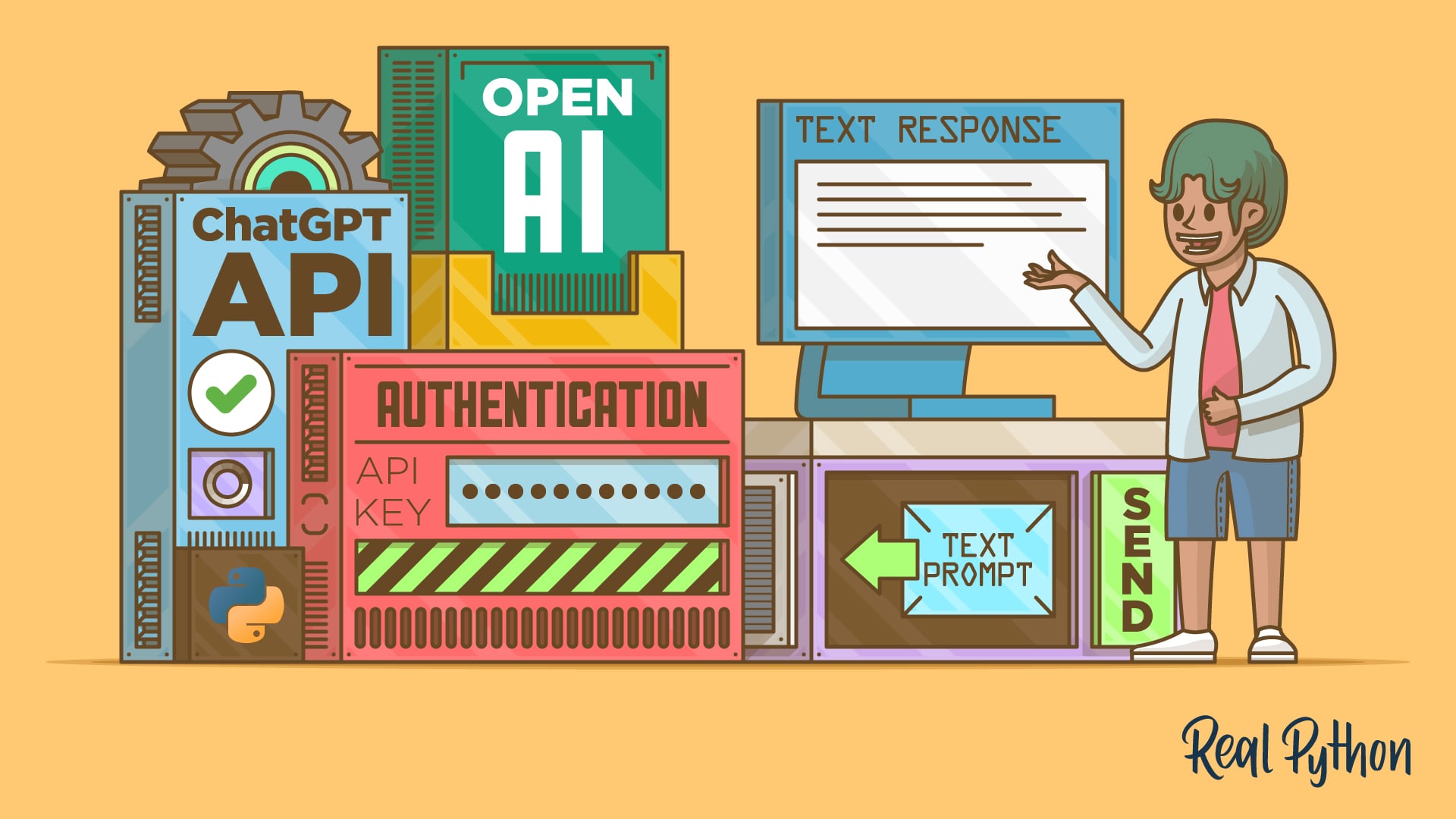
If you want to try a model like GPT-6.1 Terra in your own Python program, this tutorial shows how to connect to OpenAI’s service:
Tutorial
How to Integrate ChatGPT's API With Python Projects
Learn how to use the ChatGPT Python API with the openai library to build AI-powered features in your Python applications.
People often run downloadable models such as Mistral Large 4 and LFM3 with the Transformers library, which this tutorial walks through:

Tutorial
Hugging Face Transformers: Leverage Open-Source AI in Python
Get hands-on with Hugging Face Transformers in Python. Download, run, and inspect pretrained open-source AI models, and speed up inference on GPUs.
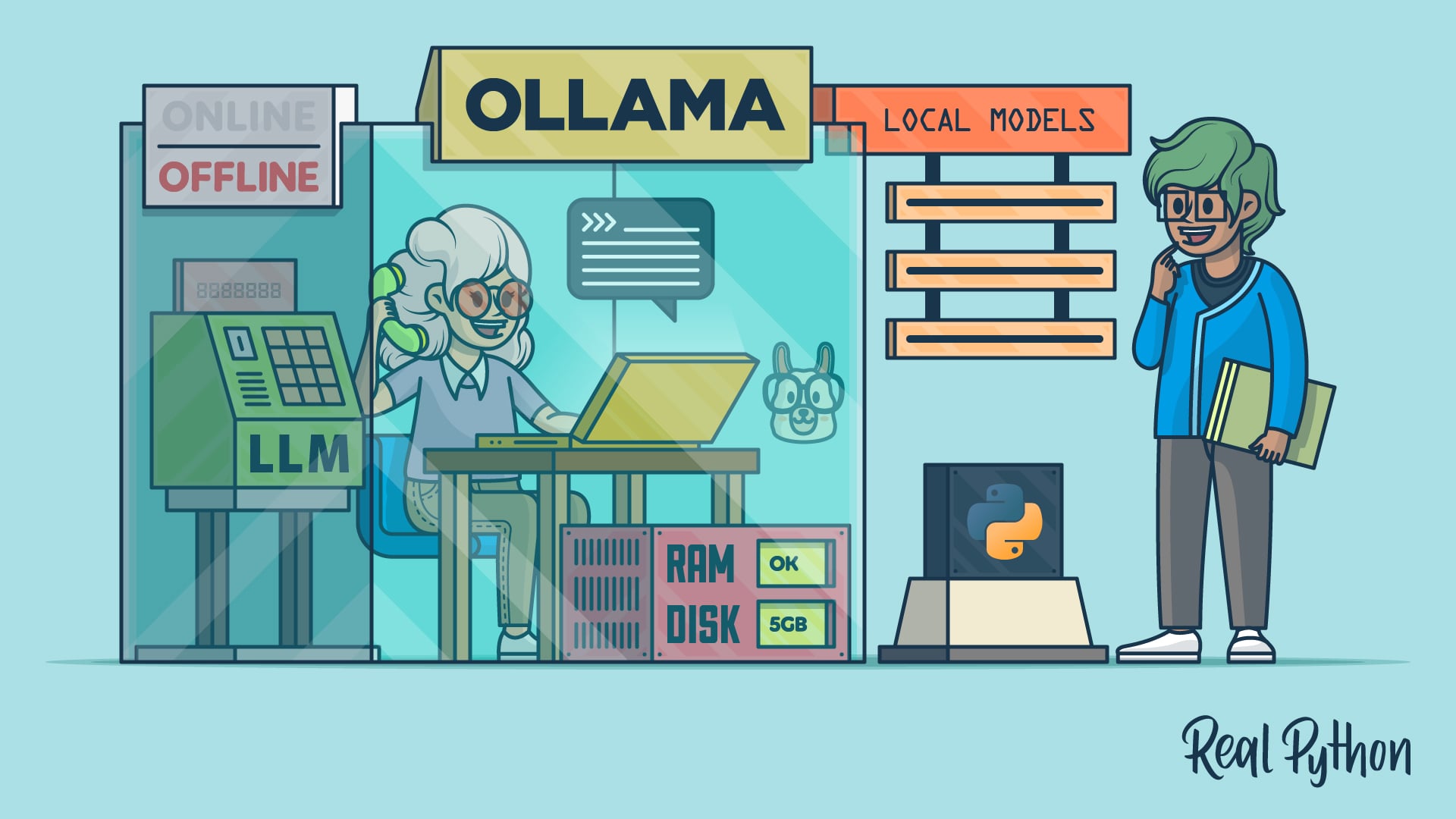
This guide shows how to run an AI model on your own computer, the kind of setup small models like LFM3 are made for:
Tutorial
How to Use Ollama to Run Large Language Models Locally
Learn how to use Ollama to run large language models locally. Install it, pull models, and start chatting from your terminal without needing API keys.
AI that builds attacks quickly makes the software you depend on a bigger target. This tutorial explains how to protect it:

Tutorial
Supply Chain Security for the Age of AI-Speed Exploits
Learn Python supply chain security as AI speeds up attacks: what the LiteLLM backdoor teaches, how to check your setup, and habits that last.
That’s it for this week.
If you want the most important AI news straight to your inbox, sign up below.
– The Real Python Team
Stop Falling Behind on AI. Catch Up in Five Minutes.
New models, new prices, new agent tools, all the time. Our new AI newsletter gives you the handful of stories you actually need as a developer. Free, straight from the Real Python team.