Real Python AI News · Weekly edition · The week of October 31–November 6, 2026
Stop Falling Behind on AI. Catch Up in Five Minutes.
New models, new prices, new agent tools, all the time. Our new AI newsletter gives you the handful of stories you actually need as a developer. Free, straight from the Real Python team.
This week’s news is about trust in AI tools: a coding add-on that hides a trap, a model built to find security holes, and new ways to tell where AI-written text comes from. Here’s each story in plain language.
A Booby-Trapped Claude Code Extension Slips a Backdoor Onto Programmers’ Computers
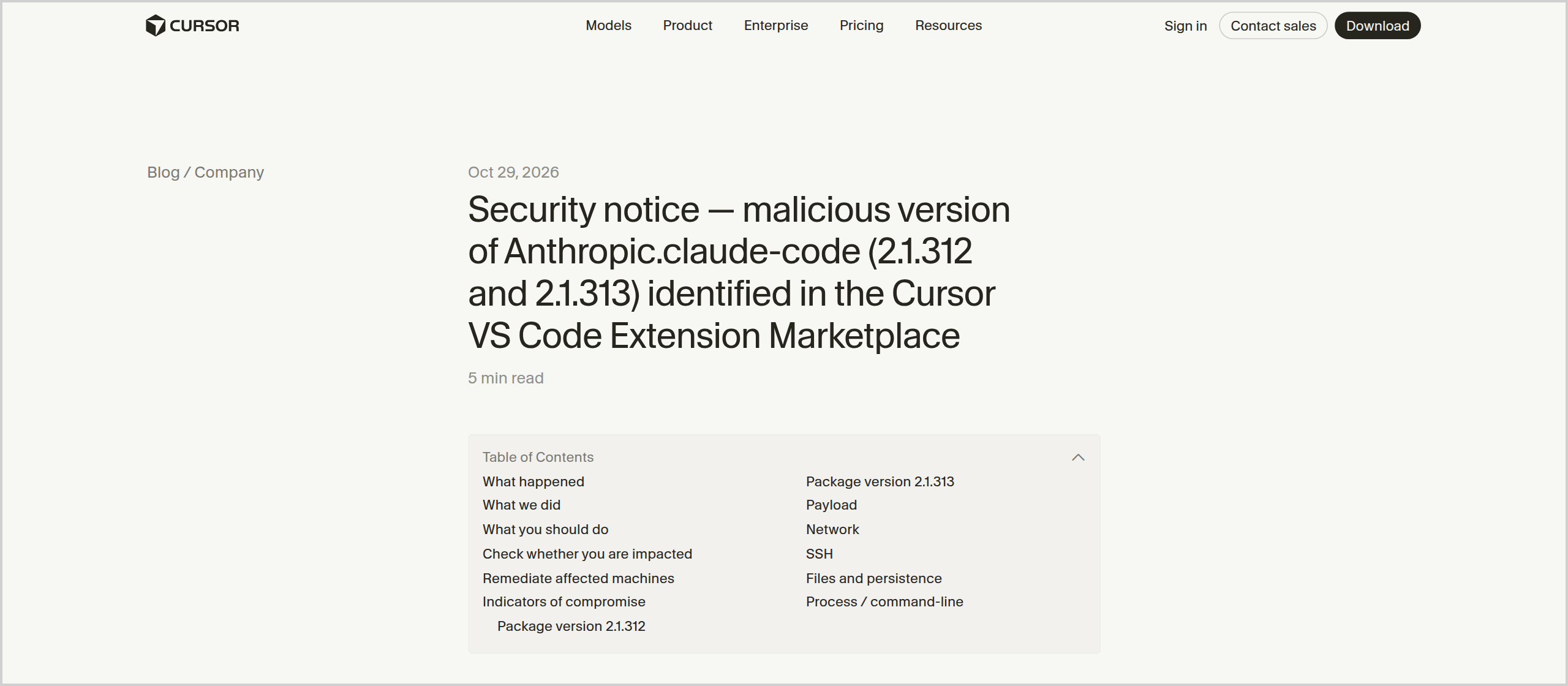
A trusted name in an app store for programmers turns out to hide a backdoor. The store belongs to Cursor, an app for writing code.
Cursor’s security notice says two versions of the extension for Claude Code, Anthropic’s AI coding assistant, are tampered copies Anthropic didn’t build: 2.1.312 and 2.1.313. They were up for about 11 hours on October 29 and target Windows PCs and Macs.
The fake extension goes after SSH, a standard way to log in to a computer from afar. An SSH key works like a pass that needs no password. The extension adds the attacker’s key, labeled svc-telemetry, to the computer’s approved keys, starts automatically when the computer restarts, and reports details like the username. Cursor says switching SSH on requires administrator rights, so on most machines that step fails.
Cursor pulled both versions and got the attacker’s server shut down. Researchers at OpenSourceMalware say the copies from npm (a public library of code), Open VSX, and Microsoft’s store are clean. Cursor users should check their version and look in their SSH settings for a svc-telemetry key. Since uninstalling may not be enough, Cursor offers cleanup scripts.

“Attackers like extension stores because one poisoned upload reaches everyone who trusts the name on it. AI coding assistants make a tempting disguise, since they run right next to company code and passwords. Businesses whose staff code in Cursor now have a version number, time window, and key name to check.”
— Philipp Acsany, Real Python
OpenAI’s Security AI Hunts Down Software Flaws, but Only Vetted Experts Can Use It
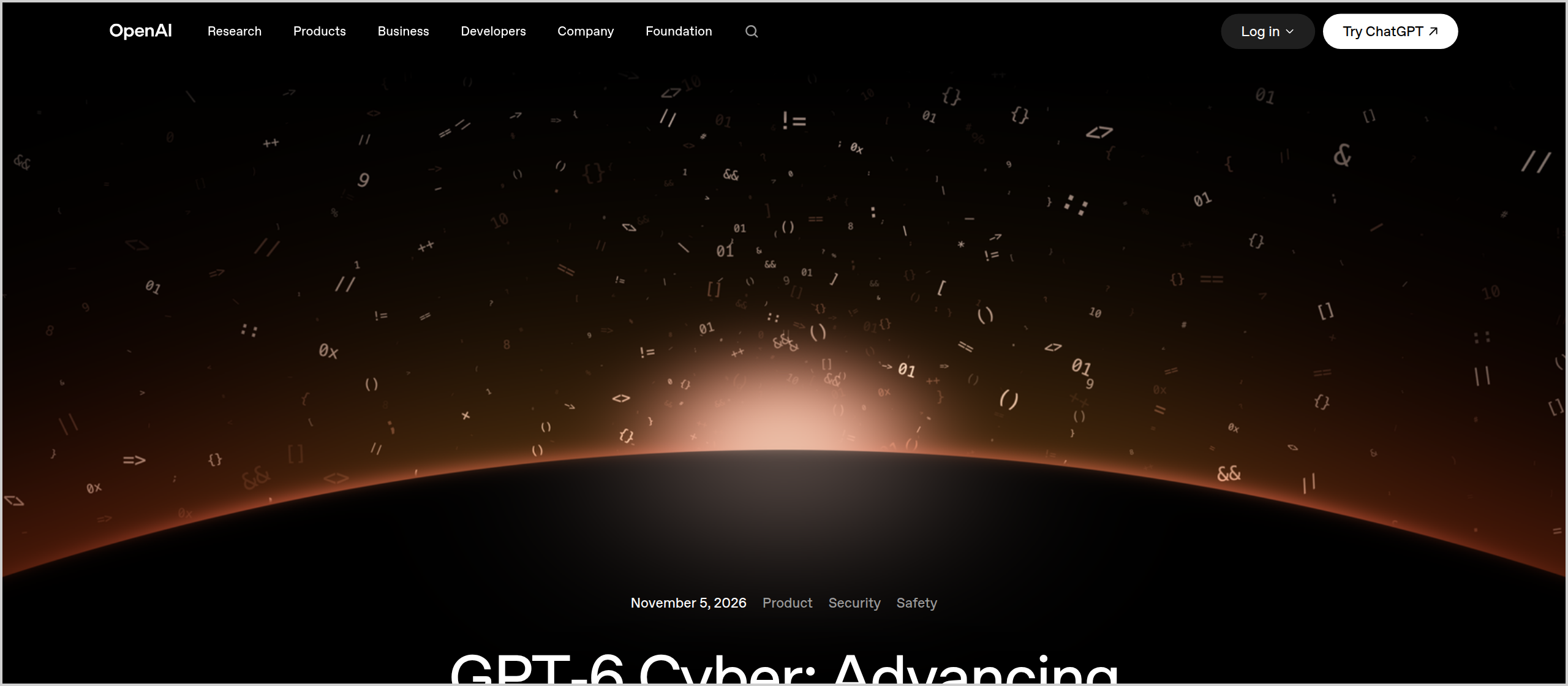
GPT-6 Cyber, OpenAI’s new AI model for security research, hunts for vulnerabilities, weaknesses in software that attackers could abuse. It then proves each flaw is real by writing an exploit, working attack code that triggers it.
OpenAI says its researchers used the model to build exploits for 948 flaws in Linux, the software behind most of the world’s servers, and sent 304 critical findings to Linux’s maintainers with suggested fixes. It also credits the model with finding 81 unknown high-severity bugs in Firefox, many already fixed.
Irregular, an independent testing company, sees a more mixed picture: the model cleared all 11 scenarios in one test set but solved 90 of 288 challenges in another, slightly fewer than OpenAI’s general-purpose GPT-6 Astra.
Because attackers would value the same skills, OpenAI rates it Critical for cybersecurity risk, up from High for its previous security model, and offers it only through Daybreak Red, its program for vetted security professionals.
“A tool that’s good at finding software flaws works for both sides, so OpenAI keeps its strongest one behind a vetting process. The company says it wants to widen its Daybreak program to smaller organizations and to volunteers who maintain open-source software, code that’s public and free for anyone to use. For everyone else, the payoff shows up as security updates to browsers and apps, so install them when they arrive.”
— Philipp
Any App Can Now Hand Its Actions to Apple’s New Siri
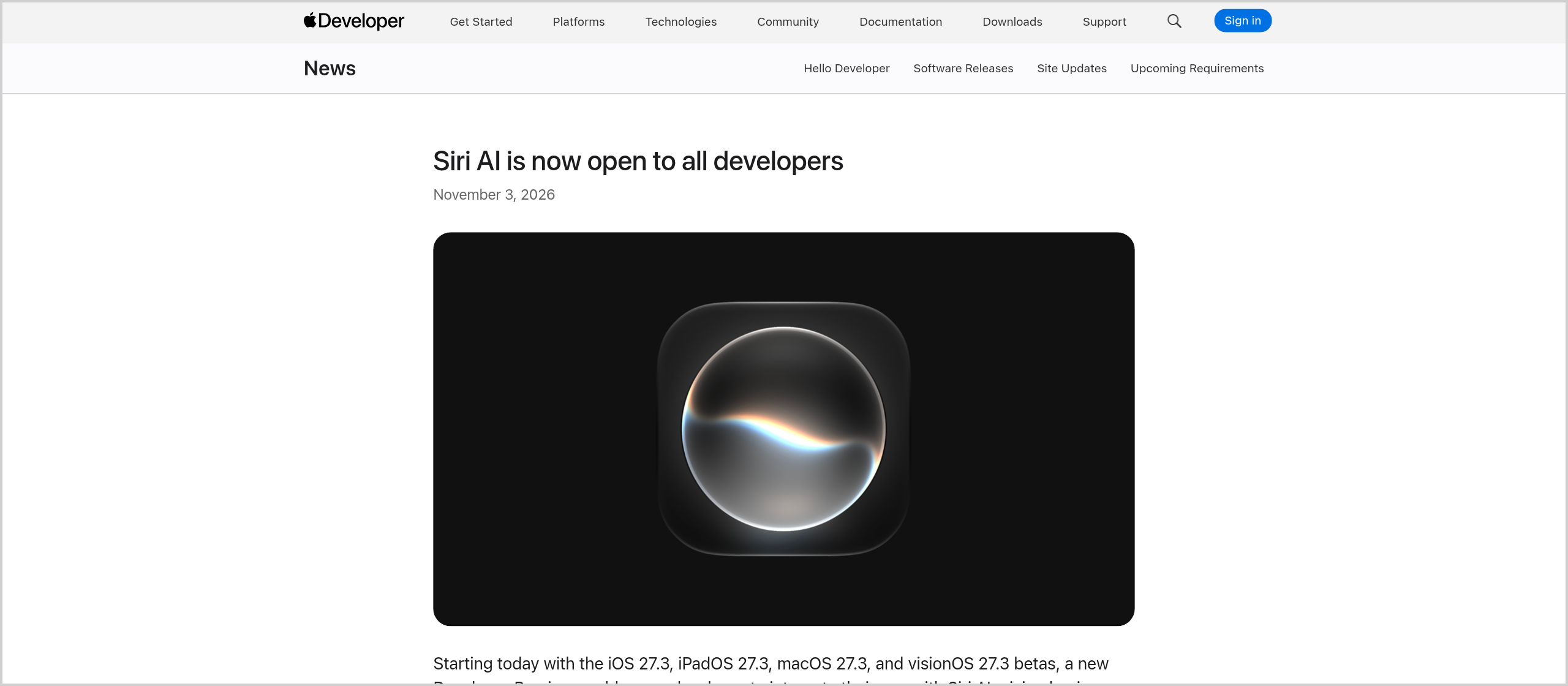
Siri AI, Apple’s far more capable new voice assistant, is open to every app maker. A developer preview, an early version to build with before customers get it, lets any app plug into Siri AI. It ships in the 27.3 test versions, or betas, of the software behind iPhones, iPads, Macs, and the Vision Pro headset.
The connection runs through App Intents, Apple’s way for an app to describe what it can do. Ask in everyday words to check a delivery, book a table, or place an order, and Siri AI does it inside the app. With new skills, developers can teach Siri AI to chain several actions for bigger requests. Siri AI can also find anything an app lists in Spotlight, the search built into Apple devices, not only certain predefined kinds of items.
For now, the preview is available only to app makers. Apple says Siri AI features reach customers in a few months and App Store submissions open in the spring. Its terms and usage rules are still to come.
“Big tech companies are racing to build assistants that act on your behalf. Siri already handles basic requests like sending a message, but this lets any app pass its own actions to a much smarter assistant. Customers could reach a business by asking Siri AI, but Apple’s unpublished terms will decide how appealing that is.”
— Philipp
Claude Agents Can Now Skip Resending the Whole Conversation
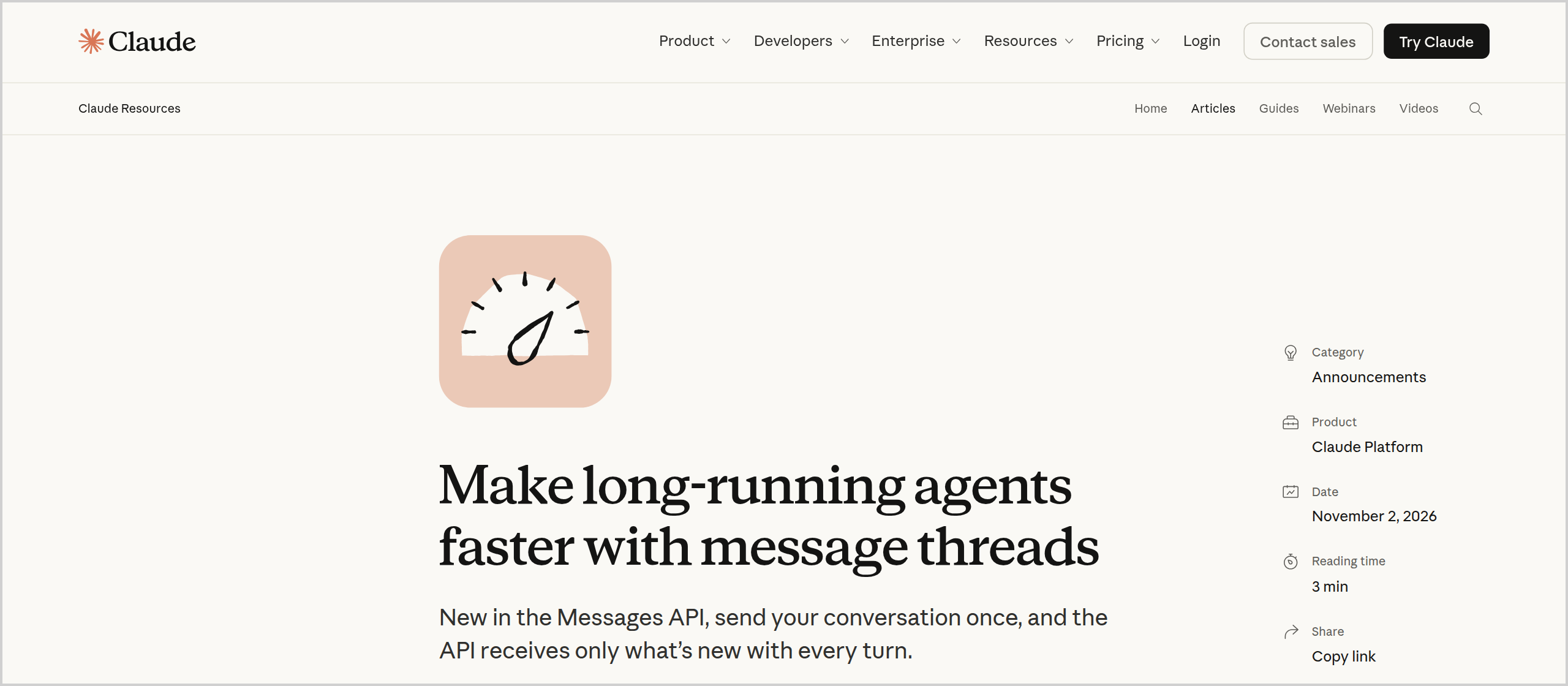
Agents, programs that work through a task step by step on their own, reach Claude, Anthropic’s family of AI models, through an API, a way for one piece of software to send requests to another. Claude doesn’t remember earlier exchanges, so an agent resends the entire conversation at every step.
Anthropic’s fix is message threads, now in public beta, an early version anyone can try. The agent sends the full conversation once to open a thread, then only new messages plus a pointer to Claude’s last reply. Anthropic keeps the thread in memory, encrypted and not saved to disk, for five minutes after the last request.
AI models handle text in small chunks called tokens. On very long requests of 500,000 to 1 million tokens, Anthropic says the typical wait before Claude starts answering drops about 35 percent.
Threads are already on by default in Claude Code, Anthropic’s coding assistant. Prices stay the same, since Claude still reads the whole conversation each turn. Threads work on Anthropic’s platform, Amazon’s cloud, Google’s cloud, and Microsoft Foundry.
“Agents now run for hours, writing code or operating a computer through screenshots, and resending everything slows each step. Threads make each of those steps start faster at no extra cost. It’s still a beta, and an idle thread expires after five minutes.”
— Philipp
A Chinese Startup’s Giant AI Model Is Free to Download
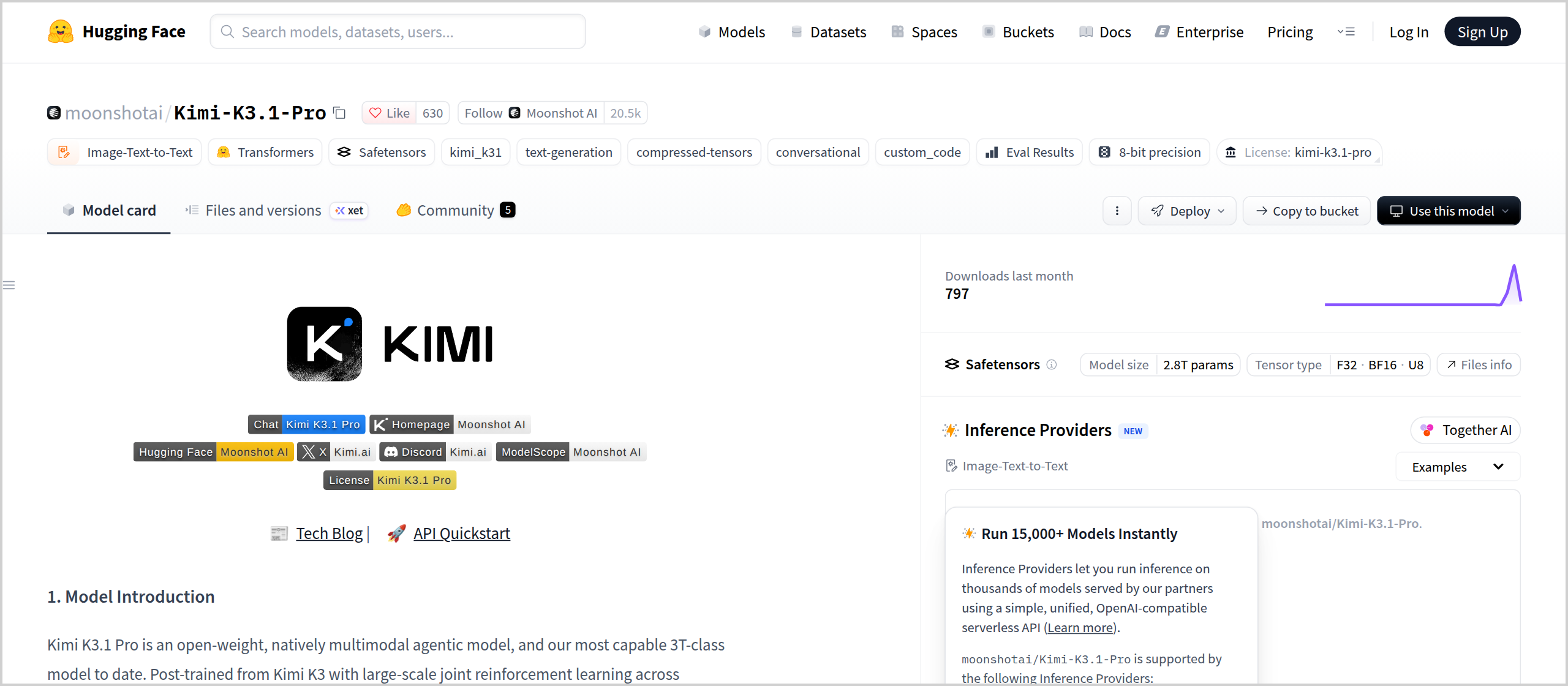
Anyone can now download Kimi K3.1 Pro, the newest AI model from Moonshot AI, a Chinese startup known for its Kimi chatbot. It’s an open-weight model: Moonshot publishes its weights, the numbers the model learned in training, so companies can run it themselves instead of only renting it.
It’s huge: 2.8 trillion parameters, the adjustable numbers that store what it knows. Because it’s a mixture of experts, with many specialized parts that take turns, only 104 billion are active at once, which keeps it cheaper to run. It’s multimodal, so it understands images as well as text, and its context window, the amount of information it can keep in mind at once, is 1 million tokens, words or pieces of words.
It targets multi-step jobs like writing and testing code. Moonshot reports 65.7 on the coding test Terminal-Bench 4.0, ahead of Anthropic’s Claude Fable 5.1 at 57.9 and OpenAI’s GPT-6 Astra at 58.2, but narrowly behind Anthropic’s Claude Opus 5.5 at 66.4. Its own Kimi license makes it free to use, but big companies that sell access to it as a service need a separate deal.
“Models you can download keep gaining on the best ones you can only rent, and Chinese labs are a big part of that push. A business can now run a strong model on hardware it controls, though one this large needs data center equipment. Independent tests will show whether Moonshot’s own scores hold up.”
— Philipp
Grok’s AI-Written Text Gets an Invisible Signature
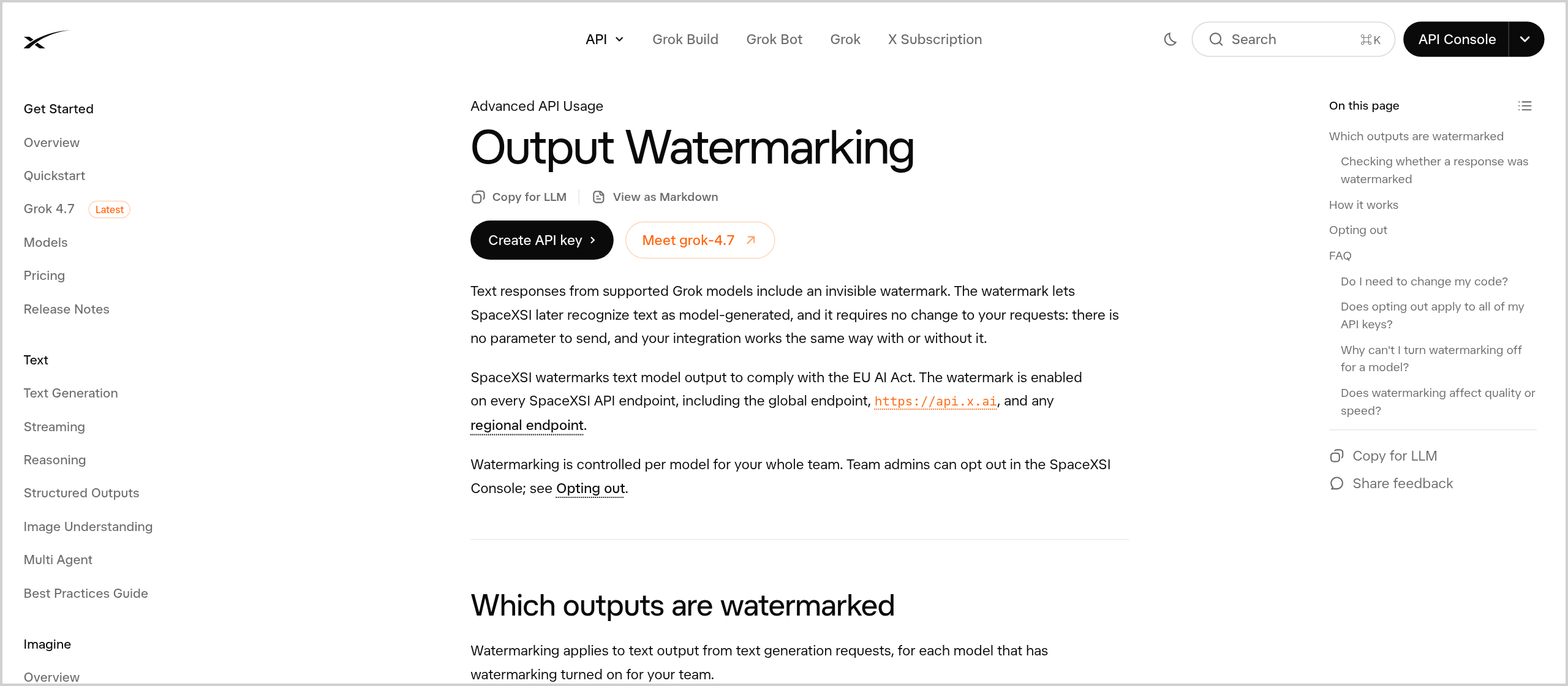
From November 7, 2026, text written by xAI’s Grok models carries a hidden signature by default. xAI, now called SpaceXSI, is the company behind the Grok chatbot. The signature is a watermark: a mark readers can’t see that lets SpaceXSI later recognize text its AI produced. It covers Grok 4.7, 4.6, 4.5, 4.3, and 4.20 in SpaceXSI’s API, the connection other apps use to plug Grok in.
Nothing is added to the words. As the model writes, the watermark gently steers which words it picks. SpaceXSI says quality and speed stay the same. Its detection test classifies text as watermarked, not watermarked, or uncertain. Longer text gives a clearer result.
A small label on each answer, the x-watermark header, says whether the text was marked. Only a team’s admins can switch the watermark off, model by model, after confirming that a legal exception covers their use. SpaceXSI says it marks the text to comply with the EU AI Act, the European Union’s law on how AI is built and used.
“SpaceXSI isn’t alone: Anthropic, maker of the Claude AI assistant, is extending its own text watermarks to older Claude models under the same European law. Businesses running Grok in their products get the change automatically, so they should check the setting before November 7. Ordinary readers can’t run the test themselves, since SpaceXSI opens detection only to approved applicants.”
— Philipp
Other AI News
- Pydantic library ends V1 support, starts V3: Pydantic 1.10.27 is the final V1 release, so code that still relies on V1 gets no more fixes. Work on V3 starts now, aiming for a near-final state by year’s end without a V1-to-V2-scale API overhaul.
- Anthropic watermarks older Claude models’ text: Anthropic now watermarks text from older models too, including Claude Mythos 5 and Opus 4.7, under its EU AI Act transparency commitments. The Decoder reports that on Opus 4.6 and Sonnet 4.6 the mark applies only at default temperature, top_p, and top_k.
- ChatGPT and Codex share one usage limit: Starting in December, ChatGPT and Codex draw from one shared allowance on the Plus, Pro, and Business plans, OpenAI says. Instant-mode chats don’t count, but coding in Codex and chatting in ChatGPT will spend the same balance.
- OpenAI’s Images 2.6 adds GIFs and API models: The API gets gpt-image-2.6-flare and gpt-image-2.6-sunburst at the same per-token prices as the 2.5 models. OpenAI says Images 2.6 is about 50 percent faster than 2.5 and can generate GIFs.
- Gemini Omni 1.2 Flash video model, 30% cheaper: Google’s video model now makes clips up to 15 seconds, adds multi-turn editing, and costs $0.07 per second at 720p. It’s generally available in the Gemini API.
- Thinking Machines’ Inkling 2 Small MoE model: The 594B mixture-of-experts model has 17B active parameters, takes image input, and is available on Tinker with closed weights for now. Apache 2.0 weights are planned next week after external safety testing. Its benchmark scores are the company’s own.
- Ricursive’s Ripple-65B Preview open-weight coding model: This dense coding model ships under Apache 2.0 on Hugging Face, Together AI, and OpenRouter. Ricursive reports 80.52 on Terminal-Bench 2.1 and a $32M total R&D cost.
- Anthropic’s FlashProve proves which model wrote a reply: The Apache 2.0 release includes a prover, verifiers, and a spec for zkSNARK proofs that a reply came from committed weights, at roughly 70–95x the GPU cost of inference.
- Anthropic’s S-1 flags imminent AI-accelerated progress: Anthropic’s amended IPO filing says it “may imminently meet” its Responsible Scaling Policy threshold for “dramatically accelerated progress attributable to AI.”
- METR measures AI speeding up Anthropic’s research: In a high-access assessment, METR estimates Anthropic’s benchmark scores are climbing about 1.9x faster than before October 2025, likely driven by AI-assisted R&D. It’s METR’s hedged judgment on partly redacted evidence, and an early independent measure of AI speeding up a lab’s own research.
Dive in Deeper
Real Python helps you understand the concepts behind the news. You can explore these topics further with the resources below.
How programmers can protect the outside code their projects depend on, now that a fake add-on and AI-found exploits both target that code:

Tutorial
Supply Chain Security for the Age of AI-Speed Exploits
Learn Python supply chain security as AI speeds up attacks: what the LiteLLM backdoor teaches, how to check your setup, and habits that last.
A hands-on look at the Claude API, the service that gains message threads this week:

Tutorial
How to Use the Claude API in Python
Learn how to use the Claude API in Python to send prompts, control responses with system instructions, and get structured JSON output.
How to run an AI model with downloadable weights on your own computer, like the open-weight models released this week:
Tutorial
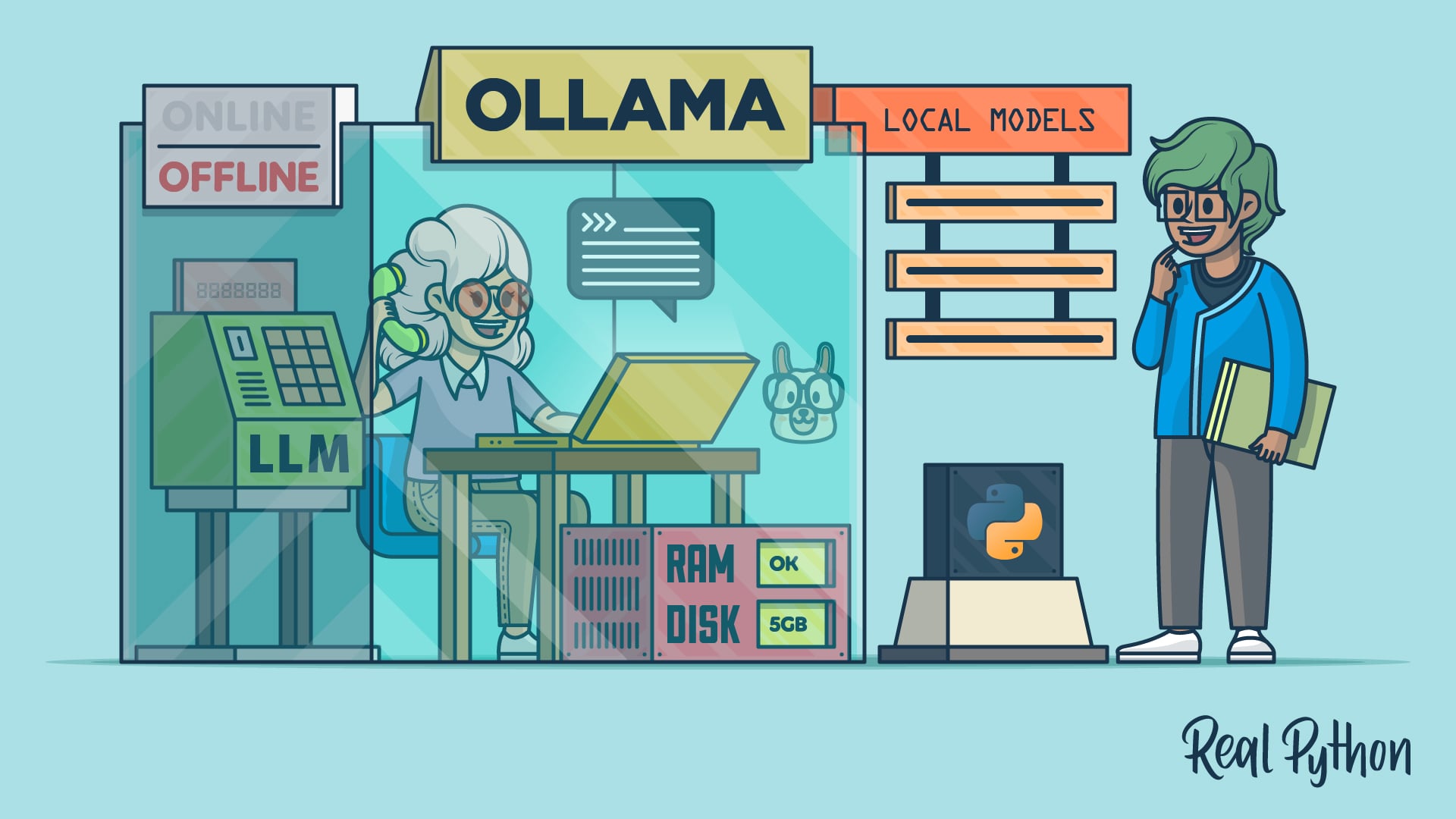
How to Use Ollama to Run Large Language Models Locally
Learn how to use Ollama to run large language models locally. Install it, pull models, and start chatting from your terminal without needing API keys.
An introduction to Pydantic, the popular tool for checking data, which has ended support for its first version:

Tutorial
Pydantic: Simplifying Data Validation in Python
Discover the power of Pydantic, Python's most popular data parsing, validation, and serialization library. In this hands-on tutorial, you'll learn how to make your code more robust, trustworthy, and easier to debug with Pydantic.
That’s it for this week.
If you want the most important AI news straight to your inbox, sign up below.
– The Real Python Team
Stop Falling Behind on AI. Catch Up in Five Minutes.
New models, new prices, new agent tools, all the time. Our new AI newsletter gives you the handful of stories you actually need as a developer. Free, straight from the Real Python team.