object
In Python, everything is an object, from simple numbers to complex data structures. An object is a piece of data in memory that has state, such as attributes or a value, and defined behavior through methods. Object instances are created from classes, which serve as their blueprints.
See also: object (Built-in Data Types)
Related Resources
Course
Class Concepts: Object-Oriented Programming in Python
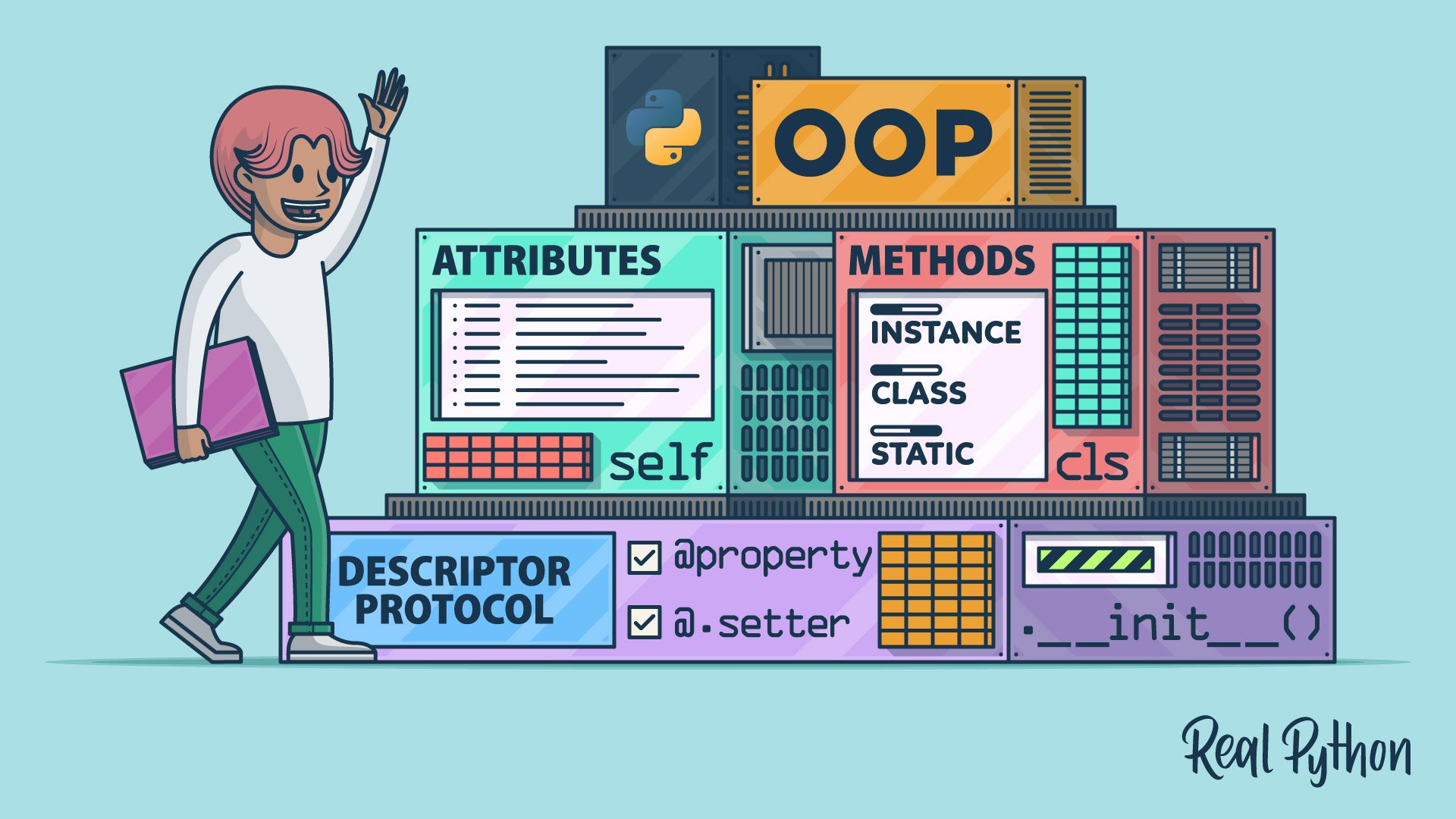
Python uses object-oriented programming to group data and associated operations together into classes. In this video course, you'll learn how to write object-oriented code with classes, attributes, and methods.
For additional information on related topics, take a look at the following resources:
- Intro to Object-Oriented Programming (OOP) in Python (Course)
- Python Classes: The Power of Object-Oriented Programming (Tutorial)
- Object-Oriented Programming (OOP) in Python (Tutorial)
- Object-Oriented Programming (OOP) (Learning Path)
- Inheritance and Internals: Object-Oriented Programming in Python (Course)
- Python Classes - The Power of Object-Oriented Programming (Quiz)
- A Conceptual Primer on OOP in Python (Course)
- Object-Oriented Programming (OOP) in Python (Quiz)
Have a question about this? Mentor AI can show you examples, compare related terms, and point you to tutorials.
Ask Mentor AI

By Dan Bader • Updated Sept. 26, 2026