vector database
A vector database is a specialized data system for storing, indexing, and querying high-dimensional embedding vectors (numerical arrays). It enables items with similar meaning or structure to be close together in vector space.
It supports fast nearest-neighbor or similarity searches using different techniques, such as graph-based indices, inverted-file clustering, product quantization or hybrid indexes—often in conjunction with metadata filters and keyword plus vector hybrid ranking.
Core capabilities of a vector database include inserting, updating, deleting (CRUD/upsert) vectors and associated metadata, batch ingestion, support for similarity metrics like cosine similarity or inner product, and trade-offs between recall and latency.
Related Resources
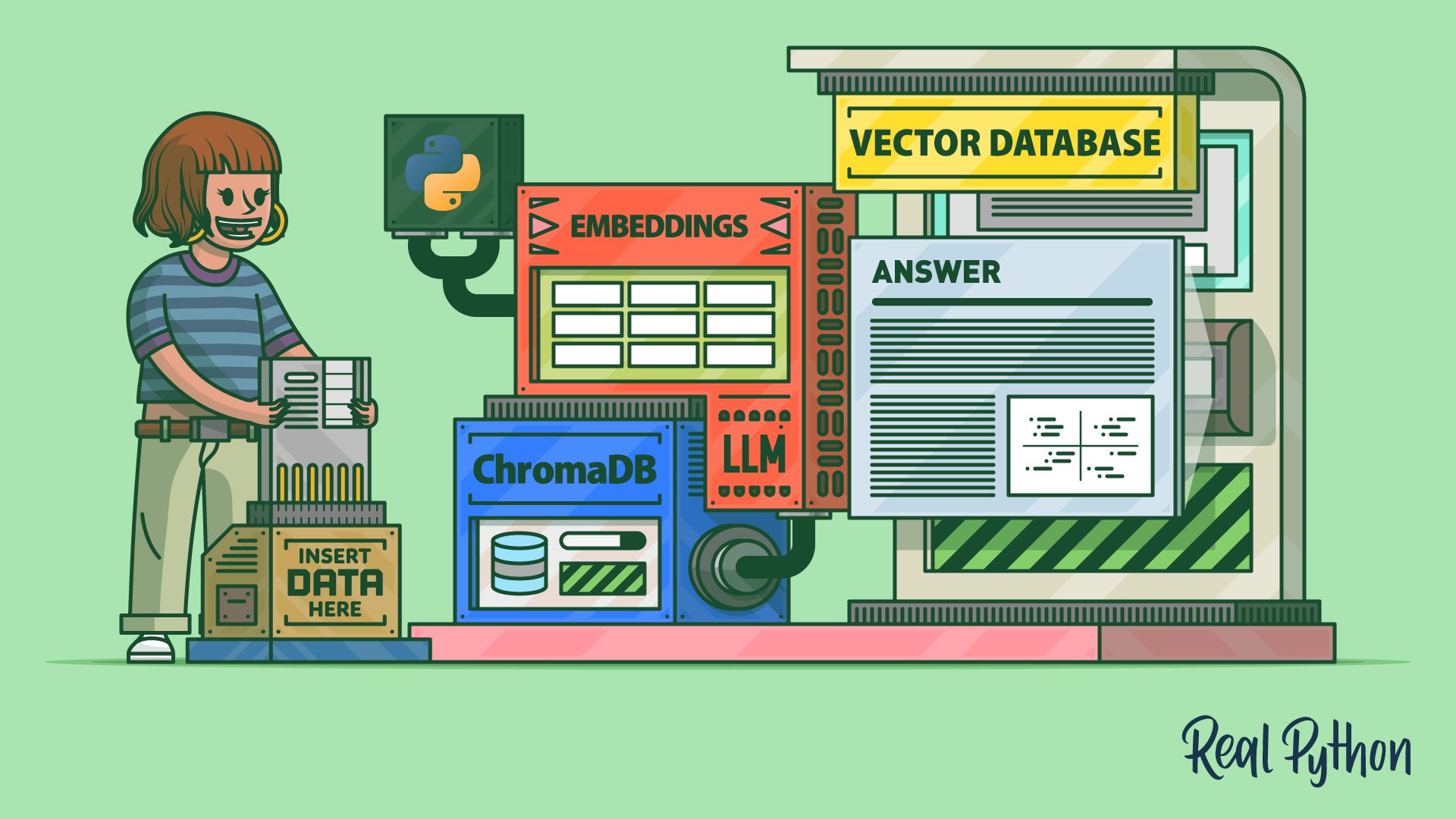
Tutorial
Embeddings and Vector Databases With ChromaDB
Vector databases are a crucial component of many NLP applications. This tutorial will give you hands-on experience with ChromaDB, an open-source vector database that's quickly gaining traction. Along the way, you'll learn what's needed to understand vector databases with practical examples.
For additional information on related topics, take a look at the following resources:
- Build an LLM RAG Chatbot With LangChain (Tutorial)
- LangGraph: Build Stateful AI Agents in Python (Tutorial)
- First Steps With LangChain (Course)
- Build an LLM RAG Chatbot With LangChain (Quiz)
- LangGraph: Build Stateful AI Agents in Python (Quiz)
By Leodanis Pozo Ramos • Updated Dec. 7, 2025
